
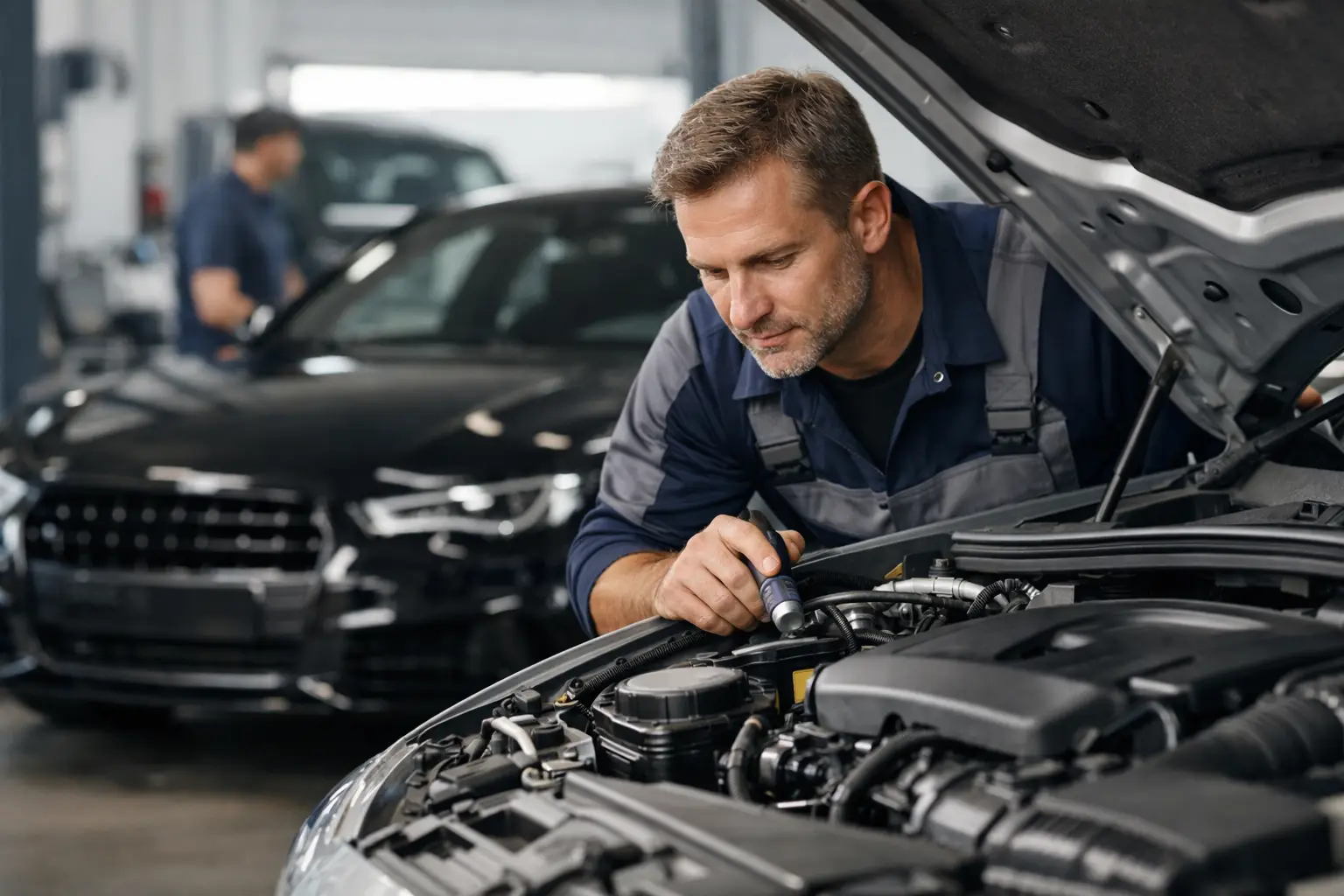
A warning light on a BMW, a rough shift in a Mercedes-Benz, or an A/C system that stops cooling in an Audi rarely has a one-size-fits-all answer. A qualified German mechanic understands that the vehicle’s software, service procedures, parts specifications, and driving systems all influence the right diagnosis. For owners in Palatine and the northwest suburbs, that expertise can be the difference between replacing a part based on a guess and correcting the actual cause.
German vehicles are engineered around tightly integrated systems. They reward careful maintenance and precise repairs with the performance, comfort, and road feel that made you choose the vehicle in the first place. They also need a repair shop that has the diagnostic capability and practical experience to work with those systems correctly.
Why German Vehicles Need Specialized Care
BMW, Mercedes-Benz, Audi, Porsche, Volkswagen, and Mini models are not difficult simply because they are European. They are sophisticated because their components communicate constantly. The engine, transmission, steering, braking, suspension, climate control, safety systems, and infotainment may all share data through multiple control modules.
That means a dashboard warning may be a symptom rather than the failed component itself. A low-voltage condition, a wiring concern, a sensor signal outside its expected range, or a software-related issue can create warnings in systems that appear unrelated. Reading a generic trouble code is only the beginning. Proper diagnosis requires manufacturer-grade scan equipment, access to vehicle-specific information, and a technician who knows what the live data is supposed to show.
The same principle applies to maintenance. The correct oil approval, filter, brake fluid specification, coolant, and service interval matter. Using a part or fluid that merely looks compatible can create performance concerns, shorten component life, or cause future diagnostic complications. OEM or quality equivalent parts are selected for a reason: they are designed to work with the vehicle as a complete system.
What a German Mechanic Looks for First
The best repair process starts with listening. Details such as when a noise occurs, whether a warning appears only in cold weather, how long a concern has been present, or what service was recently performed can narrow the diagnostic path. Clear communication from the driver gives the technician useful context before any testing begins.
From there, an experienced specialist verifies the concern instead of assuming the first fault code tells the whole story. That may include a road test, a visual inspection, a battery and charging-system evaluation, a full vehicle scan, and targeted testing of the affected system. If a repair is recommended, you should understand what was found, why it matters, and what can reasonably wait.
This approach is especially valuable with electrical diagnostics. Modern German vehicles can have dozens of modules, miles of wiring, and features that depend on correct communication between systems. Replacing parts without testing can become expensive quickly. Accurate diagnosis protects both your vehicle and your budget.
Brand-Specific Knowledge Makes a Practical Difference
Every manufacturer has patterns, common service needs, and repair procedures that a specialist sees repeatedly. BMW cooling and oil-leak concerns, Mercedes-Benz electrical and suspension systems, Audi and Volkswagen turbocharged engines, Porsche performance systems, and Mini maintenance needs each call for brand familiarity.
Familiarity does not mean assuming every car has the same problem. It means knowing where to inspect first, which test procedures matter, and when a factory software update or adaptation procedure may be necessary after service. It also means recognizing the difference between a normal operating characteristic and an issue that needs attention.
For example, a transmission or gearbox concern may involve fluid condition, a sensor, a control module, a mechanical component, or an adaptation issue. The appropriate repair depends on verified findings. A thoughtful shop explains those findings instead of using technical language to rush you into a decision.
Choosing a German Mechanic Over a General Repair Shop
A good general repair shop can handle many routine services well. But when your European vehicle needs advanced diagnostics, specialized maintenance, or repairs involving complex systems, the equipment and experience at the shop matter more. The goal is not to make service more complicated than it needs to be. It is to avoid cutting corners that can lead to repeat visits or unnecessary parts replacement.
Look for ASE-certified technicians, diagnostic tools that support your vehicle’s manufacturer systems, and a commitment to appropriate parts and fluids. Ask how the shop handles diagnostic testing and whether the estimate will explain the priority of recommended work. A professional answer should be direct, not evasive.
There is also a difference in the service experience. Dealerships have deep brand resources, but many owners prefer an independent specialist for more personal communication and value. The right independent shop can provide dealership-level standards without making you feel like a repair order number. At Wizard Werks, that means discussing the condition of your vehicle honestly, recommending the work that serves its reliability and safety, and avoiding pressure for work that is not needed.
Maintenance That Preserves the Driving Experience
Waiting until a warning light appears is rarely the best maintenance strategy for a premium vehicle. Some wear happens gradually, and early inspection can prevent a small concern from affecting other components. Regular oil and filter service, brake inspections, fluid checks, tire and suspension evaluations, and cooling-system attention help preserve the confident, composed driving feel owners expect from German engineering.
Service timing still depends on how you use the vehicle. A commuter that sees short trips and winter driving in the Palatine area may have different needs than a weekend Porsche or a highway-driven Mercedes-Benz. Age, mileage, prior service history, and storage conditions all affect the recommendation.
A maintenance plan should be tailored, not copied from a generic checklist. If an item is due by time, mileage, condition, or factory guidance, your advisor should be able to explain which factor applies. That gives you a clear basis for planning service rather than reacting to surprises.
Do Not Ignore These Early Signs
Premium vehicles often provide early clues before a larger repair becomes necessary. Pay attention to a new vibration, unusual brake noise, fluid spots where you park, reduced A/C performance, hard starting, inconsistent steering response, an engine that runs less smoothly, or a warning light that comes and goes.
None of these symptoms automatically points to a major problem. A vibration could be related to tires, wheels, braking, suspension, or drivetrain components. An intermittent warning may be minor, but it can also be the first sign of an electrical issue that deserves testing. Prompt diagnosis offers the best chance of addressing concerns before they affect reliability or convenience.
Questions Worth Asking Before You Authorize Service
You do not need to be a technician to make informed service decisions. Ask what testing confirmed the recommendation, whether the concern is urgent, and what may happen if you postpone it. Ask whether OEM parts or quality equivalent parts will be used and whether programming, calibration, or adaptation is needed after the repair.
You should also ask about warranty coverage and request an estimate that separates immediate needs from maintenance items that can be scheduled later. Transparency is not just a pleasant extra. It helps you prioritize confidently and maintain your vehicle without unpleasant surprises.
A Better Long-Term Service Relationship
The best time to find a German vehicle specialist is before your car has an urgent problem. Routine maintenance visits let a shop establish a service history, identify developing concerns, and learn how you use the vehicle. Over time, that history makes recommendations more precise and makes it easier for you to plan ahead.
Your vehicle was built to deliver a particular level of performance, comfort, and control. Choosing a German mechanic with the tools, training, and patience to care for it properly helps keep that experience intact – mile after mile.