
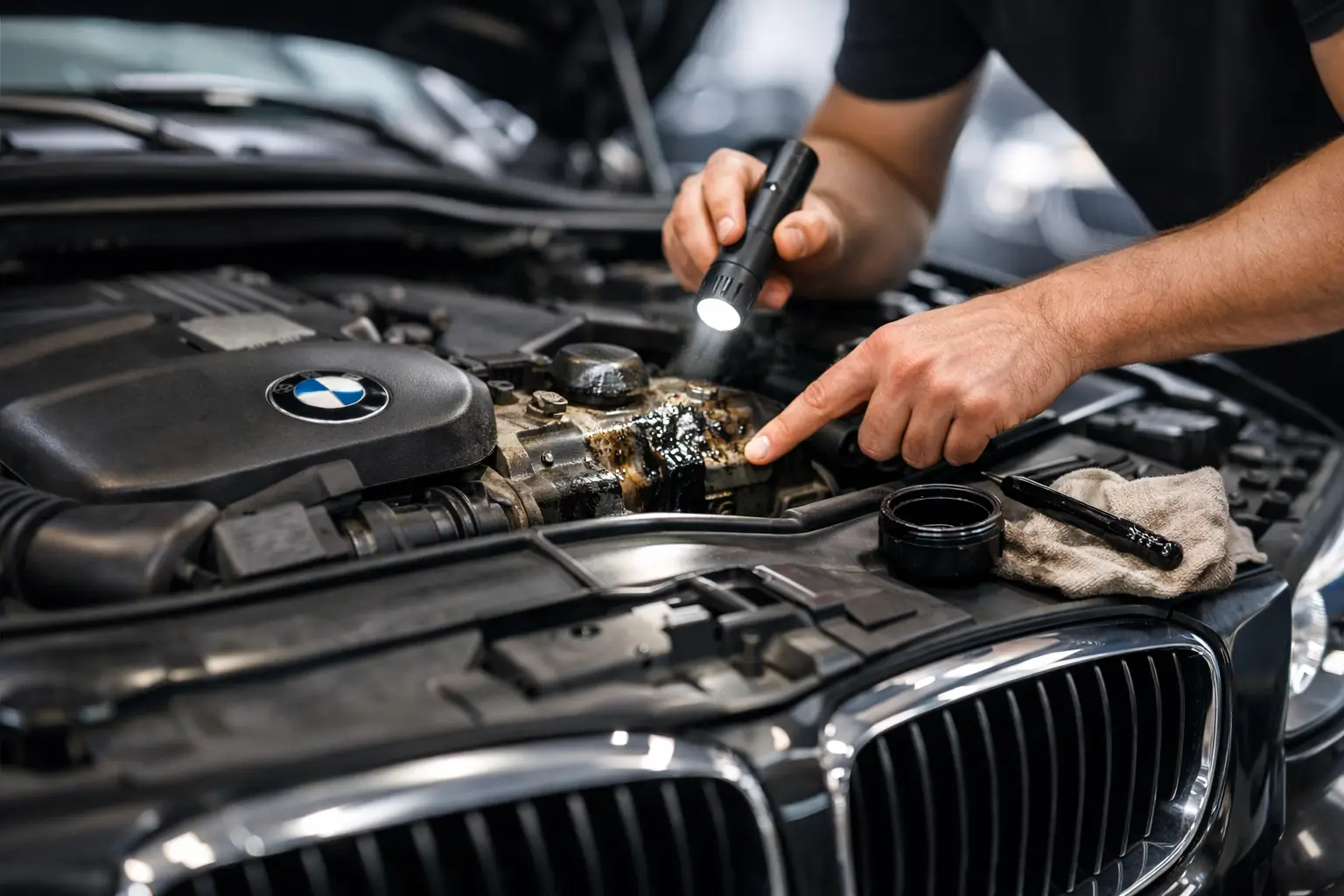
A few drops on the garage floor can turn into a much bigger problem on a BMW if the source is misread. BMW oil leak diagnosis is not just about spotting wet areas under the hood – it is about finding where the leak actually begins, how far it has traveled, and whether it is tied to pressure, heat, or a failing seal.
That matters because BMW engines often leak in ways that can fool even experienced owners. Oil can seep from the top of the engine, run down the side of the block, collect around hoses and covers, and make the lower engine look like the problem. If the first repair is based on the wrong assumption, you spend money and still end up with the same drip.
Why BMW oil leak diagnosis is different
BMW engines are tightly packaged, and many common leak points sit near other components that quickly spread oil around. A valve cover gasket may leak onto the exhaust side of the engine and create a burning oil smell. An oil filter housing gasket may send oil downward and make it look like the oil pan is leaking. On some turbocharged models, the leak path can be even harder to trace because heat shields, intake plumbing, and engine covers hide the first signs.
This is why a real diagnosis starts with pattern recognition, not guesswork. The engine family, mileage, service history, and exact location of oil residue all matter. A BMW with a six-cylinder engine may have a different likely leak source than a four-cylinder turbo model, even if the symptom looks similar from above.
The most common BMW oil leak sources
Several leak points show up again and again on BMWs, especially as rubber gaskets age and repeated heat cycles harden sealing surfaces.
Valve cover gasket and valve cover issues
This is one of the most common places to start. The gasket can flatten and crack over time, allowing oil to seep out around the edge of the cover. In some BMWs, the valve cover itself can warp or crack, which means replacing the gasket alone may not solve it.
Typical signs include a burning oil smell, light smoke from the engine bay, and oil residue along the upper edge of the engine. If oil reaches ignition components, you may also see rough running or misfire concerns.
Oil filter housing gasket
This leak is easy to underestimate and very common on many BMW engines. The gasket between the oil filter housing and engine block can harden with age. Once it leaks, oil often runs down the front or side of the engine and can spread across nearby components.
Because of where it sits, this leak is frequently mistaken for something lower on the engine. Left alone, it can contaminate belts and other surrounding parts, which raises the stakes beyond a simple drip.
Oil pan gasket
Oil pan leaks do happen, but they are also overdiagnosed. Since oil naturally moves downward, residue on the pan does not always mean the pan gasket is the true source. A proper inspection has to rule out leaks from above before recommending oil pan service.
When the pan gasket is the actual problem, seepage is usually concentrated at the lower edge and may appear more consistently after the vehicle has been parked.
Oil cooler and related seals
Some BMW models use oil cooler lines or housings with seals that can deteriorate over time. These leaks may show up near the front of the engine or around cooling-related components, and they can create a messy pattern that blends oil and road grime.
Front and rear main seal concerns
These are less common than upper-engine gasket leaks, but they do happen. The challenge is that diagnosing them correctly takes care. Before calling it a front or rear main seal leak, a technician should confirm that oil is not migrating from a higher source.
What owners usually notice first
In many cases, the first clue is not a warning light. It is a smell, a spot on the driveway, or smoke after a longer drive. BMW owners may notice oil consumption between services, residue under the engine cover, or a wet underbody panel during routine maintenance.
The details help. A leak that appears only after highway driving can point to pressure or temperature-related sealing issues. A leak that shows up mostly after overnight parking can suggest a slow seep collecting over time. If the smell is strongest at stoplights or after shutting the engine off, oil may be reaching hot exhaust components.
These patterns are useful because they narrow the search before any parts are recommended.
How a proper BMW oil leak diagnosis is done
A reliable diagnosis is usually less dramatic than people expect. It starts with a visual inspection, but not a quick glance. The engine has to be checked from the top and bottom, with attention to fresh residue, old buildup, airflow patterns, and the way oil has tracked along castings, covers, and fasteners.
If the area is heavily coated, cleaning is often part of the process. That is not cosmetic. Cleaning removes old residue so fresh oil can reveal the active leak path. Without that step, it is easy to confuse an old seep with a current failure.
On some vehicles, dye testing can help confirm the source. Under the right light, the leak path becomes much easier to follow. This is especially useful when multiple seals are aging at the same time or when access is limited by engine layout.
A good technician also checks related systems. Excess crankcase pressure, for example, can worsen or trigger oil leaks. If a ventilation issue is contributing to gasket failure, replacing the gasket alone may only provide a temporary fix.
Why guessing gets expensive
BMW owners often come in after hearing that they need several gaskets at once, when the real issue is more focused. Other times, the opposite happens – one small repair is made, but the primary leak source is left untouched because oil had spread everywhere and confused the picture.
That is where experience matters. Brand-specific diagnosis helps separate the common from the unlikely. It also helps avoid stacking repairs that do not address the actual source. Honest diagnostics are not about finding the biggest estimate. They are about finding the right repair first.
For owners in Palatine and the northwest suburbs, that dealer-alternative approach matters. At Wizard Werks, the goal is to identify what is leaking, what is only stained, and what needs attention now versus later.
When an oil leak needs prompt attention
Not every oil leak is an emergency, but some should move to the top of your schedule. If oil is dripping onto hot exhaust components, if the oil level is dropping quickly, or if the leak is reaching belts or electrical components, waiting can lead to more than a mess.
A small seep can often be monitored briefly if the source is known and the oil level remains stable. But a leak that leaves visible spots every day, creates smoke, or triggers low-oil warnings deserves a professional inspection soon. BMW engines are engineered with tight tolerances, and low oil level is not something to take lightly.
What affects the repair recommendation
Once the source is confirmed, the right repair depends on more than the gasket itself. The condition of surrounding parts matters. If a valve cover is cracked, replacing just the gasket may not hold. If nearby seals are already failing and access overlaps, it may make sense to address them together.
That does not mean every nearby part should automatically be replaced. It depends on the model, mileage, visible wear, and labor overlap. A transparent shop will explain that trade-off clearly so you can make an informed decision instead of being pushed into a blanket recommendation.
The value of early diagnosis
The best time to inspect a BMW oil leak is usually when it first becomes noticeable, not after months of buildup. Early diagnosis tends to be more accurate because the leak path is cleaner and easier to trace. It also reduces the chance that oil will damage surrounding components or mask a second issue.
If you have noticed a burning oil smell, fresh spots where you park, or oil residue during routine maintenance, it is worth having it checked before it turns into a larger repair conversation. The right diagnosis brings clarity fast, and that is often the difference between a straightforward fix and a frustrating cycle of repeat visits.
A BMW should feel precise and confidence-inspiring every time you drive it. When oil shows up where it should not, a careful diagnosis is the first step toward getting that confidence back.