
A luxury car’s air conditioning system should do more than blow cool air eventually. It should cool quickly, hold a consistent cabin temperature, manage humidity, and operate without unusual noises or odors. This auto ac repair guide is designed for European and premium import owners who want to recognize problems early and understand why a proper diagnosis matters.
On BMW, Mercedes-Benz, Audi, Porsche, Land Rover, Volvo, and similar vehicles, climate control is closely tied to sensors, control modules, refrigerant pressure readings, and vehicle-specific software. A quick refrigerant top-off may make the air feel colder for a few days, but it will not identify a leak, a failing compressor control valve, or an electrical fault. The right repair starts with finding the actual cause.
What Your Car’s AC System Is Telling You
Most air conditioning concerns begin with a change that is easy to dismiss. The cabin takes longer to cool after a commute, the driver’s side is colder than the passenger’s side, or cold air disappears while idling at a stoplight. These symptoms are worth checking before a hot Illinois summer turns a small issue into an inconvenient one.
Warm air is the most obvious warning sign, but it is not one diagnosis. Low refrigerant can cause weak cooling, yet low refrigerant usually means the system has leaked. The leak may be at an O-ring, hose connection, condenser, evaporator, service port, or another component. Simply adding refrigerant without locating the loss can waste money and leave the system vulnerable to further damage.
Inconsistent cooling can point to refrigerant pressure problems, a weak compressor, a faulty pressure sensor, a cooling fan concern, or a blend door issue inside the dashboard. On dual-zone systems, one side blowing warmer than the other may be a mechanical air-distribution issue or a control-system fault. The distinction matters because the repair path and labor involved can be very different.
Pay attention to noises as well. Clicking, rattling, squealing, or grinding when the AC is switched on deserves professional attention. Some noises come from the compressor or its related components, while others may involve the cabin blower motor or debris in the ventilation system. Do not assume a noise is harmless because the AC still produces some cold air.
A musty smell is another common concern. Moisture can collect around the evaporator and create conditions for mildew or bacterial growth. Replacing the cabin air filter may help, but it is not always the complete solution. A technician may need to inspect the evaporator drain and clean the system appropriately.
Auto AC Repair Guide: Why Diagnosis Comes First
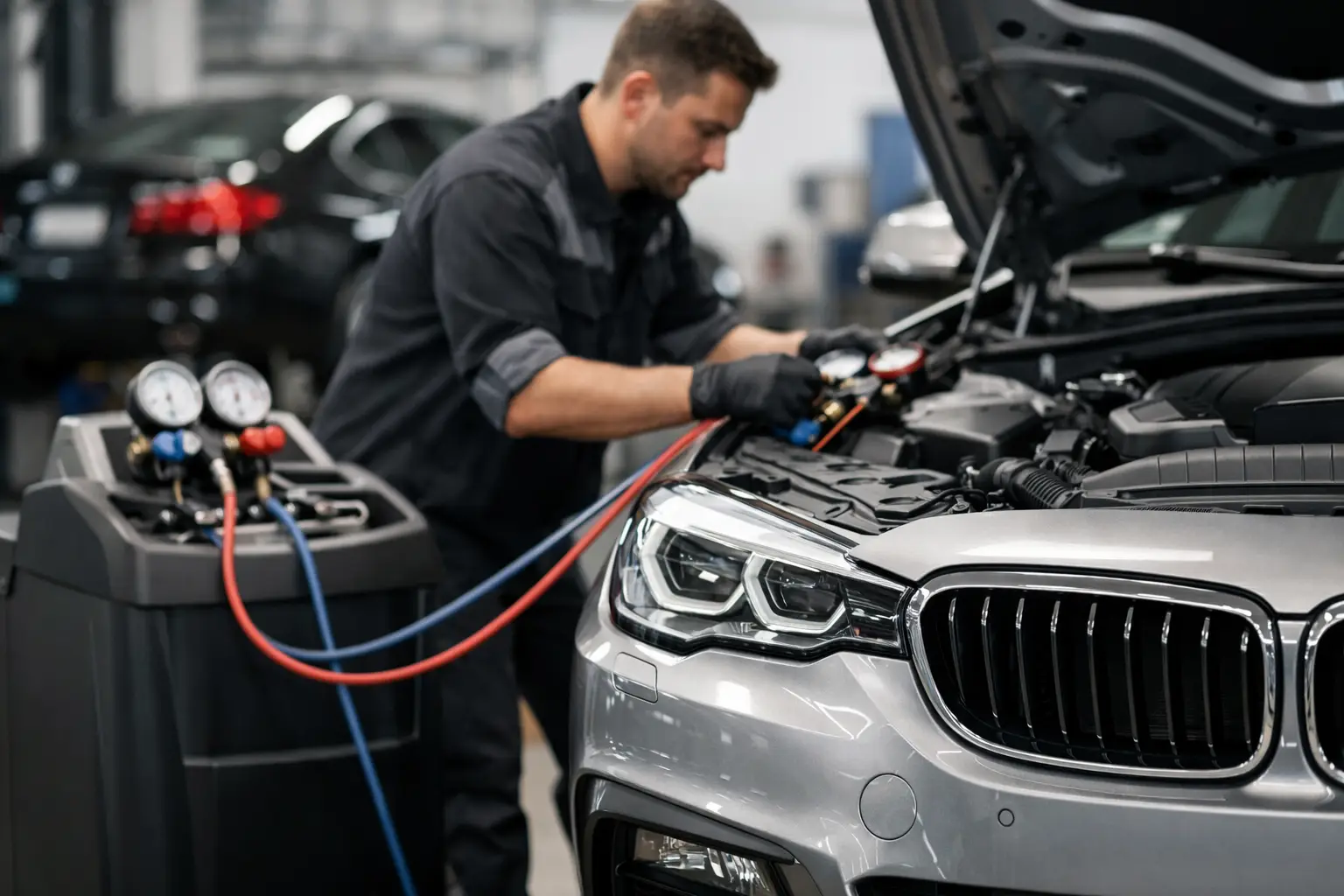
Modern vehicle AC service is not guesswork. Before recommending repairs, a qualified technician should inspect performance, test system pressures, check for visible damage, scan relevant modules for fault codes, and verify that fans and climate-control commands are operating as intended.
For European and luxury vehicles, manufacturer-grade diagnostic equipment is particularly valuable. The climate system may store faults that are not visible through a basic code reader. It may also require electronic tests to confirm a compressor command, actuator position, sensor reading, or pressure-control issue. This is why a general repair approach can miss the real problem on a sophisticated vehicle.
Leak detection should also be methodical. Depending on the system and symptoms, the technician may use ultraviolet dye, an electronic leak detector, pressure testing, or other approved procedures. A visual inspection alone is not enough for many small leaks, especially when the source is difficult to access.
If a component needs replacement, proper service includes recovering refrigerant, replacing the failed part and any required seals, evacuating moisture and air from the system, and recharging it with the correct refrigerant type and oil specification. Refrigerant quantity is precise. Too little can reduce cooling and compressor lubrication; too much can affect pressure and performance. Premium vehicles are not the place for approximate measurements.
Common AC Problems on Premium Imports
AC concerns vary by vehicle age, design, and maintenance history. Still, several issues appear often enough to be useful for owners to understand.
A leaking condenser is a frequent problem because it sits at the front of the vehicle and is exposed to road debris, salt, and changing temperatures. In the northwest suburbs, winter road conditions can be especially hard on components in this area. A damaged condenser may slowly lose refrigerant before the cabin feels noticeably warm.
Compressor problems can range from an internal mechanical failure to a control valve or electrical issue. Replacing a compressor without verifying the underlying cause is risky. If the system contains contamination or another component is creating abnormal pressures, the new part may not perform as expected. Thorough inspection protects the repair and helps prevent repeat visits.
Cooling fans play a larger role than many drivers realize. When a vehicle is moving, airflow passes through the condenser naturally. At idle or in traffic, electric fans must do the work. If the AC is colder at highway speed but warmer at stoplights, fan operation and system pressures should be checked.
Cabin temperature problems are not always refrigerant-related. Blend door actuators, interior temperature sensors, sunload sensors, and climate-control modules influence where air goes and how warm or cool it feels. A system can have the correct refrigerant charge and still deliver poor comfort because the control side is not responding properly.
What You Can Check Before Scheduling Service
There are a few useful observations you can make without taking anything apart. Start the vehicle, set the AC to its coldest setting, and note how quickly cooling begins. Then check whether the temperature changes between idle and driving speed, whether both sides of the cabin feel similar, and whether the airflow is strong from all selected vents.
Look through the grille area for obvious debris blocking the condenser, but avoid spraying harsh chemicals or forcing tools into delicate fins. Check the cabin air filter replacement interval as well. A clogged filter can restrict airflow and make a working AC system feel weak.
Avoid using store-bought recharge cans on a luxury vehicle. These products cannot diagnose a leak, and some contain sealants that may complicate future service. They can also result in an incorrect charge. If cooling is weak, documenting the symptoms and scheduling a proper inspection is the more cost-effective choice.
When AC Service Should Not Wait
Schedule service promptly if the AC suddenly stops cooling, the compressor makes grinding or loud squealing noises, the system repeatedly loses cooling, or you notice an unusual chemical smell. These signs can indicate a concern that may become more expensive if ignored.
It is also wise to book an inspection before the first sustained stretch of hot weather. AC systems often appear fine during mild spring temperatures, only to struggle once the cabin and engine bay are under real summer heat. Early testing gives you time to make an informed repair decision rather than dealing with a failure during a busy week.
For owners who value clear answers, the service experience should be straightforward: describe the symptoms, authorize diagnostic testing, review the findings, and decide on repairs with a clear explanation of priorities and costs. At Wizard Werks, that means dealership-level equipment and specialized care without the impersonal approach or unnecessary upselling.
A properly working AC system protects more than comfort. It helps clear humid windows, reduces driver fatigue, and keeps every mile in your European or luxury vehicle feeling like it should. If your cabin is taking too long to cool or the temperature is no longer consistent, address it while the repair can still be planned on your terms.