
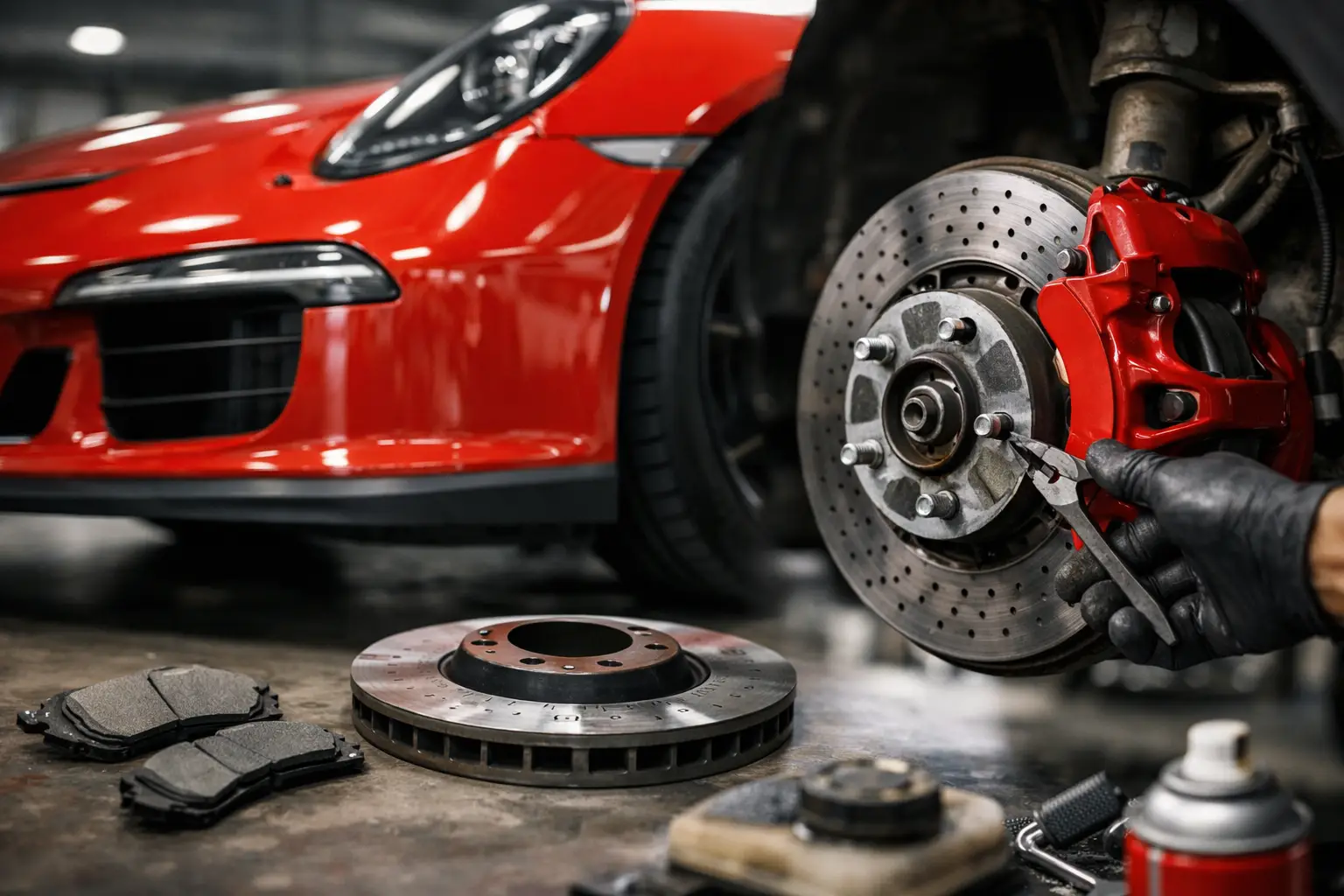
A Porsche should feel composed when you press the brake pedal. So when a sharp squeal cuts through an otherwise quiet drive, it is understandable to wonder whether something is wrong. What causes Porsche brake squeal is not always a safety issue, but it is always worth understanding – especially when the noise is new, persistent, or paired with a change in braking feel.
Porsche brake systems are engineered for confident stopping power, often using performance-oriented pad compounds and large rotors that operate differently from the brakes on an everyday commuter vehicle. That design can make certain sounds more noticeable. The key is separating normal operating noise from the warning signs of worn or improperly functioning components.
What Causes Porsche Brake Squeal?
Brake squeal happens when vibration develops between the brake pad, rotor, and caliper hardware. As the pad presses against the rotor, small vibrations can become audible at a high frequency. The cause may be as simple as cold pads on a damp morning, or it may point to wear, glazing, debris, or a component that needs attention.
A professional inspection looks beyond the sound itself. The technician checks pad thickness, rotor condition, hardware movement, caliper operation, brake fluid condition, and any electronic brake wear warnings. That matters on a Porsche because the right diagnosis protects both braking performance and the parts that make up an expensive, carefully matched system.
1. Performance Brake Pad Material
Many Porsche models use semi-metallic or performance-focused brake pads designed to work well under higher temperatures and stronger braking loads. These compounds can provide excellent pedal response and stopping performance, but they may be more prone to squealing than softer, comfort-oriented pads.
This is particularly common during the first few stops after the vehicle has been parked overnight, in cool weather, or after rain. If the sound fades as the brakes warm up and there is no vibration, pulling, warning light, or loss of braking confidence, it may be characteristic of the pad compound rather than a defect.
There is a trade-off here. Switching to a quieter pad may reduce noise and brake dust, but it can also alter pedal feel, initial bite, heat tolerance, and the driving character Porsche owners expect. The best choice depends on how the vehicle is used, not simply on whether the brakes make noise.
2. Moisture or Light Surface Rust on the Rotors
In the Northwest Chicago suburbs, moisture is a frequent reason for temporary brake noise. After rain, snow, humidity, or a wash, a thin layer of surface rust can form on iron brake rotors surprisingly quickly. The first few brake applications scrape that layer away, sometimes creating a squeal or light grinding sound.
This is usually normal when it disappears after a short drive. However, noise that continues after the rotors have had time to clean themselves may indicate more than ordinary surface oxidation. Winter road salt can accelerate corrosion around rotor edges, pad contact areas, and brake hardware, so seasonal inspections are especially valuable for vehicles driven year-round.
3. Worn Brake Pads or Pad Wear Sensors
Porsche brake pads have a finite service life, and a high-pitched squeal can be one indication that the friction material is getting low. Some pads are designed with audible wear indicators that contact the rotor and create noise when replacement is due. Many Porsche models also use electronic wear sensors that can trigger a dashboard warning.
Do not wait for a warning light if the sound has become frequent. Wear sensors are helpful, but they are not a substitute for measuring the remaining pad material and checking wear patterns. Inner and outer pads can wear differently, and a pad that is wearing unevenly may reveal a caliper or hardware concern that should be addressed before it affects the rotor.
4. Glazed Pads or Rotors
Glazing occurs when the surface of a brake pad or rotor becomes overly smooth and hardened from excessive heat. It can happen after repeated heavy braking, prolonged downhill driving, spirited use followed by holding the pedal at a stop, or a braking system that is not releasing correctly.
Glazed brakes may squeal, feel less responsive at low speed, or produce a sensation that the pedal requires more pressure than usual. Sometimes the issue can be corrected by properly servicing the friction surfaces and installing the right parts. In other cases, replacing worn components is the more reliable solution.
The important point is that brake noise following overheating deserves a closer look. A Porsche’s braking system is built to manage demanding conditions, but it still needs components that are within specification and operating as intended.
Porsche Brake Squeal Can Come From Hardware, Too
Pads and rotors get most of the attention, but brake hardware has a major role in controlling vibration. Anti-rattle clips, shims, pad backing plates, guide pins, and mounting surfaces help keep the pads positioned correctly as they move within the caliper.
If hardware is worn, corroded, missing, incorrectly installed, or not lubricated in the proper locations, the pads can vibrate and squeal. This is one reason a quick pad replacement without a complete brake service can lead to frustrating noise afterward. Quality brake work includes cleaning and inspecting the contact points, replacing hardware when appropriate, and using brake-specific lubricant only where the manufacturer calls for it.
Caliper operation also matters. A sticking caliper or restricted guide mechanism can keep a pad lightly in contact with the rotor after the pedal is released. The resulting heat can accelerate pad wear, cause glazing, and create noise. You may also notice a hot brake smell, reduced fuel economy, the vehicle pulling during braking, or one wheel producing much more brake dust than the others.
Debris Between the Pad and Rotor
A small stone, road grit, or rust fragment can become trapped near the pad and rotor. The result is often a sudden, high-pitched scrape or squeal that may change with vehicle speed and disappear when the brakes are applied.
Because debris can score a rotor if left in place, it is wise to have persistent new noises inspected rather than hoping they work themselves out. This is especially true after driving on gravel, through construction areas, or during winter conditions when debris accumulates on the road.
New Brakes That Have Not Been Bedded In Correctly
New pads and rotors require a bedding-in process to establish an even transfer layer of pad material on the rotor surface. Without it, the brakes may be noisier, feel inconsistent, or develop uneven deposits that create vibration.
The proper procedure varies by pad material and Porsche model. It generally involves a series of controlled stops, followed by a cooling period, rather than aggressive panic stops or immediately parking with very hot brakes. An experienced European vehicle specialist can advise on the correct process for the components installed on your vehicle.
When Is Porsche Brake Squeal Normal?
Brief squealing in cold, wet, or humid conditions can be normal, particularly with performance brake pads. A light sound that goes away after a few controlled stops and is not accompanied by any change in pedal feel is usually less concerning.
The situation changes when the noise is constant, grows louder, occurs with every stop, or is joined by steering wheel vibration, pedal pulsation, pulling, a brake warning message, burning odor, or reduced stopping confidence. Grinding is more urgent than squealing because it can mean the pad material is worn through and metal is contacting the rotor.
A useful rule is to pay attention to changes. If your Porsche has always made a slight cold-morning squeak, that is different from a new sound that appeared yesterday and now follows every drive. Your car is communicating through patterns, not just volume.
The Right Way to Address Brake Noise
Avoid spraying cleaners or lubricants through the wheel in an attempt to silence the brakes. Products applied in the wrong area can contaminate pad surfaces and reduce braking effectiveness. Likewise, choosing parts solely because they promise low noise can compromise the balance of performance, durability, dust control, and pedal feel.
A proper brake evaluation starts with a road-test conversation: when does the noise occur, how long does it last, and has braking feel changed? From there, the brake system should be inspected with the wheels removed so pad thickness, rotor surfaces, hardware, caliper movement, and sensors can be assessed accurately.
At Wizard Werks, that approach means explaining what is normal, what needs attention now, and what can be monitored. Porsche owners deserve more than a generic answer or unnecessary parts recommendations. They deserve a clear diagnosis and repairs performed with the correct components and procedures.
If your brakes are squealing, take note of when it happens and whether the sound changes after the brakes warm up. That small detail can help a specialist pinpoint the cause quickly and keep your Porsche stopping with the confidence it was designed to deliver.