
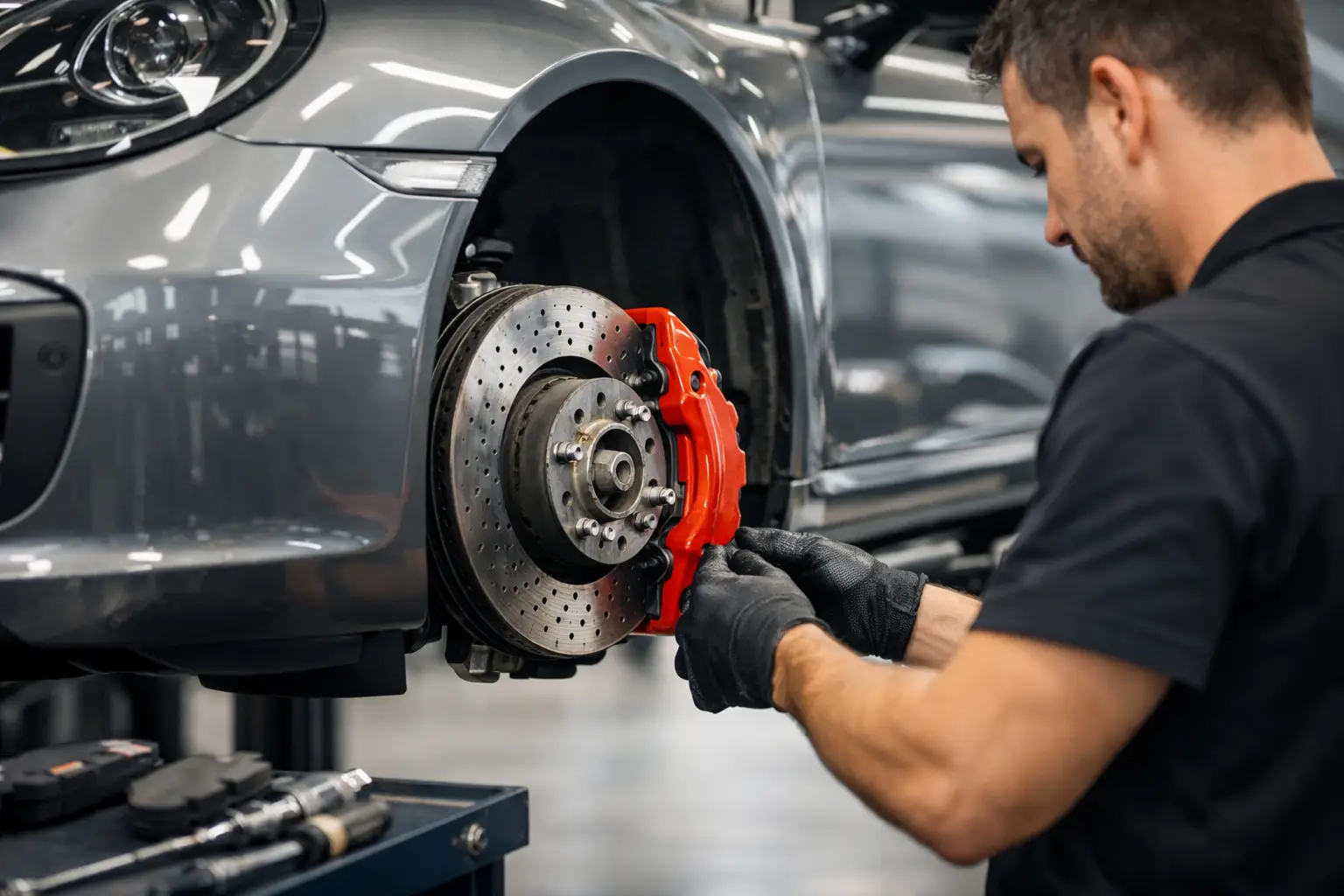
A Porsche tells you a lot through the brake pedal. The feel should be firm, predictable, and confidence-inspiring. When that changes – maybe the pedal gets soft, the car pulls under braking, or you hear a squeal that was not there before – you do not want guesswork. You want Porsche brake repair experts who understand how these systems are designed to perform and what it takes to restore them correctly.
For Porsche owners, brake service is not just about replacing worn parts. It is about protecting the driving character of the car, preserving safety at higher performance limits, and avoiding the kind of shortcuts that create bigger problems later. That is why choosing the right shop matters as much as choosing the right parts.
What sets Porsche brake repair experts apart
A Porsche braking system is engineered for more than routine stopping power. Depending on the model, trim, and package, your vehicle may have larger rotors, multi-piston calipers, electronic wear monitoring, model-specific pad compounds, or performance brake setups that need careful handling. Even within the same model line, brake service needs can vary.
That is where specialists make a difference. Porsche brake repair experts know that proper service starts with inspection and measurement, not assumptions. They check rotor condition, pad wear patterns, hardware function, sensor status, fluid condition, and the overall behavior of the system. They also know when a symptom points to a brake issue and when it may involve suspension, tire, or electronic control concerns.
A general repair approach can miss those details. On a premium performance vehicle, missed details tend to show up quickly. Uneven pad wear, vibration, noise, premature component wear, and inconsistent pedal feel usually mean something was overlooked.
Porsche brake problems are not always obvious
Some brake issues announce themselves right away. Grinding noise, severe vibration, or a warning light leaves little room for debate. Other problems are subtler. A slightly longer stopping distance, a faint pulsation at highway speed, or increased brake dust on one wheel can be early signs that service is due.
In many cases, owners assume noise alone means pads are worn out. Sometimes that is true. Sometimes the issue is glazing, rotor surface condition, hardware wear, or a pad compound that is no longer performing as intended. The right diagnosis matters because replacing parts unnecessarily does not fix the root cause.
Fluid is another area that gets overlooked. Brake fluid absorbs moisture over time, which can affect braking consistency and internal component health. On a Porsche, where heat management and pedal response matter, old fluid can change the way the car feels even before a driver notices a major problem.
Why the cheapest brake job often costs more
Brake service pricing can vary widely, and that can make one estimate look tempting. But with Porsche vehicles, a lower upfront number often means corners are being cut somewhere. It may be lower-grade parts, skipped hardware replacement, incomplete rotor evaluation, or generic procedures that do not match the vehicle.
That does not mean the dealership is your only safe option. It means the shop should be equipped to provide dealership-level care without the dealership experience many owners want to avoid. You should expect the right diagnostic tools, technicians familiar with European and luxury models, quality parts, and clear communication about what your car actually needs.
Honest shops will also explain trade-offs. In some cases, OEM parts are the best fit for how you drive and what you expect from the car. In others, an equivalent high-quality option may make sense. The key is transparency. You should know what is being installed, why it is recommended, and how it affects performance, longevity, and cost.
What good Porsche brake service should include
The best brake repair is methodical. It is not just pad replacement done as fast as possible. It starts with a full evaluation of wear items and system condition, then follows with the right repairs based on measurements and testing.
A proper service visit should usually include inspection of pads, rotors, calipers, sensors, brake lines, hardware, and fluid. If there is a vibration complaint, the shop should verify whether the cause is rotor condition, installation issues, wheel problems, or another factor entirely. If there is noise, they should distinguish between normal brake characteristics and a repairable fault.
On modern Porsche models, electronic systems matter too. Brake wear warnings, ABS concerns, and service reset procedures are part of the job. This is one reason specialist equipment is so important. A premium vehicle should not be treated like a generic platform.
Choosing Porsche brake repair experts near you
If you are comparing shops, the right questions are usually more useful than the lowest quote. Ask whether the shop regularly services Porsche vehicles. Ask what level of diagnostic capability they have for European models. Ask whether they use OEM or equivalent premium parts and whether they inspect the entire braking system rather than replacing visible wear items only.
Pay attention to how they answer. A shop that knows these cars will speak clearly and confidently without trying to overwhelm you. They should be able to explain their process in plain language and tell you what they found, what is urgent, and what can wait. That kind of communication is often the clearest sign that the repair will be handled properly.
For owners in Palatine and the northwest suburbs, that dealer-alternative model matters. You want the skill and equipment required for a Porsche, but you also want a more personal experience, fair pricing, and recommendations based on real condition rather than a sales target. That is exactly why many drivers turn to shops like Wizard Werks for European vehicle service.
When to schedule Porsche brake service
There is no one-size-fits-all mileage for brake repair because driving habits change everything. Stop-and-go commuting, spirited weekend driving, long highway use, weather exposure, and wheel and tire setup all affect brake wear. Some owners need service sooner than expected, while others may go longer between major brake work.
The smarter approach is to act on changes in feel, sound, and performance instead of waiting for a severe symptom. If your Porsche starts squealing, pulling, vibrating, or showing a warning light, it is time to have it inspected. The same goes for a brake pedal that feels different than it used to. Performance cars train their owners to notice small changes, and those small changes are worth checking.
Routine inspections also help you avoid surprise repairs. Catching worn pads before they damage rotors is always better than waiting. Identifying fluid condition before it affects braking response is better too. Preventive service usually saves money because it keeps a manageable issue from turning into a more expensive one.
The value of specialized care
Porsche ownership comes with certain expectations. You expect the car to respond properly, stop confidently, and feel composed every time you drive it. Brake service plays a major role in all three.
That is why specialized care is worth it. Porsche brake repair experts do more than install parts. They protect the precision of the car. They help maintain factory-level driving feel. And they reduce the risk of repeat repairs caused by incomplete diagnostics or improper procedures.
For many owners, trust is the real deciding factor. You want to know that when a shop recommends pads, rotors, fluid service, or related repairs, those recommendations are based on inspection and experience. You want straight answers, workmanship that holds up, and a team that respects the value of the vehicle you drive.
When your brakes feel right, every drive feels right. If something feels off, do not wait for it to get worse. The right specialist will help you make sense of the problem, fix it correctly, and get your Porsche back to feeling like a Porsche should.