
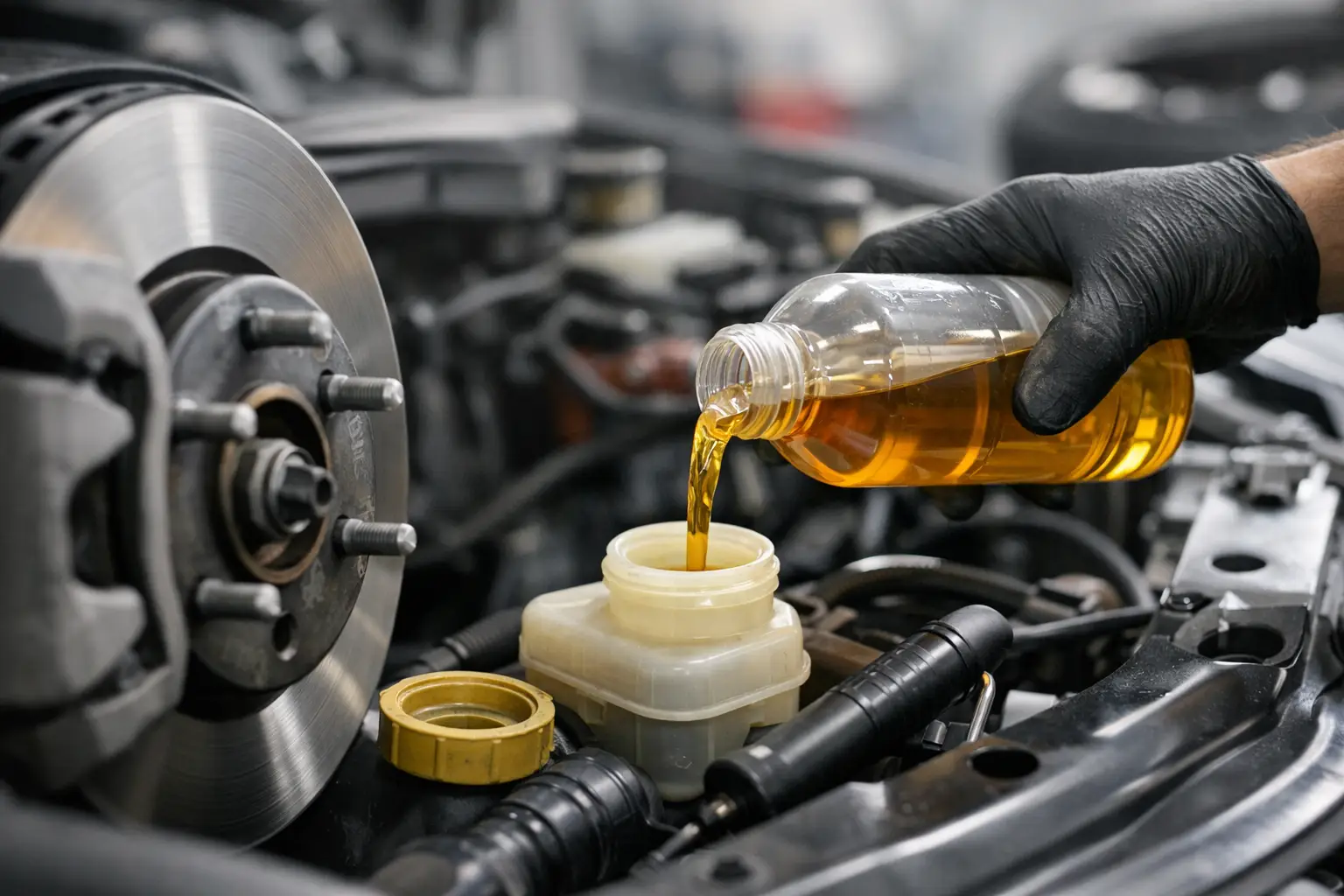
You usually do not think about brake fluid until the brake pedal feels a little softer, stopping distances seem a little longer, or a warning light gets your attention. That is why drivers often ask, when should brake fluid change? For most European and luxury vehicles, the honest answer is every 2 years is a strong baseline, but the right timing can vary based on the manufacturer, driving conditions, and what testing shows.
Brake fluid is easy to overlook because it does its job quietly. Unlike brake pads or rotors, you do not see it wearing down. But it is one of the most important fluids in your vehicle because your braking system depends on it to transfer force from the pedal to the brakes at each wheel. If the fluid is contaminated or degraded, braking performance can suffer long before there is an obvious failure.
When should brake fluid change on most vehicles?
For many BMW, Mercedes-Benz, Audi, Volkswagen, Porsche, Volvo, Land Rover, Jaguar, and other premium imports, brake fluid service is commonly recommended every 2 years. Some models have a time-based service interval regardless of mileage. That surprises drivers who assume low miles mean the fluid is still fine.
Brake fluid does not wear out only from use. It also absorbs moisture over time. Even if you drive your vehicle sparingly, that moisture can lower the fluid’s boiling point and reduce its ability to perform under heat. That matters even more in heavier vehicles, high-performance models, and stop-and-go suburban driving where brakes work hard.
The best place to start is always the factory maintenance schedule for your exact year, make, and model. European manufacturers can be very specific, and those specifications matter. Using the right fluid type and servicing it at the correct interval helps protect the feel, safety, and responsiveness you expect from a premium vehicle.
Why brake fluid cannot just be topped off and ignored
Brake fluid is hygroscopic, which means it naturally absorbs moisture from the air. That is not a defect. It is simply how most modern brake fluids are designed. The problem is that as water content rises, the fluid becomes less effective under high temperatures.
When brake temperatures climb, contaminated fluid can begin to boil sooner than it should. That can create vapor in the brake lines, and vapor compresses much more easily than liquid. The result can be a spongy brake pedal or inconsistent braking response. In a performance-oriented car, that is bad enough. In daily traffic, it can become a real safety issue.
There is also a long-term wear issue. Moisture in the brake fluid can contribute to internal corrosion in expensive brake components such as calipers, ABS modules, and hydraulic control units. On European vehicles with advanced braking and stability systems, those parts are not something you want to replace early because routine fluid service was skipped.
Topping off the reservoir does not solve contamination inside the system. If the fluid has absorbed moisture or is breaking down, a proper brake fluid flush is the fix, not simply adding more fluid at the top.
Signs your brake fluid may need attention sooner
Time and mileage are the starting point, but they are not the whole story. Some vehicles need brake fluid service earlier than the schedule suggests, especially if they see harder use or if previous maintenance was delayed.
A soft or spongy brake pedal is one of the most common signs. So is a pedal that feels less consistent than usual. You might also notice reduced braking confidence during repeated stops, such as in heavy traffic or on long downhill drives.
In some cases, the brake fluid itself looks dark or dirty in the reservoir. That does not always tell the full story, but it can be a clue. Certain warning lights, ABS concerns, or brake system service reminders can also point to fluid condition issues. And if you have recently had brake work done and the fluid was not replaced as part of the service, it is worth asking whether the fluid is still due based on age.
That said, there is a trade-off here. Brake feel problems are not always caused by fluid alone. Worn pads, old rubber brake hoses, sticking calipers, or issues in the hydraulic system can create similar symptoms. That is why proper inspection matters. Guessing often leads to spending money in the wrong place.
Why European and luxury vehicles deserve extra attention
European and luxury vehicles are engineered with very specific braking characteristics. The pedal feel in a BMW, the braking refinement in a Mercedes-Benz, or the performance capability of a Porsche depends on more than just pads and rotors. Fluid condition plays a real part in how the entire system behaves.
Many premium vehicles also have tighter service standards and more sensitive electronic brake controls than older or more basic cars. Anti-lock braking, traction control, stability systems, and electronic brake assist all rely on hydraulic performance being correct. If the fluid is degraded, the system may still work, but not as cleanly or confidently as designed.
This is one reason dealer-level procedures matter, even outside the dealership. A proper brake fluid service on a European vehicle may require the correct bleeding sequence, manufacturer-approved fluid, and diagnostic tools to cycle certain components when needed. Generalized service can miss those details.
For owners who plan to keep their vehicle long term, timely brake fluid maintenance is a small service that can help avoid much larger hydraulic repairs later. It is one of those jobs that does not feel dramatic in the moment, but it pays off in reliability and confidence.
How brake fluid is tested and replaced
A quality shop will not treat every vehicle exactly the same. In some cases, the maintenance schedule alone is enough to justify service. In others, fluid testing helps confirm condition. Shops may check moisture content or boiling point to see whether the fluid is still within an acceptable range.
If service is due, the process should involve flushing the old fluid through the system and replacing it with fresh fluid that meets the manufacturer’s specification. The goal is to remove as much old, moisture-laden fluid as possible from the lines, calipers, and hydraulic circuits. This is not just a reservoir exchange.
The details matter here. Different vehicles may require DOT 4 or another approved fluid formulation. Some high-performance systems are especially sensitive to fluid quality. Using the wrong type can create problems with seals, performance, or service intervals.
This is also a good time to inspect the overall brake system. If pads are low, a caliper is sticking, or there is uneven brake wear, those issues can be addressed before they turn into more expensive repairs. Honest service means looking at the full picture, not using a fluid change as a reason to push work you do not need.
So, when should brake fluid change for your car?
If you want the most practical answer, start with every 2 years unless your owner’s manual specifies otherwise. If you drive a European or luxury vehicle, that interval is often exactly what the manufacturer expects. If you drive spiritedly, sit in traffic often, tow, or have gone beyond the recommended time, it makes sense to have the fluid checked sooner rather than later.
If you just bought a pre-owned vehicle and do not have complete maintenance records, brake fluid service is often a smart reset point. The same goes for vehicles that have been sitting for long periods. Low mileage sounds reassuring, but with brake fluid, age still counts.
At Wizard Werks, this kind of maintenance is treated the way it should be – as part of protecting the performance, safety, and long-term value of a premium vehicle, not as an upsell. The right answer is based on your car, your service history, and what inspection shows.
A fresh set of brake fluid will not get much attention in your driveway, but you will notice it where it matters most – when traffic stops fast, the road turns slick, or your vehicle needs to respond exactly the way it was engineered to.