
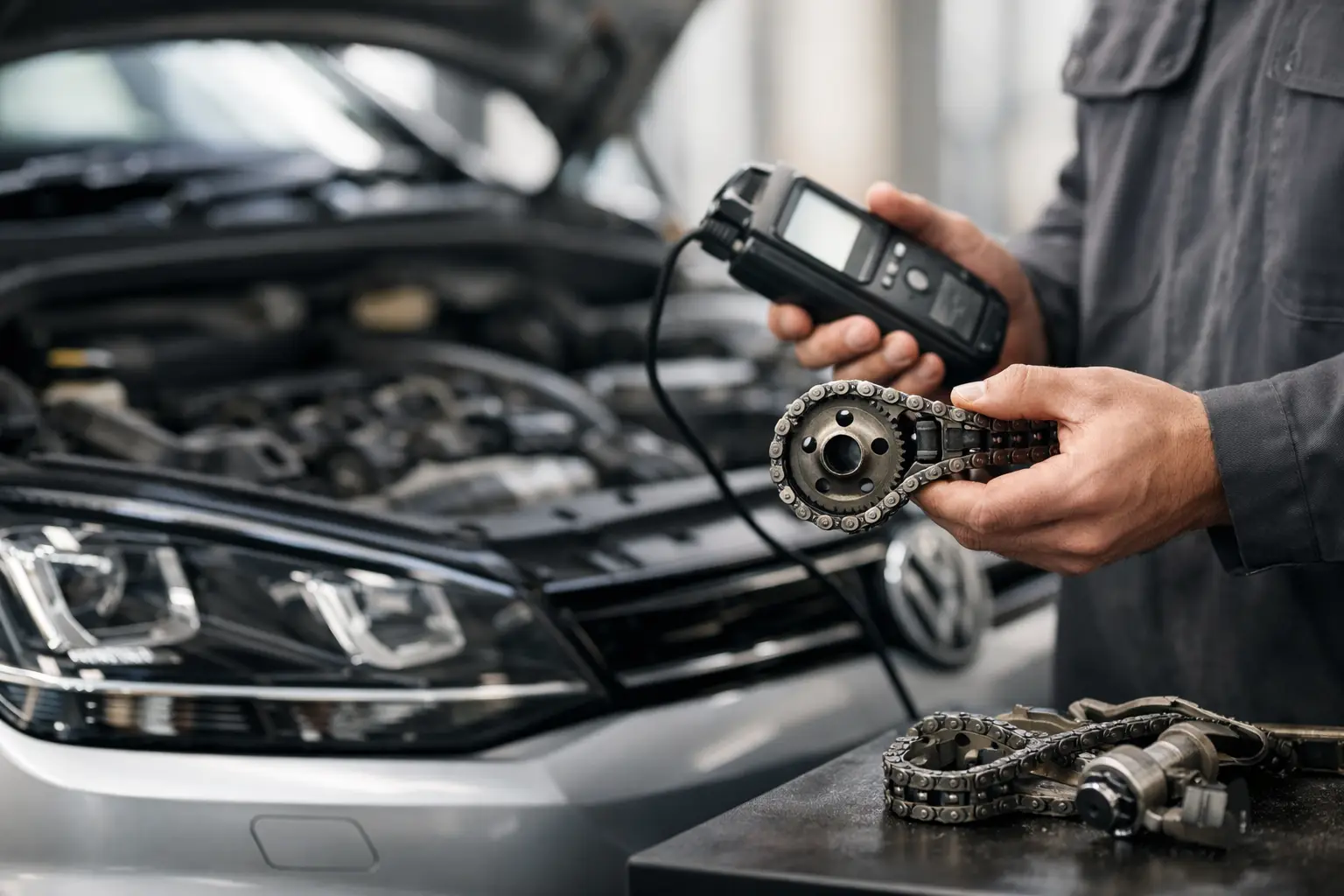
If your Volkswagen starts rattling for a second on cold start, feels slightly off at idle, or turns on the check engine light without an obvious reason, do not brush it off. Volkswagen timing chain symptoms often start small, and that is exactly why they get missed until the problem becomes far more expensive than it needed to be.
On many VW engines, the timing chain is designed to keep the camshaft and crankshaft in sync. When that system begins to wear, stretch, or lose proper tension, engine timing can drift. Sometimes the warning signs are obvious. Sometimes they are subtle enough that drivers assume it is just normal aging. The difference between a manageable repair and major engine trouble often comes down to how early the issue is diagnosed.
Why Volkswagen timing chain symptoms matter
A timing chain problem is not the same as a routine maintenance item like filters or brake pads. This is a critical engine component, and when timing is off, performance, drivability, fuel economy, and engine safety can all be affected.
That does not mean every rattle or check engine light points straight to the timing chain. Volkswagen engines can develop symptoms that overlap with ignition, fuel, or variable valve timing faults. That is why proper diagnostics matter. Guessing can get expensive fast, especially on European vehicles where one symptom can have several possible causes.
The good news is that many timing chain issues give some warning before a serious failure occurs. If you know what to look for, you have a much better chance of catching the problem early.
Common Volkswagen timing chain symptoms
The most talked-about symptom is a rattling noise during startup, especially when the engine is cold. Drivers often describe it as a brief metallic clatter that lasts a second or two. That sound can point to a timing chain tensioner that is no longer holding the chain tightly enough when the engine first starts. One short rattle does not confirm the diagnosis on its own, but repeated startup noise should never be ignored.
A check engine light is another common clue. When chain stretch or timing deviation becomes enough for the engine computer to notice, it may trigger fault codes related to camshaft timing, crankshaft correlation, or variable valve timing performance. The car may still run, but that does not mean it is safe to postpone testing.
You may also notice rough idle or inconsistent running. If valve timing is slightly off, the engine may shake more than usual at a stop, hesitate on acceleration, or feel less smooth overall. Some owners describe it as the vehicle feeling tired or less responsive than it used to.
Hard starting can show up as well. A Volkswagen with timing chain wear may crank longer than normal before firing, especially after sitting overnight. In more advanced cases, the engine may struggle to start at all.
Loss of power is another possible symptom. Since engine timing directly affects combustion efficiency, a chain issue can make the vehicle feel sluggish, particularly under load. Passing power may drop off, and fuel economy may suffer at the same time.
In the worst cases, the engine may misfire, stall, or run very poorly. By that point, the problem has usually moved past the early-warning stage.
Which Volkswagen models are more likely to have timing chain issues?
Not every Volkswagen has the same timing chain history. Certain VW engines, especially some older turbocharged four-cylinder applications, have been more prone to chain stretch and tensioner-related problems than others. Model, engine code, production year, and maintenance history all matter.
That is why internet advice can be misleading. Two Volkswagens may look nearly identical from the outside and have very different failure patterns under the hood. A professional inspection that considers the specific engine is far more useful than assuming every online symptom list applies equally to your car.
If you drive a Jetta, Passat, Tiguan, GTI, CC, Beetle, or EOS from an affected generation, it makes sense to pay closer attention to startup noise, drivability changes, and timing-related fault codes. That is not a reason to panic. It is simply a reason to be proactive.
What causes timing chain symptoms in a Volkswagen?
Timing chains are durable, but they are not immune to wear. Over time, the chain can stretch, guides can wear down, and the tensioner can lose its ability to maintain proper chain tension. Oil quality also matters more than many drivers realize. Since the timing system depends on clean, correctly specified oil for lubrication and hydraulic operation, skipped oil changes or the wrong oil can accelerate wear.
Driving habits and mileage both play a role. A high-mileage Volkswagen that has seen inconsistent service is naturally at greater risk. But lower-mileage vehicles are not automatically exempt, especially if a known tensioner design issue exists for that engine family.
There is also a big difference between normal engine noise and a true timing chain problem. Direct-injection Volkswagen engines can make mechanical sounds that worry owners who are not familiar with them. That is where experience matters. You want a technician who knows how these engines are supposed to sound, not someone replacing parts based on a guess.
How technicians confirm the problem
The right approach starts with a conversation. What noise are you hearing? Is it only on cold starts? Has the check engine light come on? Has performance changed gradually or suddenly? Those details help narrow the issue before any parts are discussed.
From there, technicians typically scan for fault codes, review live engine data, and evaluate camshaft timing correlation. Depending on the engine, they may inspect timing values through factory-level diagnostic equipment and listen for mechanical noise patterns that point toward chain slack or tensioner wear.
Sometimes the symptoms lead clearly to the timing system. Sometimes they reveal something else entirely, such as ignition coil issues, carbon buildup, or a separate valve timing fault. Honest diagnostics matter here because replacing timing components when the real issue is elsewhere does not help the customer.
That is one reason many Volkswagen owners prefer a qualified European specialist over a general repair shop. Brand familiarity makes a real difference when symptoms overlap.
Should you keep driving with Volkswagen timing chain symptoms?
It depends on the symptom and how severe it is, but this is not an area where waiting is usually wise. If the issue is limited to a brief startup rattle and the vehicle otherwise runs normally, you may still have time to schedule an inspection before damage occurs. Even then, the safest move is to have it checked soon.
If the check engine light is on, the vehicle runs rough, struggles to start, or has obvious loss of power, continued driving carries more risk. A timing chain that jumps out of position can lead to serious internal engine damage. That is why early evaluation matters. The goal is to fix the problem before it turns into something far more disruptive and costly.
For drivers in Palatine and the northwest suburbs, this is exactly the kind of issue that benefits from specialist diagnostics rather than trial-and-error repairs.
What to expect if repair is needed
Timing chain service is not a casual repair, and the exact scope depends on what testing finds. In many cases, the recommended repair may involve replacing the worn timing chain along with related components such as guides and tensioners. The goal is to correct the underlying wear, not just quiet the symptom for a short time.
Cost can vary based on the Volkswagen model, engine design, and how far the problem has progressed. Catching it early usually gives you more options and lowers the chance of added damage. Waiting until the engine runs poorly or will not start can raise both repair complexity and downtime.
A trustworthy shop should explain what was found, why the repair is being recommended, and whether the issue appears urgent. Clear communication matters just as much as technical skill, especially when you are making decisions about a premium vehicle.
When to schedule an inspection
If your Volkswagen has a startup rattle more than once, a new check engine light, rough idle, hard starting, or unexplained performance changes, it is time to get it looked at. The best-case scenario is that the issue turns out to be something less serious. The worst approach is assuming it will go away on its own.
At Wizard Werks, we see a lot of European vehicles that arrive with early symptoms owners were unsure about. The drivers who fare best are usually the ones who come in before the warning signs turn into a breakdown.
If something about the way your Volkswagen starts, sounds, or drives has changed, trust that instinct. A timely diagnosis can protect the engine, preserve performance, and save you from a much bigger repair conversation later.