
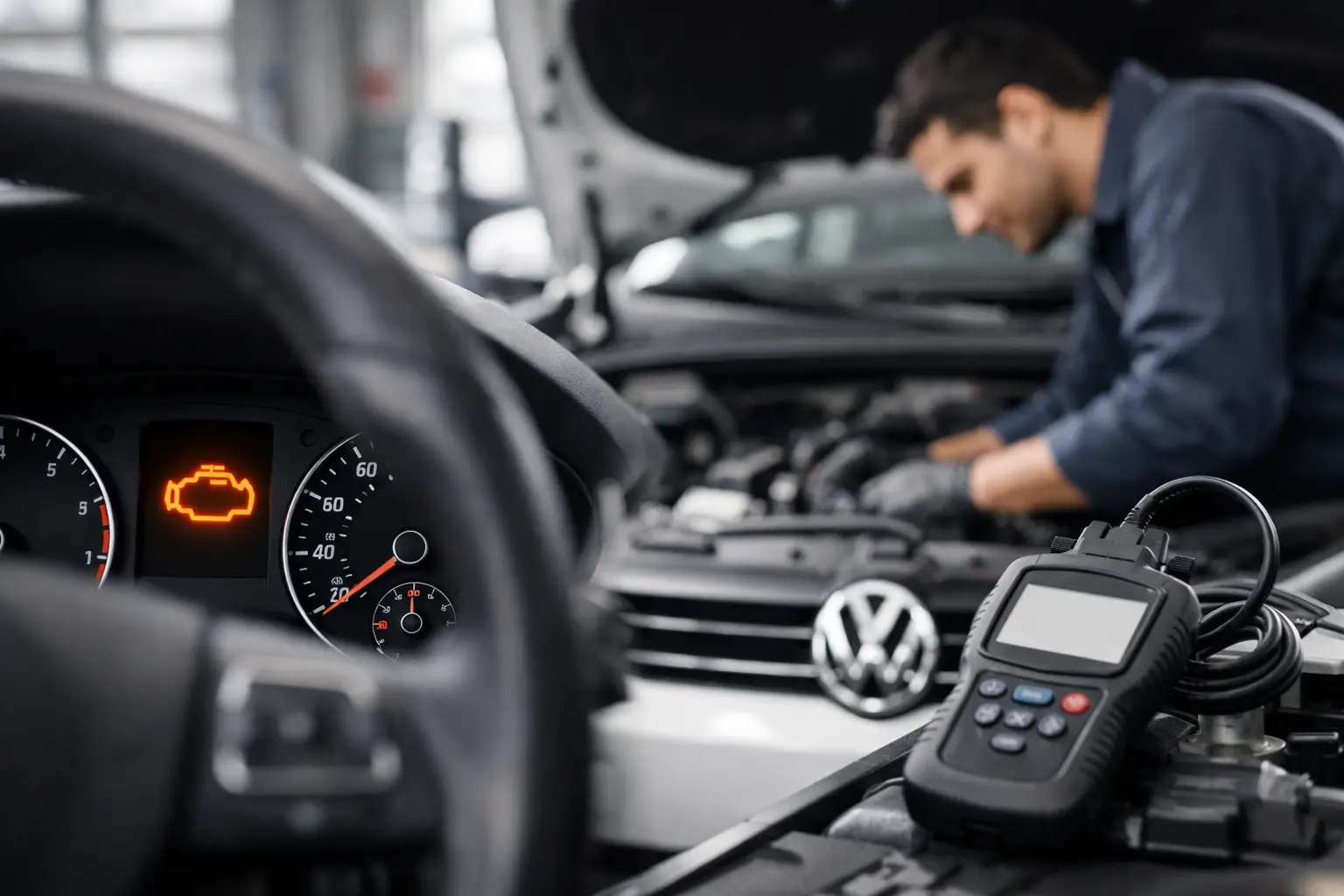
That yellow warning on your dash rarely shows up at a convenient time. If you need Volkswagen check engine light repair, the smartest first step is not guessing – it is getting the car properly scanned and tested before a small issue turns into a bigger, more expensive one.
On Volkswagen models, the check engine light can point to something minor, like a loose gas cap, or something more involved, like an ignition fault, sensor failure, air-fuel imbalance, or emissions problem. The challenge is that the light itself does not tell you which one it is. Two vehicles can show the same warning while having completely different underlying issues.
That is why Volkswagen owners are usually better served by brand-specific diagnostics rather than a quick code read and a generic recommendation. European vehicles rely on tightly integrated systems, and Volkswagen is no exception. The fault code is only the starting point. The real answer comes from testing, live data, and knowing how these systems behave in actual driving conditions.
What the check engine light means on a Volkswagen
Your Volkswagen’s check engine light is part of the onboard diagnostics system. It monitors engine performance, fuel delivery, ignition timing, emissions controls, and related electrical components. When the system detects a fault outside the expected range, it stores a code and turns the light on.
If the light is steady, the vehicle may still be drivable, but that does not mean the problem is harmless. A steady light often points to an issue that can worsen over time, including misfires, intake leaks, failing sensors, or evaporative emissions faults. If the light is flashing, that is more urgent. A flashing check engine light usually signals an active misfire severe enough to risk damage to the catalytic converter.
The difference matters. A steady light means schedule service soon. A flashing light means reduce driving and have the vehicle inspected as quickly as possible.
Common reasons for Volkswagen check engine light repair
Volkswagen vehicles can trigger a check engine light for many reasons, but certain patterns show up more often than others. Ignition coil and spark plug issues are common, especially when the engine starts running rough, hesitates under load, or idles unevenly. In those cases, the repair may be relatively straightforward, but only after confirming which cylinder or component is actually at fault.
Oxygen sensor and mass air flow sensor problems are also frequent causes. These parts help your Volkswagen adjust fuel mixture and emissions performance. When they begin to fail, you may notice reduced fuel economy, sluggish acceleration, or a rough idle. Sometimes the car still feels mostly normal, which is why owners put it off longer than they should.
Vacuum leaks and PCV system faults can trigger warning lights too. On turbocharged Volkswagen engines, air leaks can affect performance in ways that are subtle at first and much more noticeable later. Fuel system issues, including injector problems or high-pressure fuel delivery concerns, can also bring the light on. Depending on the model and engine, carbon buildup may play a role as well.
Then there are EVAP faults, which involve the system that manages fuel vapors. These can be caused by something as simple as a loose or defective gas cap, but they can also involve valves, lines, or leaks that need proper testing to isolate. That is exactly why replacing parts based on guesswork often wastes time and money.
Why a code scan is not the same as a diagnosis
This is where many drivers get steered in the wrong direction. A basic code scan may tell you the system where the fault was detected, but it does not confirm the failed part. For example, a lean condition code does not automatically mean the oxygen sensor is bad. The actual cause could be unmetered air, fuel delivery problems, a sensor reading issue, or another related fault.
Proper Volkswagen check engine light repair should include more than reading stored codes. It should involve reviewing freeze-frame data, checking manufacturer-specific fault information, evaluating live sensor readings, and testing the affected system. That process takes more effort, but it is how you avoid paying for parts you did not need.
Volkswagen systems are especially sensitive to software logic, adaptation values, and electrical communication between modules. A technician familiar with European vehicles can usually narrow the issue down faster and more accurately than a shop relying only on universal scan data.
Symptoms that often show up with the warning light
Sometimes the check engine light appears before you feel any change in the way the vehicle drives. Other times, the symptoms are hard to miss. You may notice rough starting, shaking at idle, reduced power, poor fuel economy, stalling, or delayed throttle response. In some cases, the transmission may even feel different because the engine is no longer performing as expected.
Not every symptom points to a major repair, and not every major issue starts with obvious symptoms. That is one reason owners of newer Volkswagens should avoid the wait-and-see approach. A problem that starts as a sensor or ignition issue can eventually affect drivability, emissions components, or long-term engine performance if left unresolved.
If the light comes on after refueling, that can suggest an EVAP-related issue. If it happens along with shaking or flashing, misfire is high on the list. If it appears with reduced turbo response or hesitation, air intake, boost, or fuel delivery faults may need to be checked. The exact answer depends on the model, engine, and the data the vehicle is reporting.
What to expect during Volkswagen check engine light repair
A good repair visit should feel clear and organized, not mysterious. The vehicle should be scanned with the proper equipment, fault codes reviewed, and the related systems tested based on what those codes and symptoms suggest. After that, you should get a straightforward explanation of what failed, what needs attention now, and what can reasonably wait if there are multiple findings.
That transparency matters. Some check engine light repairs are simple and affordable. Others require additional labor to access components or complete a proper repair. The right shop will explain the difference without trying to sell you work that is unrelated to the warning light.
In many cases, once the failed component or system issue is confirmed, the repair itself is only part of the process. The vehicle may also need fault memory cleared, readiness monitors reset, or system adaptations checked to make sure everything is functioning correctly afterward. On modern Volkswagens, that finishing step is part of doing the job right.
Why Volkswagen owners choose a specialist over the dealership
Volkswagen drivers often want the same diagnostic accuracy they would expect at the dealership, just with better communication and a more personal experience. That is a reasonable expectation. A specialized independent European shop can often provide the same level of technical attention while being more transparent about the problem, the repair options, and the cost.
That matters when the warning light could represent anything from a minor emissions fault to a drivability issue that needs prompt attention. You want a shop that understands Volkswagen systems, uses the right diagnostic tools, and does not default to trial-and-error repairs. You also want honest guidance. Sometimes the fix is simple. Sometimes it takes a little more testing to get to the right answer. Either way, you should know what is happening with your car.
For Volkswagen owners in Palatine and the northwest suburbs, that dealer alternative approach is exactly what makes specialized service valuable. Shops like Wizard Werks focus on European vehicles every day, which means the process tends to be more efficient, more accurate, and easier to trust.
When not to keep driving
If your check engine light is flashing, the engine is running very rough, or you notice severe power loss, do not treat it like a routine warning. Continued driving can make the original problem more expensive. A persistent misfire, for example, can overheat and damage emissions components in a short amount of time.
Even with a steady light, use judgment. If the vehicle is stalling, struggling to accelerate, or behaving unpredictably in traffic, it is better to have it inspected before putting more miles on it. The goal is not to create alarm. It is to prevent a manageable repair from becoming a more disruptive one.
A check engine light does not automatically mean the worst, but it does mean your Volkswagen is asking for attention. The fastest way to protect performance, reliability, and your budget is to get a real diagnosis from a shop that knows what it is looking at.