
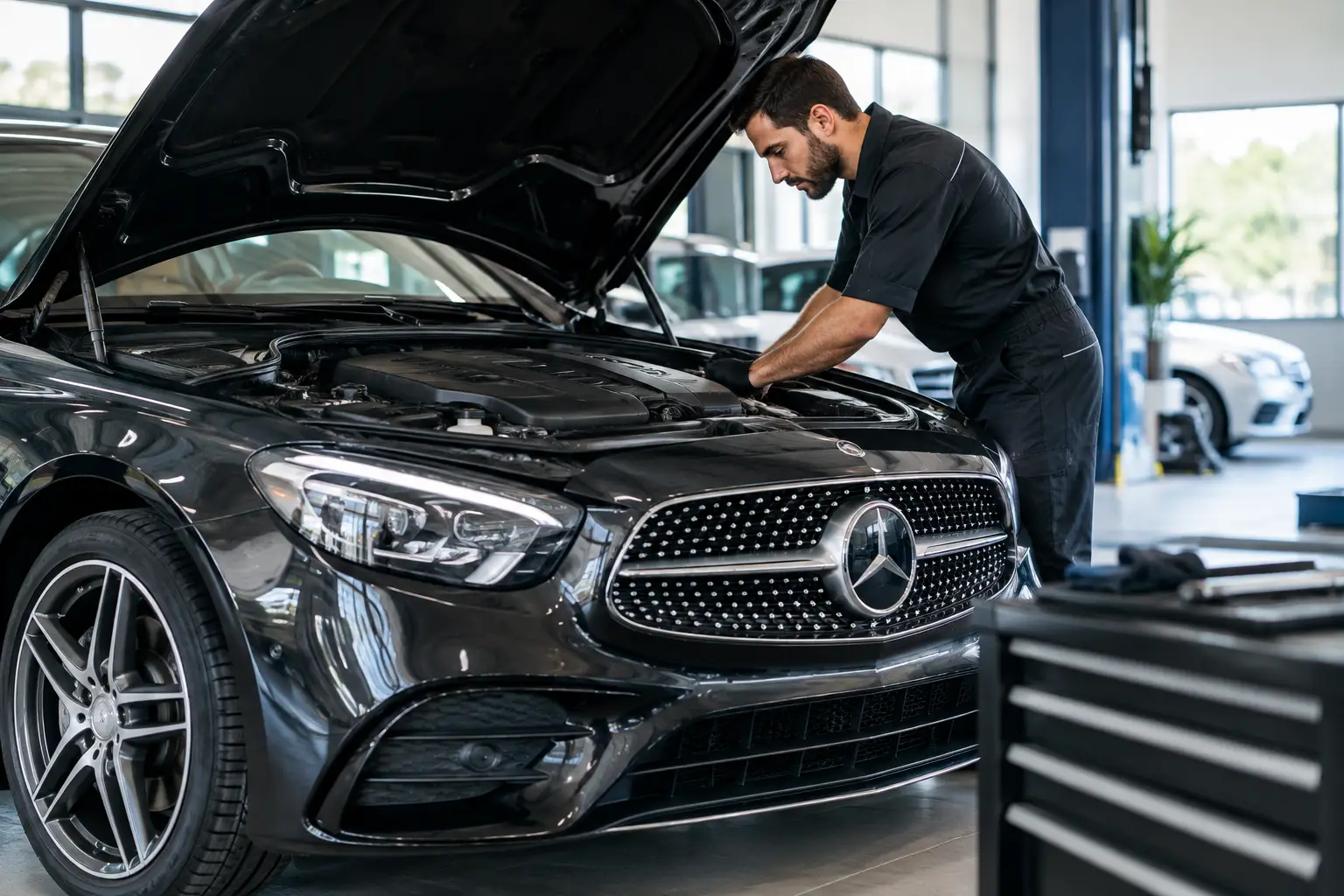
A luxury vehicle rarely gives up its refinement all at once. More often, it starts with a slightly delayed shift, a warning light that disappears, an A/C system that is not quite as cold, or a suspension that feels less composed on familiar roads. The best luxury car maintenance tips are not about over-servicing your vehicle. They are about recognizing that BMW, Mercedes-Benz, Audi, Porsche, Land Rover, and other premium vehicles need the right attention at the right interval.
For owners in Palatine and the northwest suburbs, proactive service is usually less disruptive and less expensive than waiting for a small concern to become a drivability problem. Here is how to protect the performance, comfort, and long-term value you expect from your vehicle.
1. Follow the Maintenance Schedule, but Use It Wisely
Your owner’s manual and vehicle service system provide a starting point, not always the final word. Factory intervals are developed for a broad range of driving conditions. Stop-and-go commuting, short trips in winter, extreme temperature swings, and frequent idling can all be harder on fluids, batteries, and filters than steady highway driving.
This does not mean every service should be performed early without a reason. It means your maintenance plan should reflect how you actually use the vehicle. A specialist can review mileage, time since prior service, dashboard data, and inspection findings to recommend what is due now and what can reasonably wait. That is the difference between responsible preventive care and unnecessary upselling.
2. Do Not Stretch Oil and Filter Service
Modern luxury engines often use turbochargers, variable valve timing, direct injection, and tightly engineered lubrication systems. Clean oil of the correct specification helps protect all of them. Using the wrong oil grade or a low-quality filter may save a little at the counter while creating problems that are far more costly later.
Time matters as much as mileage. Even a lightly driven vehicle can collect moisture and contaminants in its oil, especially if it makes frequent short trips. Ask for the manufacturer-approved oil specification and a quality filter appropriate for your exact engine. Keep the service record, too. Consistent documentation supports resale value and gives your technician a clearer picture of the vehicle’s history.
3. Treat Warning Lights and New Messages as Early Information
Luxury vehicles monitor hundreds of systems. A check engine light, drivetrain message, low coolant alert, or charging-system warning can be caused by something straightforward, but it should never be treated as a suggestion to wait indefinitely.
A warning that comes and goes is still worth diagnosing. Intermittent faults often leave stored codes and operating data that help identify the issue before it becomes constant. Clearing a light without identifying the cause can erase useful evidence and delay the correct repair.
The same applies to messages such as “service due” or “brake pad wear.” Some are based on sensors, while others are calculated from vehicle use. A brand-specific diagnostic scan and a physical inspection provide a much more reliable answer than guessing from the dashboard alone.
4. Use a Shop with Brand-Specific Diagnostic Capability
Not every scan tool can communicate fully with every European or luxury vehicle. Proper diagnosis may require manufacturer-grade equipment, technical information, software access, and technicians who understand the common patterns of a particular model.
This is especially relevant for electrical concerns, driveability issues, adaptive systems, electronic parking brakes, and maintenance resets. After certain services, a vehicle may need a reset, calibration, registration, or programming procedure to operate as intended. A general repair approach can miss those steps.
At Wizard Werks, the goal is to identify the actual cause of a concern, explain the findings clearly, and recommend the appropriate repair or maintenance service. That process helps owners avoid the frustration of replacing parts based on guesswork.
5. Keep an Eye on Tires, Alignment, and Suspension Feel
A premium vehicle’s ride quality is the product of many parts working together. Tires, wheel balance, alignment angles, shocks or struts, bushings, and steering components all affect how confidently the vehicle tracks down the road.
Check tire pressure monthly when tires are cold, using the pressure listed on the vehicle’s door placard rather than the maximum pressure printed on the tire sidewall. Uneven wear, steering pull, vibration at speed, or a steering wheel that no longer sits straight are good reasons to schedule an inspection.
Do not wait until a tire is worn out to consider alignment. Misalignment can shorten tire life significantly, and luxury-vehicle tires are rarely inexpensive. With performance-oriented models, even subtle suspension wear can change handling long before it feels unsafe. A trained inspection can separate a simple balance issue from a wheel, tire, steering, or suspension concern.
6. Service Brakes Before They Become a Noise Problem
Brake pads and rotors wear at different rates depending on driving habits, vehicle weight, traffic conditions, and the brake system design. Waiting for grinding is never a cost-saving strategy. By that point, worn pad material may have damaged other brake components.
Pay attention to squealing, pulsation through the brake pedal, a soft pedal, a vehicle that pulls under braking, or a brake warning message. These symptoms do not all point to the same repair, which is why an inspection matters. Quality replacement parts and correct installation are essential to quiet operation, confident stopping, and proper brake-system performance.
Brake fluid also deserves attention. It absorbs moisture over time, and that moisture can lower boiling performance and contribute to internal corrosion. The recommended interval varies by brand and model, so rely on the manufacturer schedule and the condition of the fluid rather than a one-size-fits-all timeline.
7. Protect the Cooling and Climate-Control Systems
A cooling-system issue can become serious quickly, particularly in turbocharged or high-performance engines. Watch for low coolant alerts, sweet odors, visible leaks, overheating, or a heater that suddenly performs poorly. Never ignore a rising temperature gauge, and do not remove a coolant cap when the engine is hot.
Your vehicle’s A/C system is more than a comfort feature. It also supports windshield defogging and cabin air quality. Weak cooling, unusual odors, poor airflow, or inconsistent temperatures are worth checking before the first hot week of summer. Replacing cabin filters on schedule can improve airflow and reduce strain on the system.
8. Give the Battery and Electrical System Attention
Many luxury vehicles have substantial electrical demands even when parked. Keyless access, security systems, telematics, control modules, and comfort features can place a steady load on the battery. A battery that seems fine one day may create multiple unrelated warning messages the next.
Have the battery and charging system tested if cranking is slow, electronics reset unexpectedly, start-stop functions become unavailable, or the vehicle is driven infrequently. Some vehicles also require battery registration after replacement so the charging system can manage the new battery correctly. This is another small procedure that can matter greatly over time.
9. Record Changes, Even When They Seem Minor
The most useful information a technician receives is often a driver’s observation. Note when a noise occurs, whether it happens cold or warm, the road speed, the weather, and whether a warning appeared. A short video can be helpful for intermittent sounds that are difficult to reproduce at the shop.
Maintain a simple folder of service invoices, tire purchases, inspections, and recommendations. This gives you a reliable maintenance history and makes it easier to plan upcoming work. If an inspection identifies an item that is safe to monitor, ask what symptoms should move it from “watch” to “schedule.” Honest advice should help you prioritize, not pressure you.
The Best Luxury Car Maintenance Tips Start with Consistency
The right maintenance plan is not the most aggressive one. It is the one built around your vehicle, your mileage, your driving conditions, and accurate inspections performed by people who know the brand. Address small changes early, use correct parts and fluids, and keep a clear record of the work completed. Your luxury vehicle will reward that consistency with the performance and confidence that made you choose it in the first place.