
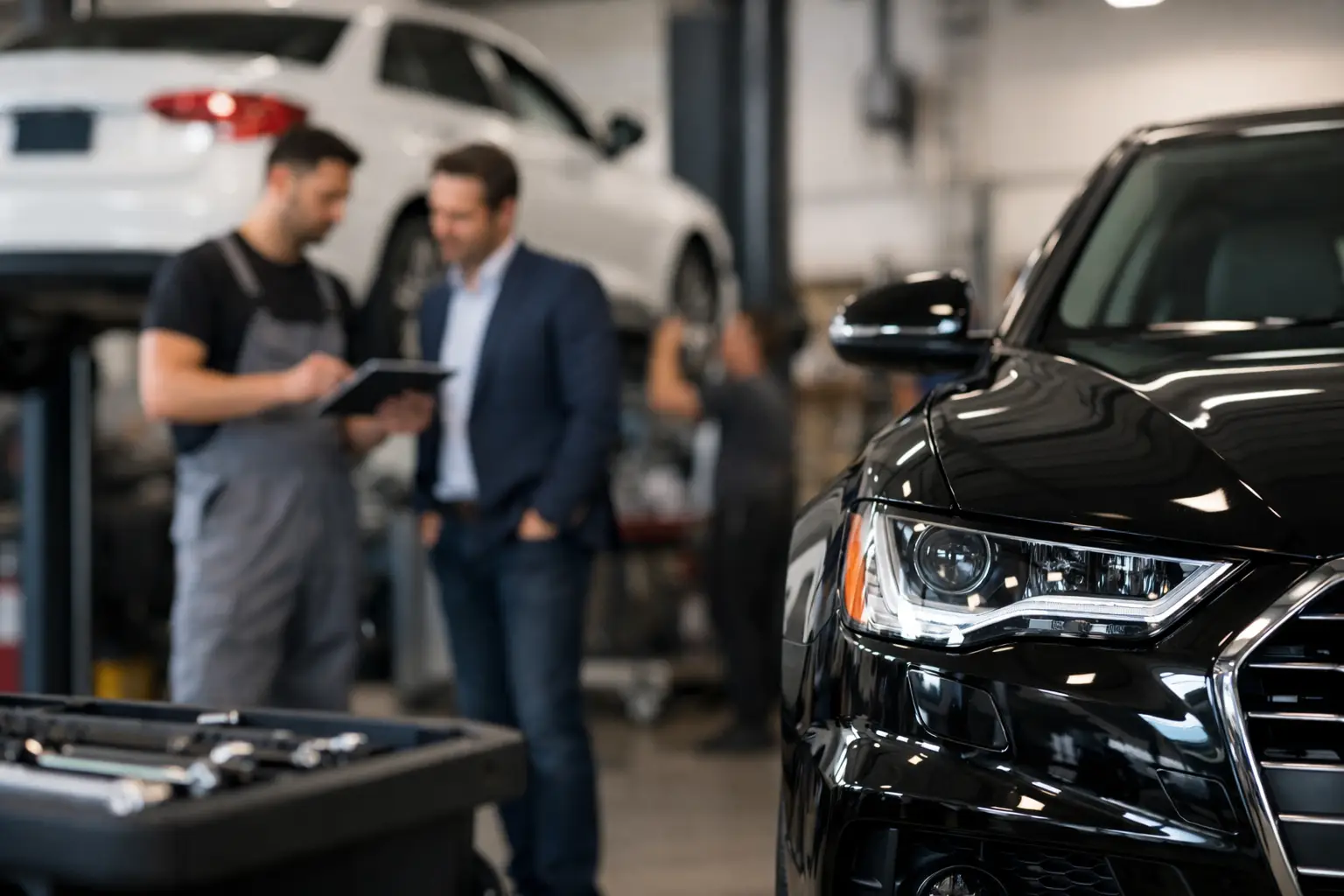
A warning light appears on your BMW, Audi, or Mercedes-Benz, and the dealership is not the only place that can perform the needed service. Yet many owners hesitate for one reason: are independent shops warranty compliant? In most cases, yes. Choosing a qualified independent repair shop for routine maintenance and non-warranty repairs does not automatically void a new-car warranty.
The key is not simply where the work is done. It is whether the service follows the manufacturer’s requirements, uses appropriate parts and fluids, and is documented clearly. For European and luxury vehicles, that standard matters because maintenance intervals, software diagnostics, oil specifications, and repair procedures can be highly vehicle-specific.
Are Independent Shops Warranty Compliant Under Federal Law?
For most consumers, the answer starts with the Magnuson-Moss Warranty Act, a federal law that protects vehicle owners from being forced to use a dealership for routine service just to keep factory warranty coverage. A manufacturer generally cannot deny your warranty simply because an independent shop changed your oil, replaced brake components, performed scheduled maintenance, or completed another covered service.
There is an important distinction, however. The manufacturer can deny a particular warranty claim if it can show that improper maintenance, an incorrect part, or faulty repair work caused the failure. If the wrong engine oil is used in a turbocharged European engine and a related lubrication issue develops, that may create a legitimate warranty question. But the burden is not on the owner to prove that the dealership was used. It is on the manufacturer to connect the problem to the work performed.
That is why experience and process matter. A shop that understands your vehicle’s factory specifications is very different from a general repair facility that relies on guesswork or generic service recommendations.
What Warranty-Compliant Service Actually Looks Like
Warranty compliance is not a label a shop can place on a sign. It is the result of disciplined service practices. For luxury vehicle owners, the right independent shop should be able to explain what your car needs, why it needs it, and how the work aligns with manufacturer recommendations.
A proper maintenance visit begins with the correct vehicle information. The technician should confirm the year, model, engine, drivetrain, mileage, service history, and any active warning messages. On vehicles from BMW, Mercedes-Benz, Audi, Porsche, Land Rover, Volvo, and other premium brands, small differences in model year or engine configuration can change the required fluid, filter, inspection procedure, or service interval.
Parts and materials matter just as much. OEM parts are often the clearest choice because they are built to the manufacturer’s original specification. In some cases, high-quality original-equipment supplier parts may also be appropriate. What should never be substituted casually are fluids, filters, sensors, or components that do not meet the vehicle’s stated requirements.
For example, “synthetic oil” alone is not a complete specification. Many European engines require a specific manufacturer approval, viscosity range, and oil performance standard. The same is true for brake fluid, coolant, transmission fluid, and differential fluid. A qualified specialist checks the required specification rather than treating all premium vehicles as if they use the same products.
Documentation Is Your Best Protection
Keep your invoices. They should show the date, mileage, vehicle identification, services performed, parts used, and fluids installed. A detailed invoice gives you a record if a warranty question comes up later.
For some newer vehicles, service information may also need to be entered into the vehicle’s digital service history. Ask whether the shop can reset the applicable maintenance reminders and document the completed service correctly. Resetting a reminder is not a substitute for maintenance, but an accurate service record helps you track what has been done and when the next visit is due.
At Wizard Werks, clear communication is part of the service process. Owners should leave with a straightforward explanation of recommended work, completed work, and any concerns that can be monitored rather than addressed immediately. That kind of transparency helps protect both your vehicle and your budget.
Independent Maintenance vs. Factory Warranty Repairs
This is where confusion often starts. An independent shop can perform routine maintenance and many repairs while your factory warranty remains active. That does not necessarily mean the shop can submit warranty claims directly to the manufacturer.
If your vehicle has a defect covered by the factory warranty, the manufacturer typically requires that repair to be completed by an authorized dealership or authorized warranty facility. The same may apply to recalls, certain emissions-related coverage, and manufacturer service campaigns. An independent specialist can diagnose the concern, explain the likely issue, and help you understand whether a dealer visit is appropriate. But the dealer is usually the place to have a manufacturer-paid warranty repair processed.
This can still be useful. An independent shop may identify a problem before a dealership appointment, provide a clear diagnostic report, or handle maintenance that is due at the same time without the dealership’s higher service pricing. The practical goal is not to choose one provider for every possible need. It is to use the right resource for the work in front of you.
When an Independent Shop Is the Smart Choice
For scheduled maintenance, wear-item replacement, diagnostics, brake service, steering and suspension concerns, heating and A/C service, electrical concerns, and general repair needs, an experienced European auto specialist can be an excellent dealer alternative. You receive brand-focused expertise without assuming that a dealership is the only qualified option.
The best independent shops invest in manufacturer-grade diagnostic equipment, current technical information, and technicians who understand the systems behind the dashboard messages. This is especially valuable when a warning light does not point to a simple part replacement. Modern luxury vehicles often require accurate testing and software-informed diagnostics before a repair recommendation should be made.
There is also a personal-service advantage. Dealership service departments can be busy and highly standardized. A local specialist has the opportunity to know the vehicle’s history, listen to the owner’s concerns, and discuss repair priorities in plain language. That does not mean every repair will be inexpensive, especially on complex European vehicles. It means you should understand the recommendation, the available options, and the cost before authorizing the work.
Questions to Ask Before Scheduling Service
If your vehicle is still under factory coverage, ask the shop whether it follows factory maintenance schedules and uses parts and fluids that meet the required specifications. Ask whether the invoice will list the exact work performed and whether the technician has experience with your vehicle’s brand and engine.
You can also ask how the shop handles service resets, diagnostic trouble codes, and digital maintenance records. A good shop will welcome those questions. Warranty-conscious service is not about vague promises. It is about being able to explain the process clearly.
For extended warranties and service contracts, read the agreement before work begins. These plans are separate from the factory warranty and often have their own rules. Some require prior authorization, specific documentation, an approved repair facility, or an inspection before covered repairs are authorized. Do not assume that a contract follows the same rules as your original manufacturer warranty.
Protecting Your Luxury Vehicle Beyond the Warranty Period
The habits that protect warranty coverage also protect long-term ownership. Timely maintenance, correct fluids, thorough records, and accurate diagnostics reduce the chance that a small concern becomes a larger repair later. They also support resale value when it is time to sell or trade your vehicle.
A dealership can be the right destination for recalls and manufacturer-paid warranty repairs. A qualified independent specialist can be the right partner for the maintenance and repair work that keeps your vehicle driving the way it should. The most helpful choice is the one that gives your European or luxury vehicle the correct care, a clear paper trail, and advice you can trust.