
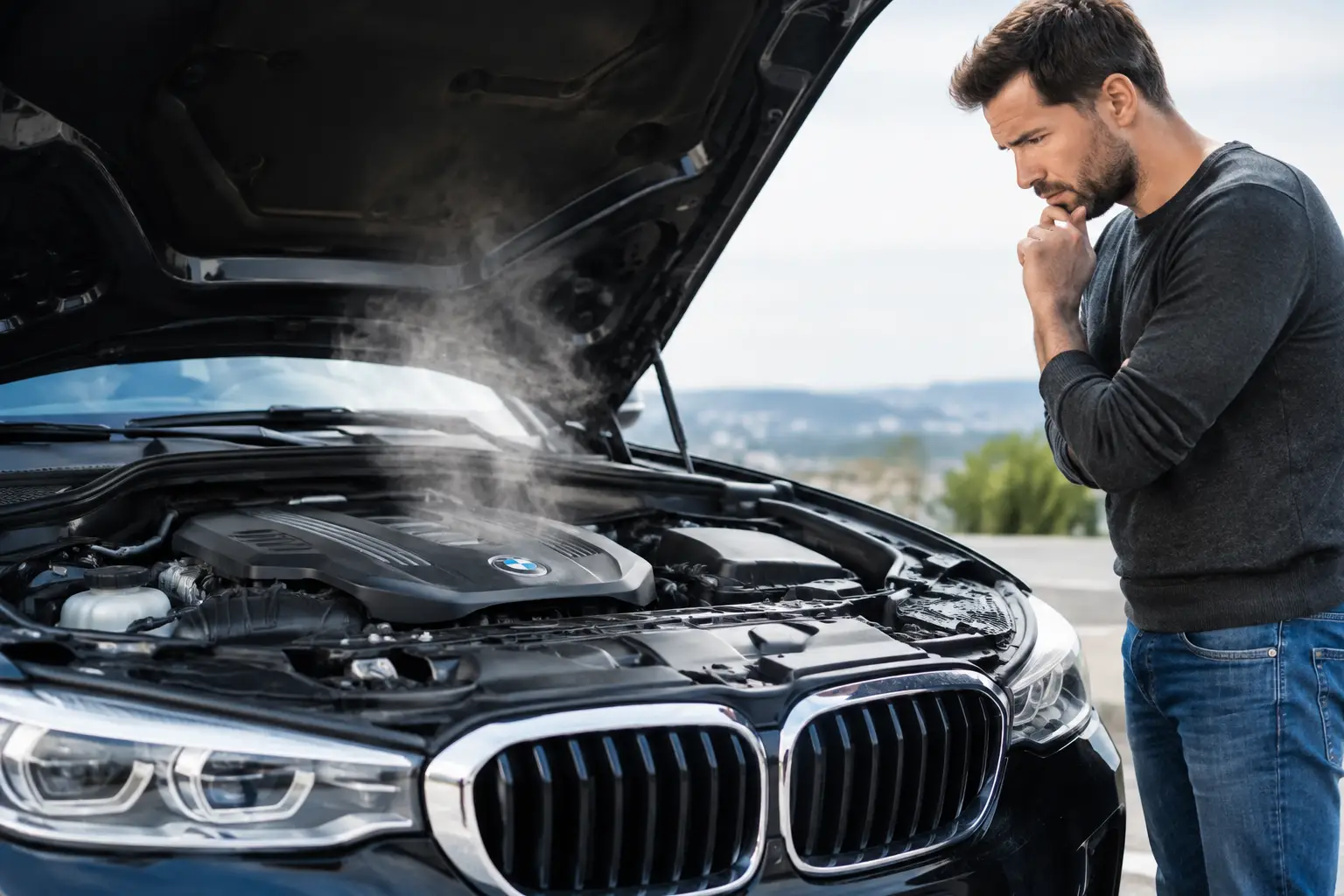
A BMW temperature warning is not a message to monitor on the way home. If you are asking, “why does BMW overheat,” the answer is usually a cooling-system fault that needs prompt attention. Modern BMW engines operate efficiently at tightly controlled temperatures, but that also means a small leak, failing pump, or electronic control issue can become serious quickly if the vehicle is driven while hot.
Why Does BMW Overheat?
BMW overheating is rarely caused by one universal problem. The exact cause depends on the model, engine, mileage, maintenance history, and whether the concern occurs in traffic, at highway speed, or only with the A/C running. Still, the cooling system relies on several components working together: coolant, a water pump, thermostat, radiator, cooling fan, hoses, sensors, and the expansion tank.
When one of those parts stops doing its job, heat cannot leave the engine fast enough. A warning may appear suddenly, even if there were no obvious symptoms the day before. That is especially true on many late-model BMWs, where electronic water pumps and thermostats can fail with little warning.
The most important rule is simple: do not continue driving an overheating BMW unless you are moving it a very short distance to immediate safety. Pull over safely, turn the vehicle off, and allow it to cool. Opening the coolant reservoir while the system is hot can release pressurized coolant and cause injury.
Common BMW Cooling-System Causes
Coolant leaks from aging plastic components
BMW cooling systems commonly use plastic fittings, expansion tanks, hose connections, and radiator components. These parts help keep weight down, but heat cycles and age can make them brittle. A small crack may leak only when the system is hot and pressurized, which is why a puddle is not always visible in the driveway.
Low coolant reduces the system’s ability to carry heat away from the engine. You may notice a sweet smell, white or colored residue near the reservoir, a low-coolant warning, or an occasional need to add coolant. Adding coolant may temporarily restore the level, but it does not correct the leak. The system needs to be pressure-tested and inspected to find the source.
Electric water pump failure
Many BMW engines use an electric water pump rather than a conventional belt-driven design. This allows precise control of coolant flow, but the pump is an electrical and mechanical component that can wear out. When it begins to fail, the vehicle may overheat in traffic, display a reduced-power warning, or run its cooling fan at high speed after the engine is shut off.
A failing pump can be intermittent at first. That makes professional diagnostics especially valuable. Fault codes, pump activation tests, live data, and a careful inspection can separate a water-pump issue from a thermostat, wiring, or sensor concern. Replacing parts based only on a dashboard warning is rarely the most cost-effective approach.
A thermostat that sticks closed
The thermostat manages when coolant flows through the radiator. If it sticks closed or does not open far enough, hot coolant stays in the engine instead of traveling to the radiator to release heat. The result can be a fast temperature increase, particularly after the engine reaches normal operating temperature.
BMW thermostats on newer models are often electronically controlled. A technician needs the right diagnostic equipment to evaluate command signals, temperature readings, and related faults. A thermostat issue can resemble a water-pump failure, which is another reason accurate diagnosis matters before repair decisions are made.
Radiator, fan, or airflow problems
If a BMW overheats at low speeds or while idling but settles down once it is moving, airflow should be checked. The electric cooling fan may not be operating properly, the fan control circuit may have a fault, or debris may be restricting airflow through the radiator and condenser area.
A radiator can also lose efficiency internally over time. Coolant contamination, old coolant, or mineral buildup can restrict flow. On the outside, leaves, road debris, and damaged fins can limit the radiator’s ability to shed heat. These issues do not always create an immediate warning, but they can make the car more vulnerable during a hot Illinois summer, stop-and-go commuting, or extended A/C use.
Air trapped in the cooling system
BMW cooling systems must be filled and bled correctly after coolant service. If air remains trapped, coolant circulation can become inconsistent and temperature readings can fluctuate. Some BMW models have an electronic bleeding procedure that requires the correct steps and a properly maintained battery.
This is not a situation where topping off a reservoir and hoping for the best is enough. Incorrect coolant mixture, the wrong coolant type, or improper bleeding can create avoidable problems. BMW-specific service procedures help ensure the system is properly filled, sealed, and tested after repair.
Less common but serious causes
An overheating condition can occasionally be related to an internal engine issue, a failed oil cooler, a blocked coolant passage, or a sensor and control fault that reports incorrect temperatures. These are not the first assumptions to make, but they should not be ruled out without testing.
This is where a complete diagnostic process protects you from unnecessary work. The goal should be to identify why the temperature rose, confirm which component failed, inspect for related damage or leaks, and explain the repair priorities clearly.
What to Do When Your BMW Temperature Warning Appears
BMW warning messages vary by model, but a red temperature warning, steam from under the hood, a strong coolant smell, or a gauge moving into the hot range all call for the same response: get off the road safely as soon as possible.
Turn off the A/C. If you need a brief moment to reach a safe shoulder or parking area, setting the cabin heat to maximum can help pull some heat from the engine, but this is only an emergency measure. Do not treat it as permission to continue your trip. Once stopped, turn the engine off and do not open the coolant cap until everything has cooled completely.
Avoid pouring cold water into a hot engine or radiator. Sudden temperature changes can damage components. Also avoid repeatedly restarting the vehicle to see if the warning disappears. An intermittent warning can still indicate a failing water pump, thermostat, fan, or low-coolant condition.
If coolant is visibly leaking, steam is present, or the warning returns after the engine cools, arrange for professional service rather than driving the vehicle. A tow is often far less expensive than the damage that can result from severe overheating.
How BMW Overheating Is Diagnosed Correctly
A proper diagnosis begins with more than checking coolant level. An experienced BMW technician will inspect the cooling system for visible leaks and residue, pressure-test the system where appropriate, scan BMW-specific fault codes, review live temperature data, and test the operation of the pump, thermostat, fan, and relevant sensors.
The inspection should also consider when the problem occurs. Overheating only at idle points in a different direction than overheating at highway speeds. Coolant loss without an external puddle requires a different approach than a fan that never turns on. Those details help prevent guesswork and allow repairs to address the actual cause.
At Wizard Werks, our technicians use manufacturer-grade diagnostic equipment and a clear, no-pressure approach to explain what we find. You should know what failed, what repair is recommended, and whether related maintenance deserves attention before approving any work.
Reducing the Risk of Another Overheating Problem
There is no single mileage that applies to every BMW cooling component. Driving conditions, climate, model year, and previous repairs all matter. Still, regular inspections are the best defense against a surprise warning.
Pay attention to coolant warnings, dried coolant residue, a cooling fan that seems unusually loud, a sweet odor after driving, or heat that fluctuates from the vents. These are reasons to schedule an inspection before a small problem becomes an urgent one. Using the correct OEM-quality parts and coolant also matters, particularly on a vehicle designed around precise temperature management.
If your BMW has recently had cooling-system service, monitor the coolant level only when the engine is cold and follow the service guidance you received. A changing level, repeat warning, or new smell should be checked rather than ignored.
Your BMW is designed to deliver a refined, confident drive. When a temperature warning interrupts that experience, timely diagnosis is the practical way to protect the vehicle, your schedule, and the investment you have made in it.