
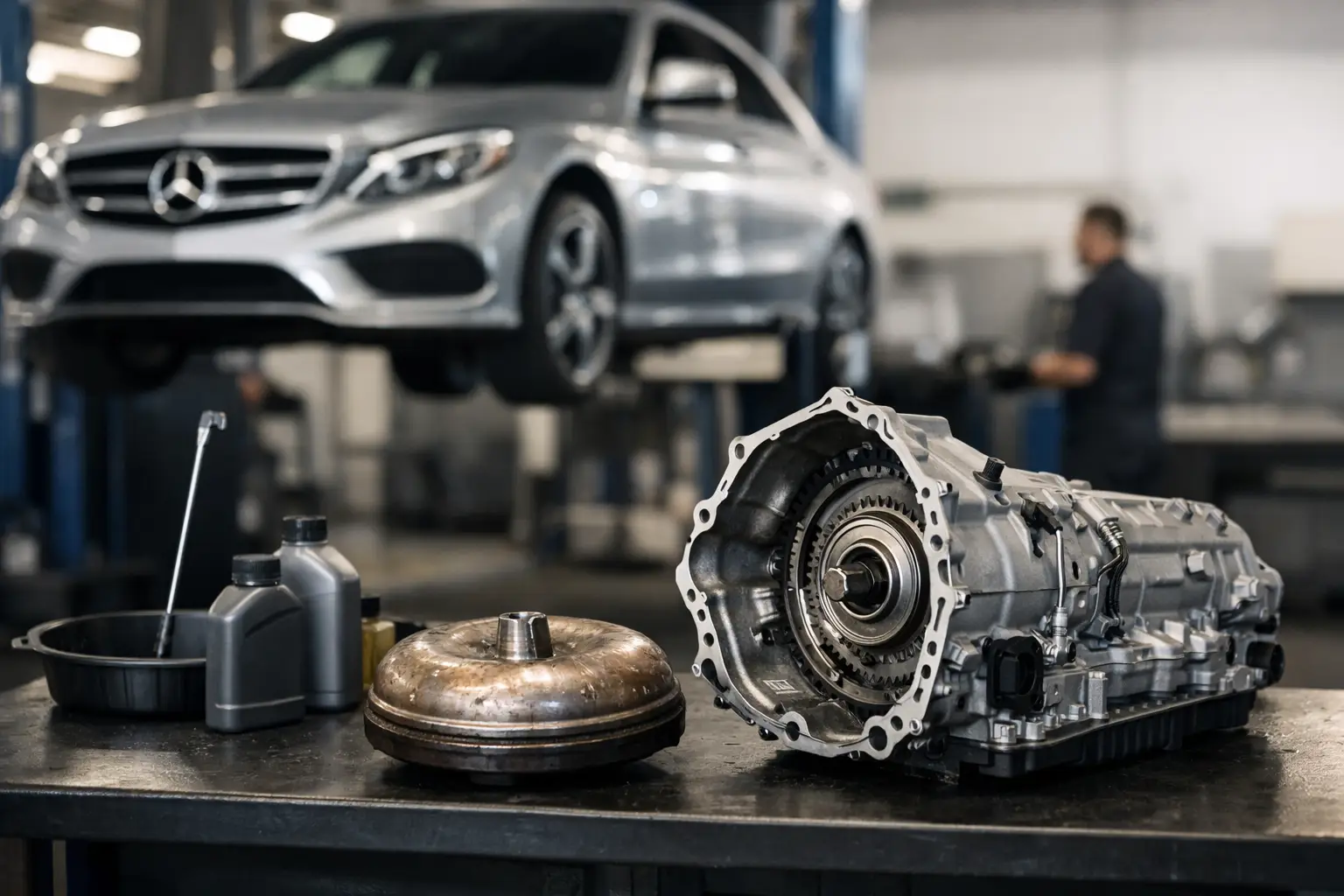
That slight hesitation when your Mercedes shifts is easy to ignore – until it turns into a much more expensive problem. Mercedes transmission service cost is one of the most common questions luxury vehicle owners ask, and the honest answer is that pricing can vary quite a bit depending on the model, transmission type, mileage, and what the vehicle actually needs.
For most Mercedes owners, the real issue is not just the number on the estimate. It is whether the service being recommended is necessary, whether the shop understands Mercedes systems, and whether the work will actually protect the life of the transmission. A lower price is not always the better value if the wrong fluid, incorrect fill procedure, or poor diagnosis creates bigger issues later.
What affects Mercedes transmission service cost?
Mercedes transmissions are not all the same, and that is a big reason costs can differ. A newer 9-speed automatic does not have the same service requirements as an older 5-speed unit, and a dual-clutch or performance-oriented setup may call for different fluids, filters, and procedures.
The biggest pricing factors usually include the transmission design, the amount and specification of fluid required, whether the pan or filter is serviceable separately, and whether the shop performs the service according to Mercedes procedures. Labor also matters. On European vehicles, the service process is often more precise than a simple drain-and-fill done on a general repair line.
Vehicle condition plays a role too. If a transmission has gone well past its recommended service interval, fluid may be heavily degraded, the pan may contain excess debris, or adaptation values may need to be checked after service. In those cases, the estimate can move beyond routine maintenance and into diagnosis and correction.
Typical Mercedes transmission service cost range
In many cases, a routine Mercedes transmission service cost will fall somewhere in the few-hundred-dollar range, but broad estimates can be misleading without knowing the exact model. Some vehicles need a basic fluid and filter service. Others may require additional sealing components, a pan replacement if the filter is integrated, or more fluid because of the transmission design.
As a practical range, many owners can expect transmission service to start around $350 to $450 on some models and move into the $500 to $800 range on others. Higher-end or more complex Mercedes models can land above that, especially if extra diagnostic time is needed or if related components are showing wear.
That does not mean every higher estimate is inflated. Sometimes the difference comes down to doing the job correctly. OEM-quality fluid, proper temperature-based fill procedures, and Mercedes-capable diagnostics all affect the final cost, but they also affect how the transmission performs afterward.
Why Mercedes transmission service is more specialized
A Mercedes transmission is built for refined shifting, performance, and long-term drivability. That level of engineering is great when maintained properly, but it also means service is not something to leave to guesswork.
Fluid specification is a good example. Mercedes transmissions are sensitive to using the correct fluid formula. The wrong fluid can lead to rough shifting, slipping, delayed engagement, or long-term internal wear. Even if the vehicle seems fine right after service, problems can appear over time.
The fill process matters just as much. Many Mercedes transmissions need to be filled and checked at a specific fluid temperature. Too much fluid or too little can cause drivability problems. A shop that works on European vehicles regularly will understand that this is not a generic maintenance item.
When transmission service is worth the cost
If your Mercedes is shifting normally and has reached the recommended service interval, routine transmission service is usually money well spent. Fresh fluid helps protect internal components, supports smoother operation, and can reduce wear caused by heat and contamination.
If the vehicle is already showing symptoms such as delayed shifting, harsh engagement, shuddering, or gear hunting, the answer becomes more nuanced. Service may still help if fluid condition is the issue, but symptoms can also point to sensor faults, valve body concerns, software-related adaptation issues, or wear that needs a proper diagnosis first.
This is where honest guidance matters. A trustworthy shop should not automatically sell transmission service as the fix for every transmission complaint. Sometimes service is appropriate. Sometimes diagnostic testing should come first. The right recommendation depends on what the vehicle is doing, not just what mileage is on the odometer.
Cheap transmission service can cost more later
It is understandable to compare quotes, especially when dealership pricing feels steep. But with Mercedes vehicles, unusually low pricing should raise a few questions.
Is the correct fluid being used? Is the filter or pan being replaced when required? Is the fluid level being set using the proper process? Is the shop familiar with Mercedes transmission behavior, software, and common failure patterns? Those details are where the real value is.
A bargain-priced service that skips key steps can leave you with shift quality issues or a transmission that still has the same complaint because the original problem was never identified. For luxury vehicle owners, the better approach is usually to find a specialist who can explain exactly what is included and why.
Mercedes transmission service cost vs dealership pricing
Dealerships often charge more because of their overhead structure, labor rates, and brand positioning. That does not automatically mean their service is better, and it certainly does not mean an independent European specialist is cutting corners.
For many Mercedes owners in the northwest suburbs, the sweet spot is finding a shop that offers dealership-level diagnostics and procedures without the dealership experience of vague recommendations or inflated pricing. An experienced independent shop can often provide the same quality of service, use OEM parts and approved fluids, and still deliver better personal communication.
That is especially important with transmission service. You want clear answers about what the car needs now, what can wait, and whether the symptoms you are noticing are actually transmission-related at all.
How to know if your Mercedes is due
Some Mercedes models follow a recommended transmission service interval based on mileage and driving conditions. If your vehicle is around or beyond that point, it is smart to have it inspected rather than assume the transmission is sealed for life.
You should also pay attention to the way the car drives. Warning signs include hard shifts, hesitation when moving from park to drive, slipping between gears, unusual vibration during acceleration, or fluid leaks under the vehicle. None of those signs automatically mean major transmission trouble, but they do mean it is time for a professional evaluation.
A good inspection should include checking for stored faults, reviewing service history, evaluating fluid condition where appropriate, and road testing the vehicle if symptoms are present. That kind of process gives you a more accurate answer than pricing off guesswork.
What you should expect from a quality shop
When asking about Mercedes transmission service cost, you should expect more than a rough estimate over the phone. A quality shop should ask about your model, mileage, and symptoms, then explain what is typically included in the service.
They should also be transparent about the difference between maintenance and diagnosis. If your transmission is simply due for service, the process may be straightforward. If the car is shifting poorly, the right next step may be testing first so you do not pay for maintenance that does not solve the issue.
At Wizard Werks, that kind of transparency is a big part of how Mercedes owners avoid unnecessary expense. The goal is not to sell the biggest ticket. It is to recommend the service that fits the condition of the vehicle and helps protect the long-term driving experience you expect from a Mercedes.
Mercedes transmission service cost is really about value
It is easy to focus on price alone, especially when any luxury car service can feel expensive. But the better question is what you are getting for that cost. Proper Mercedes transmission service protects one of the most complex and expensive systems in the vehicle. Done at the right time and with the right parts, it can help preserve shift quality, reduce wear, and prevent avoidable problems.
If you drive a Mercedes in Palatine or the surrounding northwest suburbs, the smartest move is not chasing the lowest number. It is choosing a shop that knows the platform, explains the recommendations clearly, and treats your vehicle with the same care you do. A good transmission service should leave you with confidence, not more questions.