
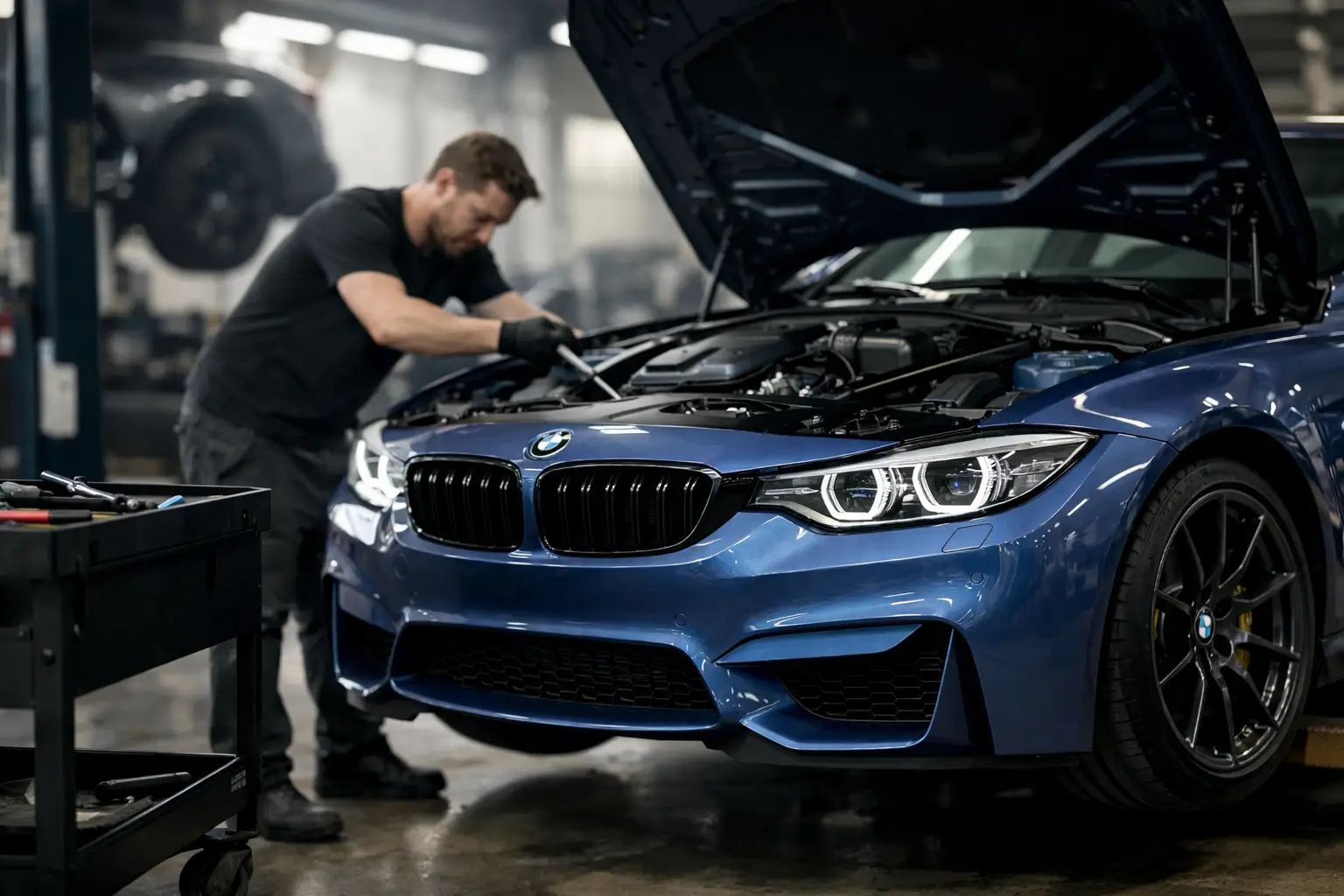
An M3 can hide a problem in plain sight. A slight hesitation under load, a suspension noise that only shows up on rough pavement, or a warning light that disappears before you get to the shop can all point to issues that a general repair approach may miss. That is why BMW M3 repair should start with accurate diagnostics, not guesswork. On a performance BMW, the difference between a quick patch and the right fix shows up in drivability, reliability, and how confident you feel every time you get behind the wheel.
The M3 is not just another 3 Series with more power. It is engineered with tighter tolerances, more advanced electronics, and performance-focused components that need brand-specific knowledge. Owners in Palatine and the northwest suburbs often come in looking for a better alternative to dealership service – someone who understands the car, explains the issue clearly, and repairs it properly without pushing work the vehicle does not need.
Why BMW M3 repair needs a specialist
BMW built the M3 to deliver sharp response, balanced handling, and high-speed stability. That driving experience depends on systems working together – engine management, suspension geometry, braking, cooling, steering, and electronics. When one part starts to drift out of spec, the effect is not always dramatic at first. It may feel like reduced throttle response, uneven tire wear, a vibration at highway speed, or a chassis that simply does not feel as planted as it used to.
This is where specialist service matters. BMW diagnostics are more than reading a fault code and replacing the first part on the list. Many M3 issues require live data analysis, software-aware troubleshooting, and familiarity with common failure patterns across different generations. A proper diagnosis saves time, avoids replacing good parts, and helps protect the car from secondary damage.
There is also the question of parts quality. On an M car, fitment and material quality matter. OEM or equivalent-quality components help preserve the way the vehicle was designed to perform. Lower-grade parts may seem like a way to save money, but they often lead to repeat repairs, inconsistent drivability, or a result that simply feels wrong.
Common problems that bring M3 owners in
No two BMW M3 repair visits are exactly the same, but some patterns come up often. Cooling system concerns are one example. Performance engines create heat, and when a water pump, thermostat, hose, or radiator component starts to fail, the margin for error gets small fast. An overheating event is never something to ignore on an M3.
Oil leaks are another common issue, especially as seals and gaskets age. What starts as a minor seep can eventually affect nearby components or create larger reliability concerns. On a BMW, leaks around valve cover areas, oil filter housing areas, and other engine sealing points need the kind of careful inspection that identifies both the source and any related wear.
Suspension and steering problems also tend to show up as these vehicles accumulate miles. Worn control arm bushings, struts, shocks, mounts, or links can change the car’s feel more than many owners expect. The M3 is supposed to feel precise. If it starts wandering, clunking, or reacting harshly over bumps, there is usually a reason, and it is worth addressing before tire wear and handling issues get worse.
Brake service is another area where M3 owners benefit from experienced eyes. These cars place real demands on their braking systems, even in normal suburban driving. Pulsation, noise, soft pedal feel, or uneven braking can come from several sources, and a good inspection helps separate normal wear from a more specific issue.
Electrical and drivability concerns round out the list. Misfires, check engine lights, battery draw issues, sensor failures, and communication faults can all occur on modern BMWs. Some are straightforward. Others require a more methodical diagnostic process. That is especially true when symptoms are intermittent or tied to heat, load, or driving conditions.
What good BMW M3 repair looks like
A quality repair experience starts before any wrench turns. It begins with listening. If the car makes a noise only on cold starts, if the steering feels off only at higher speeds, or if the warning light appears after a long commute, those details matter. They help narrow the problem and reduce wasted time.
Next comes a complete inspection and diagnostic process. That may include scanning BMW-specific modules, checking service history, confirming the complaint on a road test, and visually inspecting related systems. This step matters because symptoms often overlap. A vibration may be tire-related, suspension-related, or brake-related. A coolant loss issue may be obvious, or it may require pressure testing and a closer look at the full system.
Once the issue is confirmed, the repair plan should be clear. You should know what failed, what the recommended fix is, and whether there are any related items worth watching. Honest communication matters here. Not every recommendation is urgent, and not every concern has a one-size-fits-all answer. Sometimes the right move is to handle the immediate repair and monitor another component over time. Sometimes doing related work together saves labor and avoids duplicate teardown later. It depends on the vehicle’s condition, mileage, and how you use it.
That kind of transparency is what many BMW owners are looking for when they choose an independent specialist. At Wizard Werks, that means dealership-level equipment, ASE-certified technicians, and a straightforward conversation about what your M3 actually needs.
BMW M3 repair and maintenance work together
Many of the bigger repair bills on performance cars begin as smaller maintenance issues that were easy to miss or easy to postpone. Fluid service intervals, brake inspections, suspension checks, and cooling system evaluations all help catch wear before it turns into a breakdown or a more expensive repair.
This does not mean every M3 needs the same schedule. A weekend-driven car with low annual mileage has different needs than a daily commuter that sees stop-and-go traffic year-round. Driving style matters too. So does vehicle generation. The right service approach is based on how the car is used, what its condition looks like now, and what BMW-specific patterns an experienced shop sees during inspection.
The goal is not to oversell maintenance. It is to stay ahead of avoidable problems. A well-maintained M3 is usually less expensive to own than one that only comes in when something fails. It also drives better, which is the whole point of owning one.
Choosing the right shop for BMW M3 repair
If you are comparing your options, look past the hourly rate alone. The better question is whether the shop can diagnose and repair the car correctly the first time. BMW-specific scan tools, access to manufacturer-grade information, experience with European vehicles, and a commitment to quality parts all matter.
It also helps to pay attention to how the shop communicates. You should not feel pressured, talked down to, or left guessing about what is happening with your vehicle. A good repair experience is built on clarity – what was found, what is recommended now, what can wait, and why.
For M3 owners, trust is a real part of the service decision. These cars are valuable, not just financially but emotionally. People keep them because they enjoy them. The right repair shop respects that and treats the car accordingly.
When to schedule BMW M3 repair sooner rather than later
Some symptoms deserve quick attention. If your M3 is overheating, leaking fluid, showing a flashing check engine light, braking poorly, or making a new noise that gets worse under acceleration or turning, it is smart to have it inspected promptly. Waiting can turn a focused repair into a larger one.
Even if the issue seems minor, a professional inspection can give you a clearer picture. Sometimes the news is simple and manageable. Sometimes catching the problem early is what prevents a major interruption to your week. Either way, knowing what you are dealing with is better than guessing.
A BMW M3 rewards careful ownership. When repairs are handled with the right tools, the right parts, and honest guidance, the car keeps delivering what made it worth buying in the first place – confidence, performance, and a driving experience that still feels special long after the new-car smell is gone.