
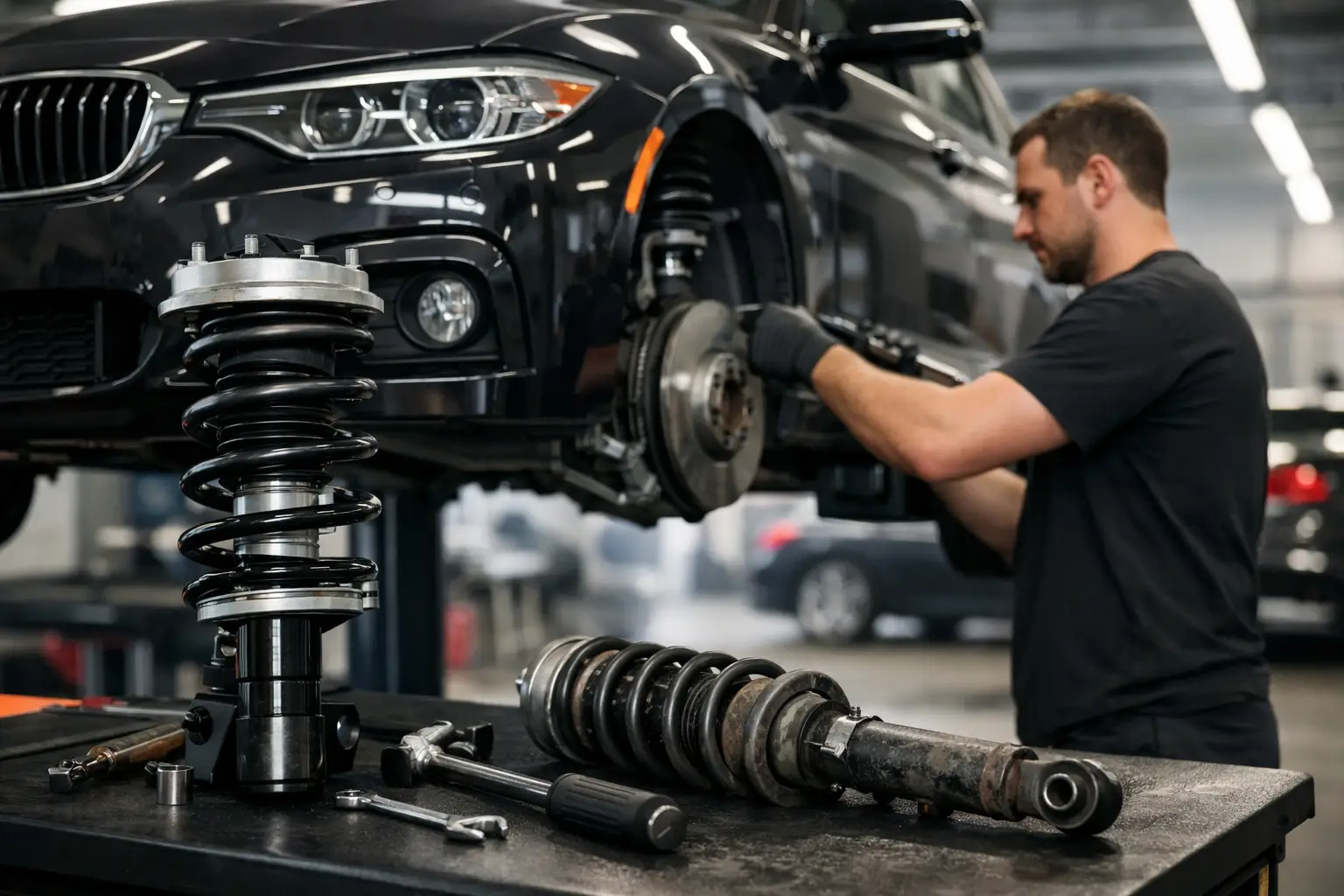
That sharp, planted BMW feel does not disappear all at once. More often, it fades in small ways – a little extra bounce over railroad tracks, a clunk on turns, uneven tire wear, or steering that no longer feels as precise as it should. BMW suspension repair and installation is about getting ahead of those changes before they affect ride quality, handling, and safety.
BMW drivers usually notice suspension problems early because these cars are built to communicate with the road. When something in the system starts to wear, the vehicle often tells you. The trick is knowing what is normal road feel and what points to a problem that needs a closer look.
Why BMW suspension repair and installation matters
A BMW suspension system does more than soften bumps. It helps keep the tires planted, supports braking stability, preserves steering response, and maintains the balance the car was designed to deliver. On many BMW models, even one worn component can change how the whole vehicle feels.
That is why suspension work on a BMW should never be treated like a generic repair. Control arms, bushings, shocks, struts, sway bar links, springs, and mounts all work together. If one part is weak, another may start compensating. That can create a chain reaction of premature wear, especially on vehicles driven daily through potholes, rough pavement, and Midwestern winter conditions.
There is also a value question. Replacing parts too early wastes money. Waiting too long can turn a smaller issue into a larger one, especially if bad suspension geometry starts affecting tires or steering components. The right approach is accurate diagnosis first, then a clear recommendation based on actual condition.
Signs your BMW suspension needs attention
Some suspension problems are obvious. Others are subtle enough that drivers adapt to them without realizing how much the car has changed. A BMW that used to feel tight and controlled may slowly become noisier or less composed.
Common warning signs include knocking or rattling over bumps, a floating sensation at highway speeds, nose-diving under braking, uneven ride height, inner or outer tire wear, or steering that feels loose off-center. You may also notice the vehicle pulling slightly, especially when suspension wear changes alignment angles.
Not every symptom points to the same repair. A clunk could come from sway bar links, strut mounts, or control arm bushings. Uneven tire wear might be related to worn suspension parts, but alignment settings also matter. If the ride feels harsh, the issue could be failed dampers, damaged mounts, or even incorrect replacement parts installed previously.
That is where BMW-specific diagnostics make a difference. The goal is not just to replace whatever looks worn. It is to identify the root cause and repair the system in a way that restores the way the car should drive.
What BMW suspension repair and installation usually includes
BMW suspension service can range from a targeted repair to a more comprehensive refresh, depending on mileage, condition, and model. Some vehicles only need a pair of front control arms or sway bar links. Others need shocks and struts, mounts, bushings, and a proper alignment to bring the chassis back into spec.
On higher-mileage BMWs, it is common to find several worn parts at the same time. That does not always mean everything must be replaced immediately. Sometimes it makes sense to handle the most critical items first and plan the next phase around budget and wear patterns. In other cases, doing related components together saves labor and prevents repeat visits.
Installation quality matters just as much as part quality. BMW suspension components often require precise torque procedures, correct ride-height loading, and alignment afterward. If those steps are skipped, even new parts may not perform correctly or last as long as they should.
For drivers considering performance-oriented replacements, there is another layer to the decision. A sportier setup can improve response, but it may also create a firmer ride. That trade-off can be worth it for some owners and frustrating for others. The best recommendation depends on how the car is driven, what the owner wants from it, and whether preserving factory ride character is the priority.
OEM-quality parts vs aftermarket options
This is one of the biggest questions in suspension service, and the honest answer is that it depends. OEM or OEM-equivalent parts are usually the safest choice for maintaining original ride quality, fit, and durability. That matters on BMWs because suspension tuning is part of what makes the car feel like a BMW.
Aftermarket options vary widely. Some are excellent. Some are built to hit a lower price point and do not hold up well. Others are intentionally stiffer or more aggressive than stock. That can sound appealing until the car starts feeling harsh on everyday roads.
A good shop should explain the difference rather than pushing the cheapest or most expensive option. For many owners, the best value comes from parts that match the intended use of the vehicle and support long-term reliability. Price matters, but so does doing the job once and doing it right.
Why diagnosis comes before replacement
Suspension complaints can overlap with steering, tire, and braking issues. A vibration may feel like a suspension problem but actually start with tire condition or wheel balance. A pull to one side may be caused by alignment, but worn bushings or weak dampers can be the reason alignment will not hold.
That is why experienced diagnosis matters more than guesswork. On BMWs especially, chasing symptoms by replacing random parts gets expensive fast. A proper inspection should include checking component play, bushing condition, dampers, mounts, ride height, tire wear, and alignment angles. On some models, electronic suspension features also need to be considered.
For owners looking for a dealer alternative, this is often where the biggest difference shows up. You want clear answers, not vague recommendations. You want to know what failed, what is still serviceable, and what should be monitored. That kind of transparency helps you make a smart repair decision without feeling pressured.
What to expect from the service process
A professional BMW suspension repair should feel straightforward. The vehicle is inspected, concerns are verified, and you get an explanation in plain language. If parts are needed, the repair plan should spell out what is being replaced, why it is necessary, and whether related services like alignment are included.
At Wizard Werks, that process is built around specialist diagnostics, OEM-quality parts, and honest communication. BMW owners in Palatine and the northwest suburbs often come in looking for dealership-level expertise without the dealership experience. They want the car fixed properly, but they also want to understand what they are paying for.
That is especially important with suspension work because there is often more than one valid path forward. If your front dampers are worn but rear components are still in good shape, the recommendation may differ from a vehicle that has widespread wear across the chassis. A good advisor will explain the trade-offs and help you choose the option that fits your car and your plans for it.
When to schedule BMW suspension service
If your BMW feels different, sounds different, or starts wearing tires unevenly, it is worth having it checked. You do not need to wait for a major failure. Early inspection can prevent secondary wear and often makes repair planning easier.
Suspension issues rarely improve on their own. They usually start small and become more noticeable over time. The upside is that when the right repairs are made, the improvement is often immediate. The steering tightens up, the ride settles down, and the car feels composed again.
That is the real value of proper suspension service. You are not just replacing parts. You are restoring the confidence, comfort, and control that made the car worth owning in the first place.
If your BMW no longer feels as smooth, stable, or responsive as it should, trust that instinct – your car is probably telling you it is time for a closer look.