
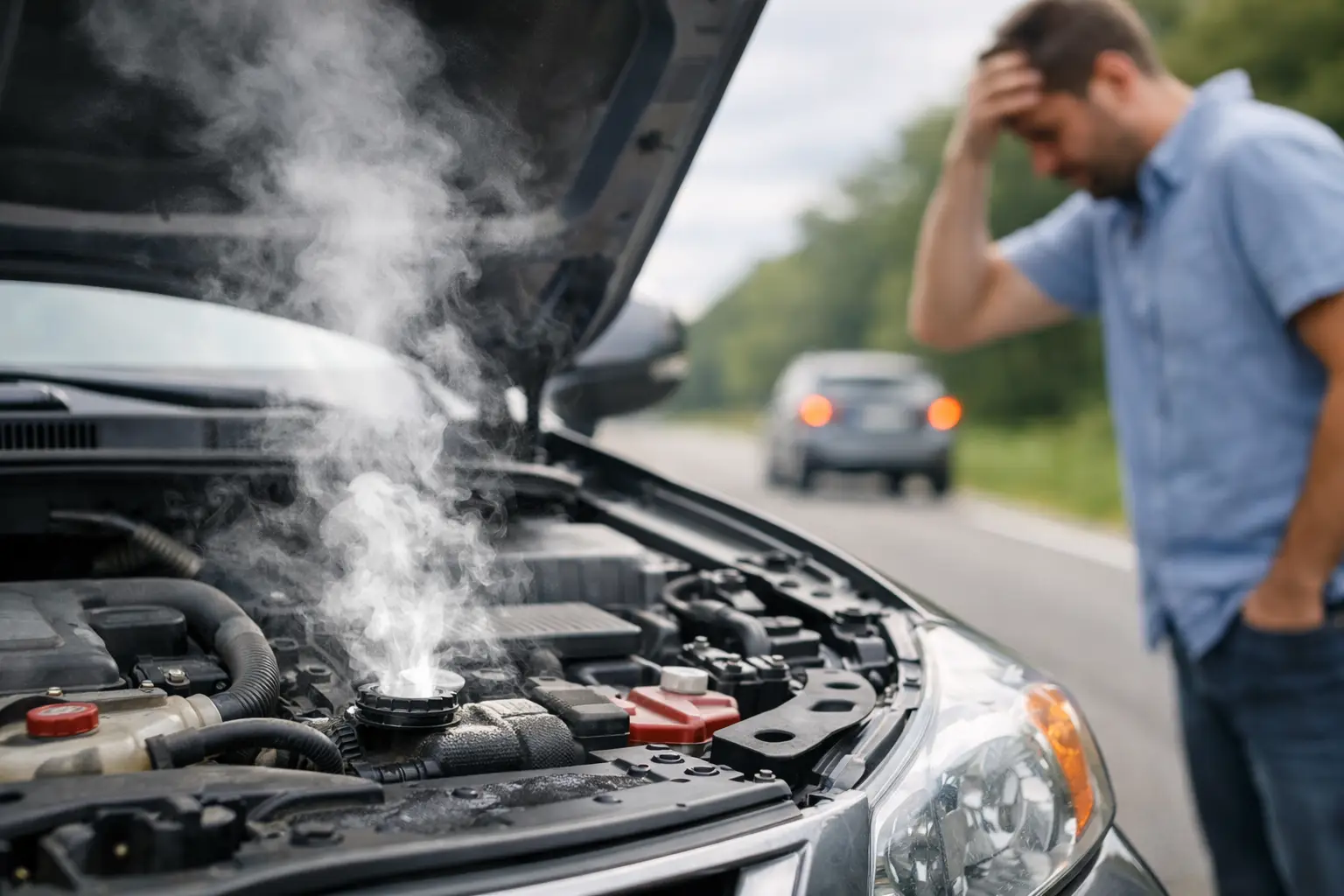
That temperature gauge climbs a little higher than usual in traffic, the A/C starts blowing warmer air, and suddenly the question becomes very real: why is my car overheating? If you drive a BMW, Mercedes, Audi, Porsche, Land Rover, or another premium import, this is not a warning to shrug off and hope it passes. An overheating engine can go from minor inconvenience to major repair surprisingly fast.
Modern European and luxury vehicles are engineered for performance, efficiency, and tight operating tolerances. That also means the cooling system has to do its job perfectly. When one part starts falling behind, the rest of the system can struggle. Sometimes the cause is straightforward. Sometimes it takes proper diagnostics to find the real issue instead of guessing and replacing parts.
Why Is My Car Overheating All of a Sudden?
When overheating happens suddenly, most drivers assume the radiator itself has failed. Sometimes that is true, but often the problem starts somewhere else in the cooling system. Your engine creates a huge amount of heat every time it runs. Coolant circulates through the engine, absorbs that heat, then moves it to the radiator where it can dissipate. If coolant is low, flow is restricted, or the system cannot release heat properly, temperatures rise quickly.
The most common cause is a coolant leak. Hoses can crack, fittings can loosen, water pumps can seep, and expansion tanks can develop stress fractures over time. In many European vehicles, cooling system components are made from lightweight composite materials that perform well but do not last forever. A small leak may start as a faint coolant smell or an occasional low coolant warning before it turns into a full overheating event.
A thermostat can also stick closed or partially closed. When that happens, coolant cannot circulate through the engine the way it should. The engine warms up, but the heat has nowhere to go. This often shows up as a temperature spike after the vehicle reaches normal operating temperature rather than immediately after startup.
Another common issue is the water pump. If the pump is worn, leaking, or not moving coolant efficiently, the entire system loses circulation. Some vehicles show symptoms mainly at highway speeds, while others overheat most noticeably at idle. It depends on the design of the system and whether the problem is mechanical, electrical, or both.
Signs Your Cooling System Is in Trouble
Overheating rarely appears out of nowhere with no warning at all. Many drivers notice smaller clues first, especially in daily commuting or stop-and-go suburban traffic.
You may see the temperature gauge creeping above its normal position. You might get a warning light or a dashboard message. Steam from under the hood is the obvious sign, but by that point the problem is already serious. Less dramatic signs include a sweet coolant odor, puddles under the vehicle, weak cabin heat, or the engine cooling fan running harder and longer than usual.
In luxury and European models, the warning system can be more sophisticated, but that does not always make the cause obvious. A low coolant warning does not tell you whether the issue is a hose, radiator, pump, thermostat, sensor, or pressure problem. That is one reason overheating problems should be diagnosed carefully instead of treated like a simple top-off and reset.
Common Reasons a Car Overheats
A cooling system has several parts working together, so a failure in one area can trigger problems elsewhere. The usual suspects include low coolant, leaks, a bad thermostat, a failing water pump, radiator blockage, cooling fan failure, and pressure loss from a worn cap or tank.
Low coolant is the simplest explanation, but not the whole story. Coolant does not just disappear. If the level is low, there is usually a leak, internal consumption issue, or service history concern behind it. Topping it off may help temporarily, but it does not solve the root problem.
Radiator trouble can also play a role. Corrosion, age, internal buildup, or external blockage can reduce the radiator’s ability to shed heat. If airflow through the radiator is restricted, especially in hot weather or traffic, engine temperature can rise fast.
Electric cooling fan problems are especially common when a car overheats at idle but seems more stable on the highway. At speed, airflow through the front of the vehicle helps cool the radiator naturally. Sitting at a light is different. If the fan does not engage when needed, heat builds quickly.
There are also cases where the problem is not the cooling hardware itself but the information the car is using. A faulty temperature sensor or control issue can affect fan operation and warning behavior. That is where brand-specific diagnostics matter, particularly on newer imports with complex electronic management systems.
What to Do If Your Car Starts Overheating
If the gauge is climbing or you get an overheating warning, the safest move is to reduce load on the engine and get off the road as soon as it is safe. Turn off the A/C. If necessary, turn the heat on full to help pull some heat away from the engine. It is not comfortable, but it can buy you a little time.
Do not keep driving and hope it clears up. That decision can make the difference between a manageable cooling system repair and severe engine damage. If steam is coming from under the hood or the warning is severe, shut the vehicle off and let it cool completely before anyone inspects it.
Do not open the coolant reservoir or radiator cap while the system is hot. Pressurized coolant can cause serious burns. Once the engine cools, you may be able to see obvious signs like leaking coolant or a broken hose, but many overheating issues are not visible without testing.
If your vehicle has overheated even once, it is worth having it checked properly. Some engines tolerate brief temperature spikes better than others. On many premium import vehicles, overheating can affect gaskets, plastic cooling components, and other parts that rely on stable temperatures.
Why European Cars Need Accurate Overheating Diagnosis
For luxury and European vehicles, cooling system repairs are not an area where guesswork pays off. Different brands have known patterns, model-specific weak points, bleeding procedures, and electronic controls that a general repair approach can miss.
A BMW may have one common cooling system failure pattern, while an Audi or Land Rover may have another. Some vehicles use electric water pumps. Others have multiple temperature sensors, active grille systems, or tightly packaged engine bays that make leak detection more involved. The symptom may be the same, but the correct repair can be very different.
That is why experienced diagnostics matter. Pressure testing, scan tool data, fan command checks, leak inspection, and confirmation of coolant flow all help identify the real cause. Replacing the thermostat because the car overheated might sound reasonable, but if the actual issue is a leaking expansion tank or weak water pump, the problem comes right back.
At Wizard Werks, that is exactly the type of issue we see from owners who want dealership-level expertise without the dealership experience. Honest testing and clear communication save time, money, and frustration.
Can You Prevent Overheating?
Usually, yes. Not every failure gives early warning, but many do. Routine maintenance is the biggest advantage you have. Coolant should be inspected at regular intervals and replaced according to the manufacturer schedule, not ignored until a warning light appears. Hoses, tanks, pumps, and thermostats all age, and many premium vehicles benefit from proactive inspection as mileage increases.
It also helps to pay attention to small changes. If your car starts running warmer than usual, if you smell coolant, or if you notice residue around hoses or the reservoir, that is the time to act. Waiting until the engine overheats on the side of the road is always more disruptive and usually more expensive.
The trade-off is simple. Preventive cooling system service may feel early when the vehicle is still driving fine, but it is far easier than dealing with an overheated engine and the risk that comes with it.
When your car asks why is my car overheating, it is really asking for attention before the problem grows. The best next step is not to guess – it is to have the system inspected by technicians who know your vehicle, understand the warning signs, and can fix the cause with confidence.