
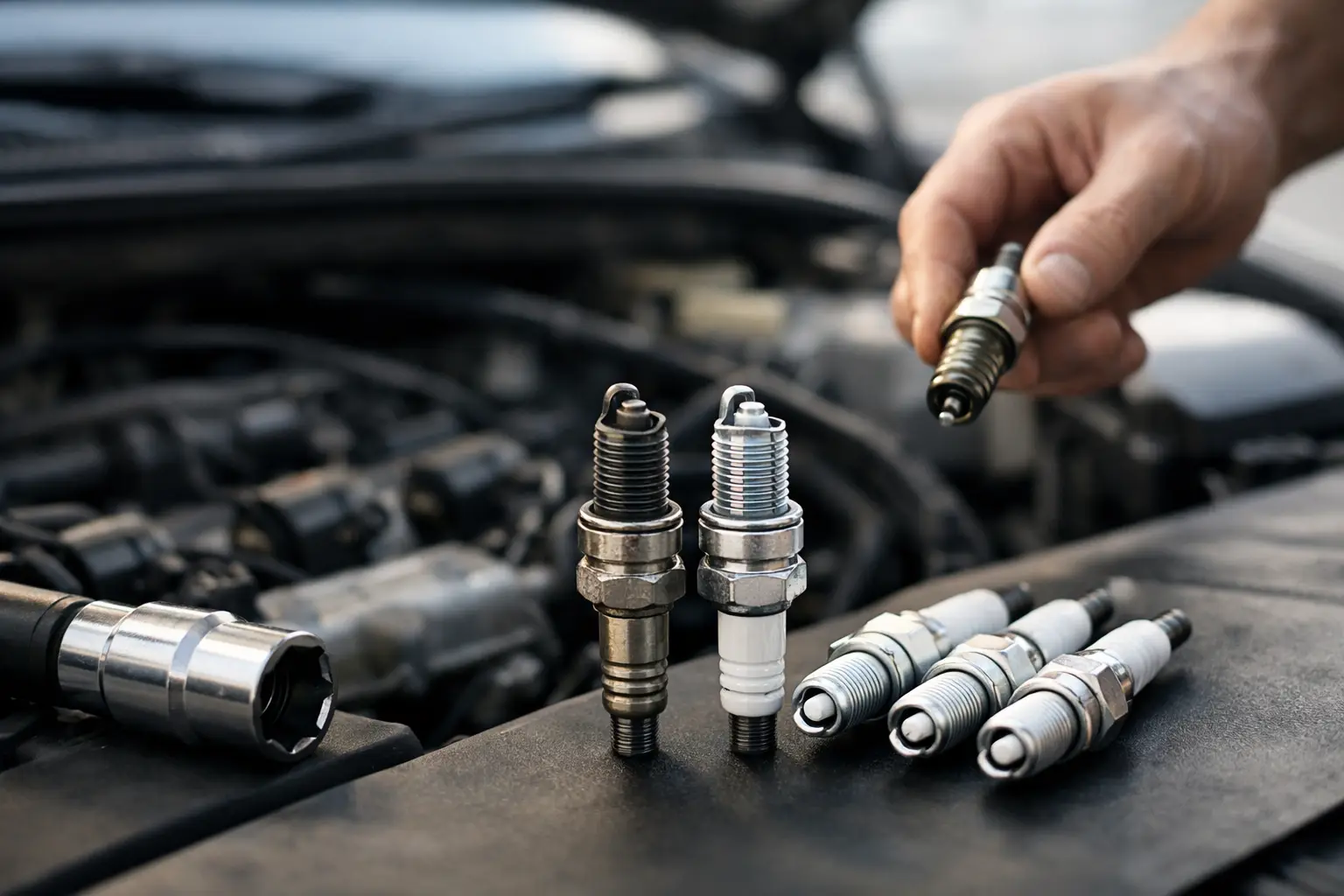
For owners of European and luxury vehicles, the question of when should spark plugs change often comes up after a rough start, a flashing check engine light, or a noticeable loss of the smooth power the car once had. Spark plugs are small components, but they play a direct role in how efficiently your engine starts, accelerates, idles, and uses fuel. Replacing them at the right time can protect both performance and the more expensive components that depend on a clean, consistent combustion process.
When Should Spark Plugs Change?
There is no single mileage number that applies to every vehicle. The right interval depends on your vehicle’s manufacturer recommendation, engine design, plug material, driving conditions, and maintenance history. For many late-model BMW, Mercedes-Benz, Audi, Porsche, Volkswagen, Land Rover, and Volvo models, spark plug service is commonly due somewhere between 40,000 and 100,000 miles.
That is a wide range for a reason. A high-performance turbocharged engine may require new plugs much sooner than a naturally aspirated luxury sedan, even if both use long-life spark plug materials. Manufacturer service schedules should always lead the decision, especially on premium imports where plug specifications and installation procedures can be highly engine-specific.
In general, traditional copper plugs have the shortest life, often around 20,000 to 30,000 miles. Platinum plugs can last roughly 60,000 miles, while iridium plugs may be rated for 80,000 to 120,000 miles. Still, a plug’s advertised lifespan is not a promise that it will perform perfectly until that exact mileage. Heat, repeated short trips, oil consumption, fuel quality, and ignition-system issues can shorten its useful life.
Why European Engines Need the Correct Interval
Modern luxury engines are engineered for precision. Many use direct injection, turbocharging, variable valve timing, high compression, and tightly managed ignition timing to deliver strong power while meeting fuel-economy and emissions standards. The spark plugs must be able to perform consistently under those conditions.
A worn plug develops a larger gap between its electrodes. As that gap grows, the ignition coil must work harder to create a spark strong enough to ignite the air-fuel mixture. Eventually, the engine may misfire, particularly under acceleration or when the engine is cold. Left unaddressed, persistent misfires can place added stress on ignition coils and may contribute to catalytic converter damage.
Turbocharged and Performance Models
Turbocharged engines often place greater demands on spark plugs because combustion pressure is higher under boost. That is why certain BMW, Audi, Mercedes-Benz, Porsche, and Volkswagen engines call for relatively frequent plug replacement despite using iridium plugs. Waiting for a symptom can be more expensive than following the scheduled interval.
For performance-oriented models, the correct plug type, heat range, and electrode gap matter just as much as the replacement timing. Installing an incorrect aftermarket plug or setting the gap improperly can create drivability problems that are easy to mistake for a larger engine issue.
Short-Trip and Stop-and-Go Driving
Northwest suburban driving can be tougher on an engine than the odometer suggests. Frequent short trips may prevent the engine from reaching full operating temperature for long enough to burn off moisture and deposits. Stop-and-go traffic also means more idling and repeated acceleration, which can increase wear on ignition components.
If your vehicle sees mostly local driving, it may be worth having the plugs inspected near the earlier end of the manufacturer’s recommended interval. That does not mean replacing parts unnecessarily. It means using the vehicle’s condition, service history, and diagnostic information to make an informed recommendation.
Oil or Fuel-Related Issues
Spark plugs can also reveal what is happening inside the engine. Oil deposits, heavy carbon buildup, or unusual electrode wear may point to an underlying concern that should be addressed before simply installing a new set. Replacing fouled plugs without finding the cause can lead to the same problem returning quickly.
A proper inspection considers the condition of each plug, not just whether the vehicle has reached a certain mileage. That approach is especially valuable on older luxury vehicles, where maintenance history may be incomplete.
Signs Your Spark Plugs May Be Due Sooner
Mileage is the best starting point, but your car may give you clues before its scheduled service. A rough or shaky idle, slower acceleration, hard starts, reduced fuel economy, and hesitation under load can all be related to worn spark plugs or ignition coils.
A check engine light deserves prompt attention, particularly if it flashes. A flashing light can indicate an active misfire, and continuing to drive can risk damage to the emissions system. The cause may be a spark plug, coil, injector, vacuum leak, fuel issue, or another engine-management fault. Accurate diagnostics matter because the symptom alone does not identify the failed part.
You may also notice that the vehicle feels less refined than usual. Luxury vehicles are designed to run smoothly, so a slight vibration at idle or a faint stumble during acceleration is worth investigating. Small changes in how the car feels can be the earliest warning that service is due.
What a Proper Spark Plug Service Includes
Spark plug replacement is not simply a matter of removing old plugs and fitting new ones. On many premium vehicles, access can require removing engine covers, intake components, or other surrounding parts. Technicians should use the correct manufacturer-specified plugs, follow the required torque specification, and inspect related ignition components during the service.
The ignition coils should be checked for signs of cracking, moisture intrusion, or heat damage. Coil replacement is not automatically necessary whenever plugs are replaced, but a weak coil can become more obvious after new plugs restore normal ignition demands. An honest inspection helps avoid replacing parts that are still performing correctly while catching issues that could cause a recurring misfire.
It is also useful to confirm whether the engine has stored fault codes, even if the check engine light is not currently on. Some problems are intermittent, and the vehicle’s diagnostic system may retain valuable information about a developing misfire or cylinder-specific concern.
At Wizard Werks, spark plug service for European and luxury vehicles is approached as part of the vehicle’s complete ignition and maintenance picture. The goal is not to sell a repair based on a generic interval. It is to use the factory maintenance requirements, vehicle condition, and specialized diagnostics to recommend only what the car needs.
Can You Wait Until the Car Runs Poorly?
You can, but it is rarely the best value. By the time worn plugs cause clear symptoms, the ignition system has often been working harder for some time. A routine service performed on schedule is generally more predictable and less disruptive than diagnosing a misfire after it appears.
There is also a practical ownership benefit. Keeping up with scheduled spark plug replacement helps preserve the responsive acceleration, smooth idle, and confident starting that make a premium vehicle enjoyable to drive. For drivers planning to keep their car long term, those small maintenance decisions add up.
How to Find Your Vehicle’s Right Interval
Start with the factory maintenance schedule for your exact year, model, engine, and drivetrain. A BMW 3 Series, Mercedes-Benz GLE, Audi Q5, Porsche Macan, or Range Rover may have a different interval depending on the engine fitted to that specific vehicle. Online generalizations can be useful for context, but they should not replace the schedule written for your VIN and engine configuration.
If you recently purchased a used luxury vehicle and do not have records showing when the plugs were last replaced, an inspection and maintenance review can provide peace of mind. Depending on the vehicle’s age and mileage, replacing them proactively may be sensible, but the decision should be based on evidence rather than guesswork.
The best time to address spark plugs is before a minor ignition issue turns into an inconvenient warning light or a rough-running commute. A clear maintenance plan, the correct parts, and knowledgeable service can keep your vehicle delivering the polished performance you expect every time you turn the key or press the start button.