
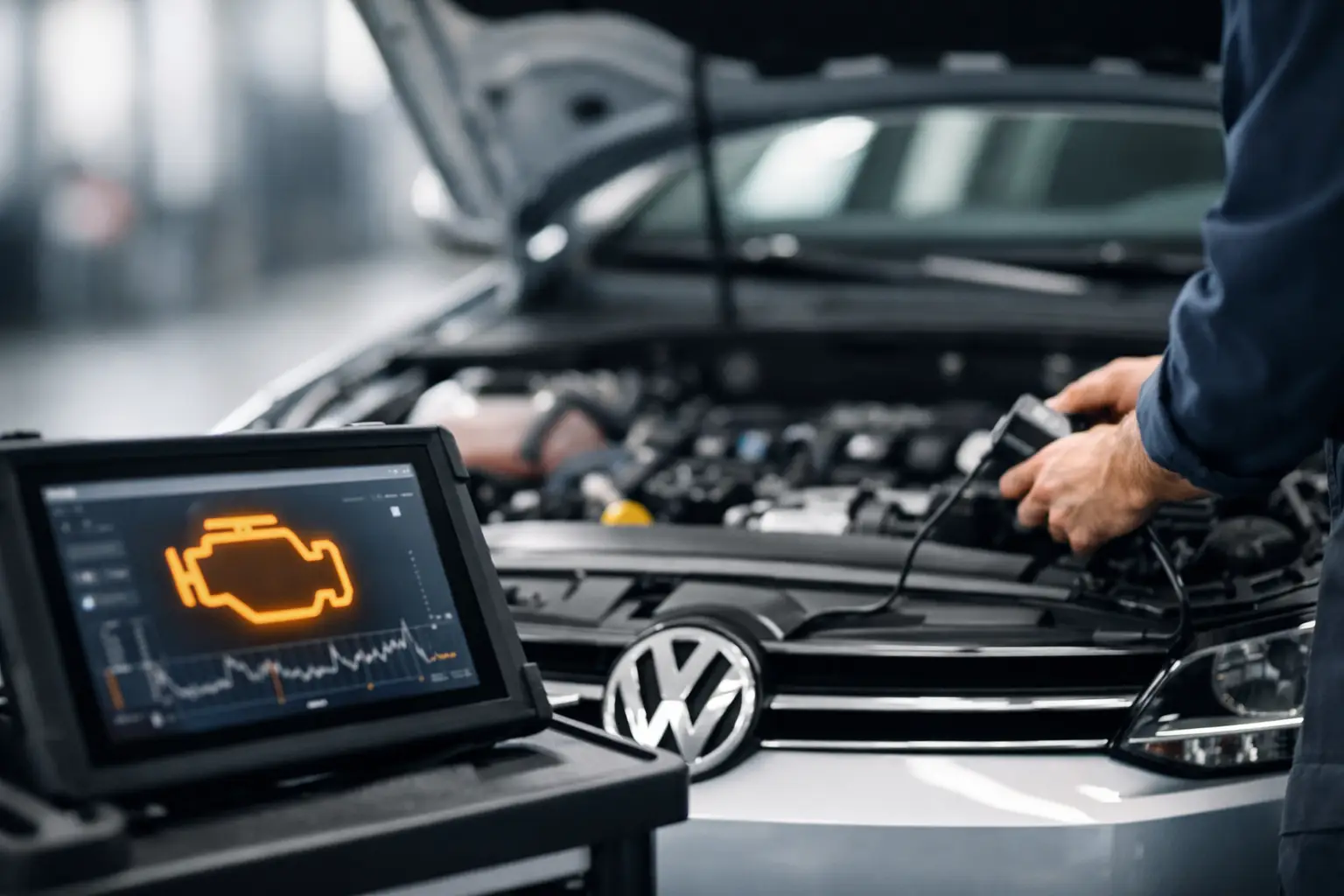
That yellow check engine light on a Volkswagen rarely tells the whole story. Volkswagen check engine diagnostics are not just about pulling a code and guessing at a repair. On modern VW models, the warning can be tied to anything from a loose gas cap to a failing ignition coil, carbon buildup, sensor faults, or a problem that affects drivability, fuel economy, and long-term engine health.
For Volkswagen owners, the difference between a quick guess and an accurate diagnosis matters. These vehicles rely on tightly integrated electronics, brand-specific software logic, and engine systems that need the right testing process. If the warning light comes on, the smartest move is to treat it as useful information, not a panic signal and not something to ignore.
What Volkswagen check engine diagnostics actually involve
A lot of drivers assume diagnostics means plugging in a scan tool, reading one trouble code, and replacing whatever part sounds related. In reality, that is only the starting point. Fault codes point technicians toward a system or condition, but they do not always identify the failed component.
Proper Volkswagen check engine diagnostics usually include a full system scan, code history review, live data analysis, visual inspection, and targeted testing of the affected circuit or component. Depending on the symptom, that may also involve smoke testing for vacuum leaks, checking fuel trim values, verifying ignition performance, or evaluating emissions-related components.
That process matters because many Volkswagen issues can create overlapping symptoms. A misfire code, for example, might come from a bad spark plug, a weak ignition coil, a fuel delivery issue, an air leak, or excessive carbon deposits. Replacing parts too quickly can get expensive without actually solving the problem.
Why Volkswagens need a brand-specific diagnostic approach
Volkswagen vehicles are engineered differently than many domestic or mainstream import models. The electronics are sophisticated, the engine management systems are sensitive, and many repairs depend on accurate communication with factory-level software.
That does not mean every check engine light points to a major repair. It does mean the car should be evaluated with the right equipment and by technicians who understand how Volkswagen systems behave in the real world. Generic code readers can be helpful for a basic alert, but they often miss the context needed to diagnose the issue correctly.
On a VW, small details matter. The same warning light can feel very different depending on whether the engine is running rough, fuel mileage has dropped, the EPC light is also on, or the vehicle has entered a reduced-power condition. An experienced European repair shop looks at the whole picture, not just the code description.
Common reasons the check engine light comes on in a Volkswagen
Some causes are simple, and some require deeper testing. Ignition coil and spark plug problems are among the most common, especially when the engine begins to hesitate, idle roughly, or misfire under load. Many VW owners first notice the issue during acceleration or on a cold start.
Another common source is a failing oxygen sensor or mass airflow sensor. These components help the engine computer manage fuel mixture and emissions. When the readings fall out of range, the vehicle may still drive, but performance can suffer and fuel consumption may increase.
Vacuum leaks are also frequent offenders. Volkswagen engines depend on tightly controlled airflow, so even a small leak in a hose, intake connection, or PCV-related component can trigger lean-condition codes and drivability complaints.
Then there are EVAP system faults, which often relate to fuel vapor control. Sometimes the fix is minor, such as a gas cap issue. Other times, the problem traces back to a purge valve, leak detection fault, or another emissions-related component.
Carbon buildup can play a role as well, particularly on direct-injection Volkswagen engines. Over time, intake valves can accumulate deposits that affect airflow and combustion quality. In some cases, this contributes to rough running, cold-start problems, and persistent fault codes that are not solved by replacing ignition parts alone.
Flashing light vs. steady light
Not every check engine light means the same level of urgency. A steady light usually means the engine management system has detected a fault that should be addressed soon. The vehicle may still feel normal, or you might notice mild drivability changes.
A flashing check engine light is different. That often signals an active misfire severe enough to risk catalytic converter damage. If the light is flashing and the engine is running rough, shaking, or lacking power, continued driving can make the repair much more expensive.
This is one of those situations where waiting rarely helps. If the light is flashing, the safest move is to reduce driving and have the vehicle inspected as soon as possible.
Why code reading alone is not enough
One of the most common frustrations for VW owners is this: a parts store reads a code, a part gets replaced, and the light comes back. That usually happens because the original code was interpreted too literally.
A code for a sensor does not always mean the sensor itself has failed. It may be reporting a problem caused by wiring damage, a vacuum leak, fuel delivery imbalance, software adaptation issue, or another upstream fault. Replacing parts based on the first code can turn a manageable repair into a costly process of trial and error.
Accurate diagnostics save money because they narrow the problem before repairs begin. That is especially important on European vehicles, where multiple systems often influence the same symptom.
What to expect during professional Volkswagen check engine diagnostics
A good diagnostic visit should feel clear and straightforward. First, the technician verifies the concern and checks for stored, pending, and manufacturer-specific codes. From there, they review freeze frame data, which captures the conditions present when the fault occurred. That helps identify whether the issue happens at idle, under load, during warm-up, or in another specific operating condition.
Next comes hands-on testing. That may include checking connectors, looking for broken or oil-soaked wiring, inspecting ignition components, measuring sensor response, or testing for intake leaks. If a repair is recommended, the explanation should connect the findings to the symptom and the code, not just name a part.
This is where transparency matters. Drivers should know what failed, why it failed, what happens if they wait, and whether there are related maintenance concerns worth watching. Honest diagnostics are about clarity, not pressure.
When you should schedule service
If your Volkswagen check engine light comes on and stays on, it is worth scheduling an inspection promptly even if the car still feels fine. Some faults start small but affect emissions performance, fuel economy, or long-term reliability. Catching them early can prevent secondary damage.
You should move faster if the vehicle has hard starting, rough idle, hesitation, reduced power, poor fuel mileage, or a flashing check engine light. Those symptoms usually mean the issue has progressed beyond a minor warning.
It also makes sense to have the car checked if the light comes on intermittently. Temporary faults leave clues in stored data, and waiting too long can erase the pattern that helps identify the root cause.
Choosing the right shop for VW diagnostics
Volkswagen owners generally know these cars do best with specialized care. The right shop should have experience with European vehicles, manufacturer-grade diagnostic equipment, and technicians who understand common VW failure patterns instead of relying on broad assumptions.
It also helps to work with a shop that explains findings in plain English. You should not need to decode technical jargon just to understand what your car needs. A strong diagnostic process combines advanced tools with practical communication and a repair plan that makes sense for your budget and how you use the vehicle.
For drivers in Palatine and the northwest suburbs, that dealer-alternative approach is exactly why many choose Wizard Werks. The goal is not to oversell a warning light. It is to identify the issue accurately, recommend only what is needed, and help you keep your Volkswagen reliable without dealership hassle.
A check engine light is easy to dismiss when the car still starts and drives. But on a Volkswagen, that small warning is often the first chance to fix a problem before it grows into a bigger one. The sooner the right diagnostic process begins, the easier it is to protect performance, reliability, and your confidence every time you turn the key.