
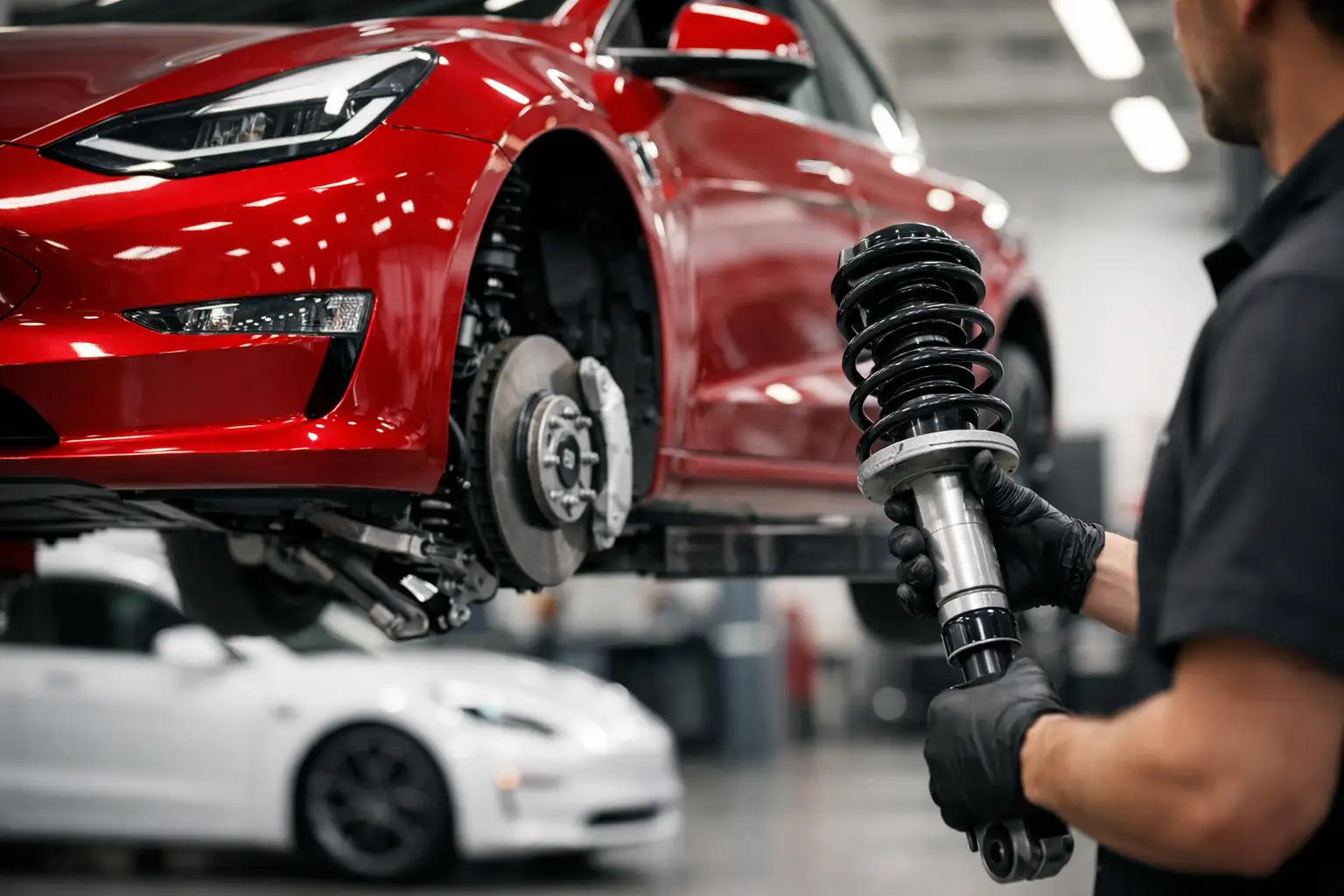
A sharp clunk over a Palatine pothole, a steering wheel that no longer sits straight, or a Tesla that feels unsettled on the expressway can turn a quiet, refined drive into a real concern. Tesla suspension service is about more than eliminating a noise. It helps protect predictable handling, tire life, ride comfort, and the confidence you expect from a premium electric vehicle.
Suspension concerns are easy to put off when the vehicle is still driving. But wear usually progresses rather than corrects itself. A loose component can place added stress on nearby parts, and a small alignment change can shorten the life of an expensive set of tires. The right response is not replacing parts based on a guess. It is a careful inspection that identifies the source of the problem and explains what is urgent, what can be monitored, and why.
What Tesla Suspension Service Actually Covers
Tesla models do not all use the same suspension design. Model 3 and Model Y vehicles typically use conventional coil-spring suspension layouts, while certain Model S and Model X configurations may use adaptive air suspension. The service needs, symptoms, and repair options depend on the model, model year, mileage, wheel size, and how the vehicle has been driven.
A thorough suspension evaluation may include the control arms, bushings, ball joints, sway bar links, shock absorbers or struts, springs, steering components, wheel bearings, and mounting hardware. On air-suspension-equipped vehicles, the inspection can also involve air springs, ride-height sensors, air lines, the compressor, and related system functions.
The goal is to separate normal road feel from an actual mechanical concern. Low-profile tires can make rough pavement feel more pronounced, especially after a Chicago-area winter. That does not automatically mean a suspension repair is needed. On the other hand, a repeated clunk, squeak, creak, vibration, or uneven ride height deserves professional attention.
Signs Your Tesla May Need Suspension Attention
The most recognizable warning sign is a noise that appears over bumps, driveway entrances, or uneven pavement. A dull clunk can point to play in a suspension or steering component, while a creak at low speeds may suggest a bushing or joint that needs closer evaluation. Sound alone is not a diagnosis, but it gives a skilled technician a useful starting point.
Changes in vehicle behavior are just as meaningful. If the Tesla drifts, pulls, feels less stable during lane changes, or requires frequent steering correction, an alignment or worn component may be involved. A steering wheel that is off-center after a pothole impact is another reason to schedule an inspection.
Tire wear often tells the story before a driver notices a handling change. Inner-edge wear, feathering, or one tire wearing much faster than the others can result from alignment angles that are out of specification. Tires can also wear unevenly because of inflation pressure, tire rotation history, or driving conditions, so a proper assessment should consider the full picture rather than blame the suspension immediately.
For Tesla vehicles with air suspension, watch for a corner sitting lower than the others after the vehicle has been parked, unusual compressor activity, a ride-height warning, or a noticeable difference between the selected ride height and the vehicle’s actual stance. These symptoms should be addressed promptly. Air-suspension problems can range from a sensor or fitting issue to a leak or component failure, and the repair approach should follow a confirmed diagnosis.
Why Accurate Diagnosis Matters More Than a Quick Fix
Suspension repair is not an area where a parts-first approach serves the customer well. Several issues can produce similar symptoms. A tire problem can feel like a suspension vibration. A worn steering component can create a sound that seems to come from a strut. An alignment concern may be the result of a bent or worn part, not the problem itself.
A qualified Tesla suspension service begins with a road test when appropriate, a visual inspection, and checks for looseness, leaks, damage, and abnormal tire wear. The technician should then compare findings with the concern you reported. If repair is recommended, you deserve a clear explanation of the affected component, the consequences of waiting, and whether related work is truly necessary.
Tesla vehicles also require proper lifting procedures, model-specific repair information, and the ability to address any necessary electronic checks after mechanical work. Depending on the service performed, the vehicle may need a wheel alignment and system verification. This is one reason a general inspection is not always enough. The shop needs experience with premium vehicles, the right equipment, and a process that respects the differences between EVs and conventional vehicles.
Common Tesla Suspension Repairs and Their Trade-Offs
Control arms, bushings, ball joints, and sway bar links are wear items. Road salt, water, sharp impacts, and normal mileage all contribute to their eventual wear. Replacing a worn component can restore a more controlled feel and prevent further tire wear, but replacing every nearby part simply because one part has failed is not always justified. Condition, mileage, and the vehicle’s intended use should guide the recommendation.
Shocks and struts manage body movement and keep the tires better connected to the road surface. When they lose effectiveness, the vehicle may feel bouncy, less composed over rough pavement, or less settled after a dip in the road. Replacing them in matched pairs on the same axle is often the sensible approach because unequal damping can affect ride balance. The right choice of parts matters as well. A lower-quality replacement may cost less upfront but compromise the quiet, controlled ride that Tesla owners value.
Air-suspension repairs need an especially disciplined diagnosis. A low ride height could stem from an air leak, a valve issue, a sensor concern, or compressor performance. Replacing an expensive assembly without identifying the cause can lead to repeat visits and unnecessary cost. A transparent shop will explain the test results before recommending a repair.
Alignment is frequently part of the conversation, but it should not be treated as a cure-all. An alignment adjusts the angles of the wheels within specification. It cannot correct a damaged wheel, worn ball joint, bent suspension part, or failing tire. When the underlying components are sound, though, a precise alignment can improve straight-line stability and help protect tire life.
How to Get More Life From Your Tesla Suspension
No suspension is immune to rough roads, but a few habits can reduce unnecessary stress. Slow down for potholes, especially when the pavement is wet or visibility is poor. Avoid striking curbs when parking, and have the vehicle checked after a hard impact even if no warning message appears immediately.
Tire maintenance matters more than many owners realize. Maintaining recommended pressures, rotating tires when appropriate for the tire setup, and addressing irregular wear early can reveal problems before they become more expensive. Because Tesla vehicles are heavy and deliver instant torque, tire condition and alignment have a direct effect on how composed the vehicle feels.
It also helps to report symptoms precisely. Note whether a noise occurs while turning, braking, accelerating, crossing bumps, or driving at a particular speed. Mention whether it began after tire work, a pothole strike, or a recent change in weather. Those details can shorten diagnostic time and help the technician reproduce an intermittent concern.
Choosing a Shop for Tesla Suspension Service
The best service experience starts with a shop that listens before it recommends. Look for technicians who inspect the vehicle methodically, use manufacturer-grade diagnostic and alignment equipment, and can explain findings in plain language. You should receive an estimate before work begins and a direct answer when a repair can safely wait.
For owners in Palatine and the northwest suburbs, an independent luxury and European vehicle specialist can offer a more personal alternative to a dealership service department. At Wizard Werks, the focus is on honest diagnostics, quality parts, and dealership-level workmanship without pressure or unnecessary upselling. Whether the concern is a minor noise or a ride-height issue, the repair plan should fit the vehicle’s actual condition, not a one-size-fits-all checklist.
Do not wait for a small change in ride quality to become a tire bill, a handling concern, or an unexpected breakdown. A timely inspection gives you useful answers and lets you make a repair decision with confidence before the next rough stretch of road makes the choice for you.