
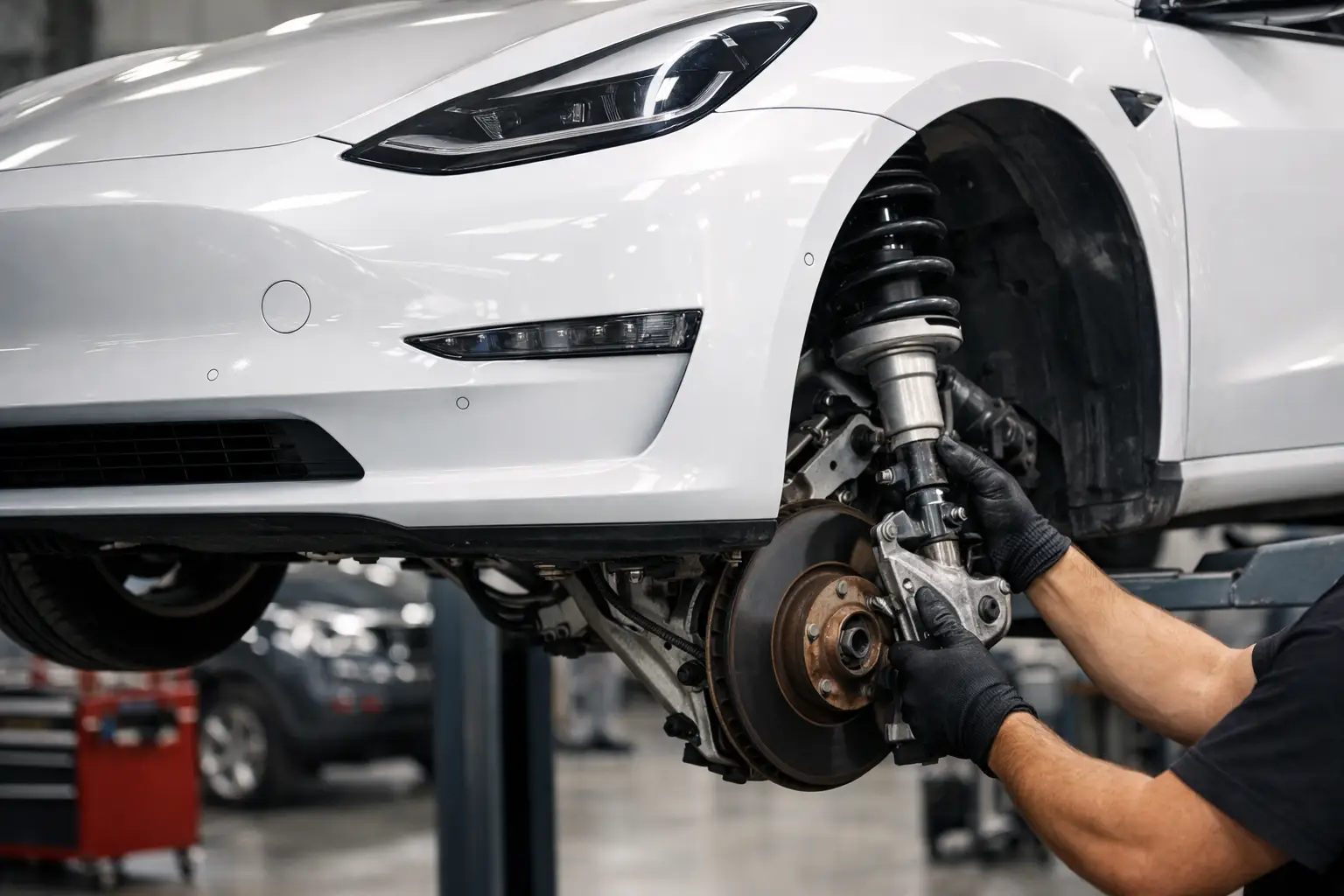
A Tesla that suddenly sits lower on one corner, clunks over small bumps, or feels unsettled at highway speed gets your attention fast. Tesla suspension repair is not the kind of service to put off, especially when ride height, steering feel, and tire wear can all change quickly once a component starts failing.
For many owners, the tricky part is not noticing that something feels off. It is figuring out whether the issue is minor wear, an air suspension fault, or a larger problem that needs proper diagnostics before parts are replaced. That matters because with Tesla, suspension symptoms can overlap, and guessing gets expensive.
Why Tesla suspension problems need the right diagnosis
Suspension systems do more than absorb bumps. On a Tesla, they also affect stability, braking feel, ride height control, tire life, and the quiet, planted driving experience owners expect. When one part is worn or one sensor starts sending bad information, the vehicle may still drive, but it will not drive the way it should.
This is where an experienced shop makes a difference. A general inspection might spot an obvious leak or a loose component, but Tesla suspension issues often need a more careful process. The goal is to confirm the real cause, not just replace the first part connected to the symptom.
That approach is especially important with adaptive and air suspension setups. A warning message does not always mean the compressor is bad. Uneven ride height does not always mean an air strut has failed. Sometimes the problem is the sensor, the valve block, a line leak, a control issue, or wear in related suspension hardware that changes how the car sits and responds.
Common signs you may need Tesla suspension repair
Some suspension problems show up dramatically. Others creep in slowly enough that owners adjust without realizing how much the vehicle has changed.
A few of the most common warning signs include knocking or clunking over bumps, squeaking at low speed, a bouncy or harsh ride, uneven tire wear, steering that feels loose or less centered, and a vehicle that leans or sits unevenly. If your Tesla has air suspension, you may also notice the car lowering overnight, struggling to raise or lower properly, or displaying suspension-related alerts on the screen.
It depends on the failure, but not every symptom means the car is unsafe to move a short distance. Still, it is smart not to stretch that gamble. A worn control arm bushing is different from a major air leak or a failed suspension component that can affect handling in a bigger way.
Tesla suspension repair often starts with these components
On any luxury vehicle, suspension wear tends to happen in patterns. Tesla is no exception. Some repairs are straightforward wear-item issues, while others involve electronic ride control and air management.
Control arms and bushings are common problem areas when owners hear creaks, clunks, or feel instability over uneven pavement. Ball joints can also create noise and play that changes steering response. Shocks and struts may wear with mileage, leading to a floaty or unsettled ride, although the symptoms can vary depending on model and suspension design.
On Teslas equipped with air suspension, the list expands. Air struts, compressors, air lines, valve blocks, and height sensors can all contribute to poor ride height control or warning messages. Sometimes the failure is obvious, like one corner dropping. Other times the issue only appears under certain conditions, which is why proper testing matters.
Alignment can also enter the conversation. Suspension wear and alignment problems often show up together, but they are not the same thing. If a shop jumps straight to alignment without addressing worn components first, the vehicle may still pull, wear tires unevenly, or fail to hold its settings.
Air suspension adds comfort, but it adds complexity
For owners with air suspension, the benefits are clear. The ride can feel more refined, the vehicle can adjust for road conditions, and height control adds convenience. But when something goes wrong, Tesla suspension repair becomes more involved than replacing a traditional shock or strut.
Air suspension faults can be mechanical, electrical, or both. A leaking air spring may overwork the compressor. A weak compressor may struggle to maintain height even if the rest of the system is intact. A faulty ride height sensor can cause the system to behave unpredictably, even when the air components themselves are still serviceable.
This is where experience saves time and money. Replacing parts one by one based on symptoms alone can lead to repeat visits and unnecessary cost. A better process is to inspect the system as a whole, confirm where pressure is being lost or where communication is failing, and then recommend the repair that solves the actual problem.
Why suspension problems should not wait
Owners sometimes delay suspension work because the car still feels manageable. That is understandable. Not every sound means immediate failure, and nobody wants to authorize repairs without a clear reason.
The problem is that suspension issues tend to spread costs when ignored. A worn joint can affect nearby components. A leaking air strut can overwork the compressor. Bad damping or poor alignment can shorten tire life. What starts as a noise complaint can turn into a bigger bill if the root issue is left alone too long.
There is also the driving experience to consider. Tesla owners are used to responsive handling, stable braking, and a smooth, controlled ride. When the suspension starts falling off that mark, the change is not just annoying. It affects confidence behind the wheel.
What to expect from a Tesla suspension repair appointment
A good suspension visit should feel straightforward. You describe what you are hearing, feeling, or seeing. The shop inspects the system, verifies the condition of the relevant components, and explains what is confirmed versus what is still being ruled out.
That last part matters. Honest diagnostics means separating facts from possibilities. If a component is clearly failed, you should be told that plainly. If there are related wear items worth watching but not yet urgent, that should be explained just as clearly.
In many cases, the repair may include replacing worn suspension parts, correcting ride height problems, and checking alignment once the mechanical issue is resolved. The exact scope depends on what failed, how long it has been happening, and whether uneven tire wear or handling changes have already developed.
For Tesla owners in the northwest suburbs, this is where a dealer alternative can make real sense. A shop like Wizard Werks can provide the personal communication many luxury vehicle owners want, along with the diagnostic discipline and repair standards these vehicles require.
Choosing the right shop for Tesla suspension repair
Not every shop is a fit for this kind of work. Suspension service on a premium vehicle calls for more than basic mechanical ability. It takes careful inspection, the right diagnostic process, and a willingness to explain recommendations without pushing work that is not needed.
If you are comparing service options, look for a shop that is comfortable with advanced vehicle systems, uses quality parts, and communicates clearly about what is failing and why. Transparency matters just as much as technical skill. You should know what is urgent, what can wait, and what the repair is expected to fix.
It also helps to work with a team that understands owner expectations. Tesla drivers are not only protecting a vehicle investment. They are trying to preserve a specific ride and handling feel. The goal is not just to make the warning light disappear. The goal is to restore how the car should drive.
Tesla suspension repair is about safety and comfort
A lot of owners first think about suspension as a comfort system. In reality, it is tied closely to safety, tire life, and overall control. When the suspension is right, the car feels composed and predictable. When it is not, even a premium vehicle can start to feel unsettled in ways that are easy to dismiss until they get worse.
If your Tesla is riding unevenly, making new noises, or feeling different on the road, trust that change. The sooner the problem is diagnosed correctly, the easier it usually is to fix it without turning one issue into several. A careful inspection today can save a lot of frustration later, and it can help your Tesla feel like a Tesla again.