
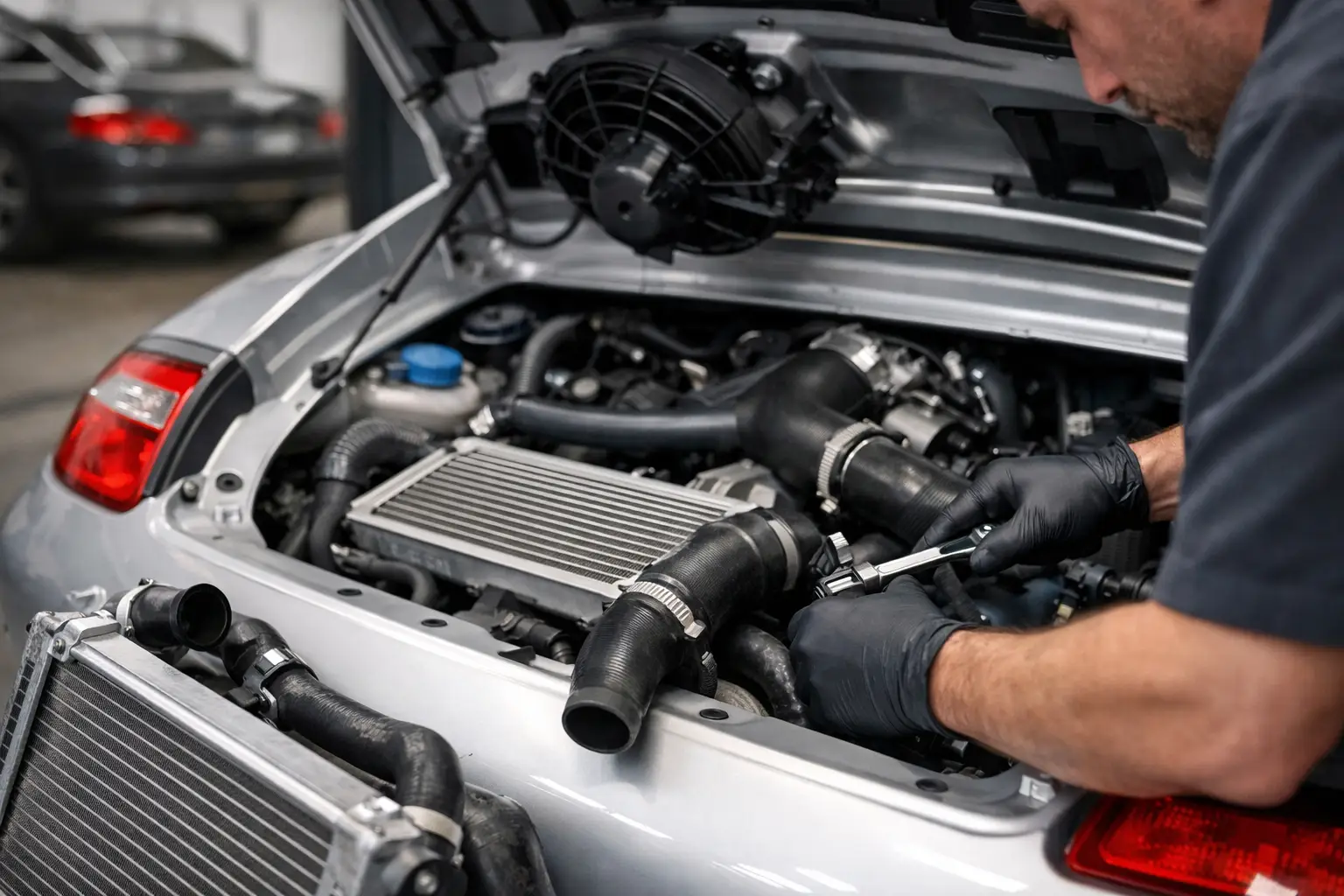
A low coolant warning in a Porsche is easy to dismiss when the car still drives normally. But in a performance vehicle designed to manage high operating temperatures precisely, a small leak can become an overheated engine, reduced performance, or a much larger repair if it is left unresolved. This Porsche cooling repair example shows why proper diagnosis matters more than simply topping off coolant and sending the vehicle back on the road.
The cooling system has one job: move heat away from critical engine components and maintain the temperature range Porsche engineered for the vehicle. When pressure drops, coolant escapes, circulation is compromised, or a component begins to fail, that balance changes quickly. The right repair starts by finding the actual cause, not by replacing parts based on a warning light alone.
Porsche Cooling Repair Example: Starting With the Symptoms
Consider a representative Porsche owner who notices a faint sweet smell after parking, an occasional low coolant message, and a few drops of fluid on the garage floor. The temperature gauge remains normal, and there is no obvious steam from the engine bay. Those details can make the issue feel minor, but they are enough to schedule an inspection.
At first glance, several possible causes could fit those symptoms. A hose connection may be seeping only when the system is hot and pressurized. A plastic coolant pipe or reservoir may have developed a hairline crack. The water pump could be leaking from its weep hole, or a thermostat housing gasket may no longer be sealing correctly. On some Porsche models, access to the affected area can be limited, so the source is not always visible during a quick visual check.
That is why a specialist begins with the vehicle’s history, current warnings, and a careful inspection of the cooling system. The technician checks coolant level and condition, looks for dried residue around fittings and components, and scans the vehicle for stored fault codes that may provide useful context. A code does not replace physical testing, but it can help identify whether the engine has seen temperature, circulation, or sensor-related concerns.
Pressure Testing Finds What a Visual Check Can Miss
In this example, the next step is a cooling-system pressure test. With the engine cool, the system is pressurized to the appropriate specification and monitored for pressure loss. This test can reveal leaks that appear only under pressure, including small leaks that may not leave a large puddle.
The inspection identifies coolant residue near a water pump assembly and a slow seep at a related sealing surface. The leak is not dramatic, but it is active enough to account for the recurring coolant warning. Continuing to add coolant would not solve the problem. It would only postpone the point at which the system could no longer maintain the proper level or pressure.
The technician also evaluates nearby components rather than treating the failed part in isolation. This is where recommendations should be specific and transparent. If an adjacent hose, connector, or thermostat housing is in good condition, it should not be added to the estimate without a clear reason. If it shows age-related deterioration or has to be removed to complete the repair, the owner should understand both the condition and the labor considerations before approving the work.
For a Porsche cooling repair, the best approach depends on the model, mileage, service history, and exact failure point. A 911, Cayenne, Macan, Panamera, and Boxster can have different cooling-system layouts and common trouble areas. The goal is not to apply one repair to every Porsche. It is to use model-aware diagnostics and manufacturer-grade equipment to make the right call for that vehicle.
The Repair Is More Than Replacing One Part
Once the source is confirmed, the repair begins with proper access, removal of the leaking component, and inspection of the mounting surfaces and related connections. Quality parts matter in a cooling system because heat cycles and system pressure place constant stress on seals, housings, hoses, and pumps. Using OEM parts or quality components that meet the vehicle’s requirements helps protect fit, function, and long-term reliability.
In this example, the leaking component and required seals are replaced. The technician checks that the mating surfaces are clean, the fasteners are installed to the correct specification, and all connections are secure. These details are not cosmetic. An improperly seated seal, overtightened fastener, or damaged connector can create a new leak immediately or months later.
Refilling the system is also a critical step. Porsche cooling systems need the correct coolant type and mixture. Mixing incompatible coolant or relying on plain water can affect corrosion protection, boiling point, and the performance of the system over time. The system is refilled according to the appropriate procedure, then carefully bled to remove trapped air.
Air pockets can cause inconsistent heater operation, coolant warnings, fluctuating temperature readings, or poor circulation. On modern European vehicles, the bleed process may involve specific equipment, procedures, and electronic functions. That is one reason a general top-off at home can be risky when a warning has appeared more than once.
Verification Protects the Repair
A repair is not complete when the new part is installed. The system should be pressure-tested again to confirm that it holds pressure without loss. The vehicle is then brought to operating temperature while the technician monitors coolant temperature, fan operation, warning messages, and the repaired area for signs of seepage.
A road test may also be appropriate, particularly when the vehicle had an intermittent warning or when the system needs to be verified under normal driving conditions. After the vehicle cools, the coolant level is checked once more. This final inspection helps confirm that the system is stable and that there are no issues hidden by the initial service position or temperature.
At Wizard Werks, that verification is part of the value of specialized European vehicle service. Porsche owners should receive a clear explanation of what was found, what was repaired, and whether any future maintenance should be planned. The point is not to create a longer estimate. It is to give the owner enough information to make a confident decision.
When a Coolant Warning Needs Immediate Attention
Some cooling issues can wait long enough for a scheduled inspection, while others require stopping as soon as it is safe. If the warning is limited to a low coolant message and the engine temperature remains normal, avoid extended driving, check for visible leaks only after the engine is cool, and arrange service promptly. Never open a hot coolant reservoir cap.
If the temperature gauge rises above normal, steam is visible, the cabin heater suddenly blows cold while the engine is hot, or a red temperature warning appears, pull over safely and turn the engine off. Continuing to drive an overheating Porsche can lead to severe damage far beyond the original cooling-system fault. A tow is usually the lower-cost decision in that situation.
The same principle applies if coolant loss is frequent. Adding coolant every few days is not maintenance. It is evidence that the system needs diagnosis. Coolant does not simply disappear under normal operation.
What Porsche Owners Can Do Between Services
A quick check of the coolant reservoir when the engine is cold can help identify a changing level before a warning becomes urgent. Look for visible residue under the vehicle after it has been parked, and pay attention to unusual smells, fan behavior, or repeated messages in the instrument cluster. These observations give a technician useful clues and can shorten the diagnostic process.
Still, the most helpful habit is to act early. Cooling systems often give owners a window to address a small leak before it becomes an overheating event. A thorough inspection, honest recommendations, and a properly tested repair protect the performance and confidence that make Porsche ownership worthwhile.
If something feels off, trust the warning signs rather than waiting for a bigger one. A small cooling concern handled correctly can keep your Porsche ready for the next commute, weekend drive, or long stretch of highway.