
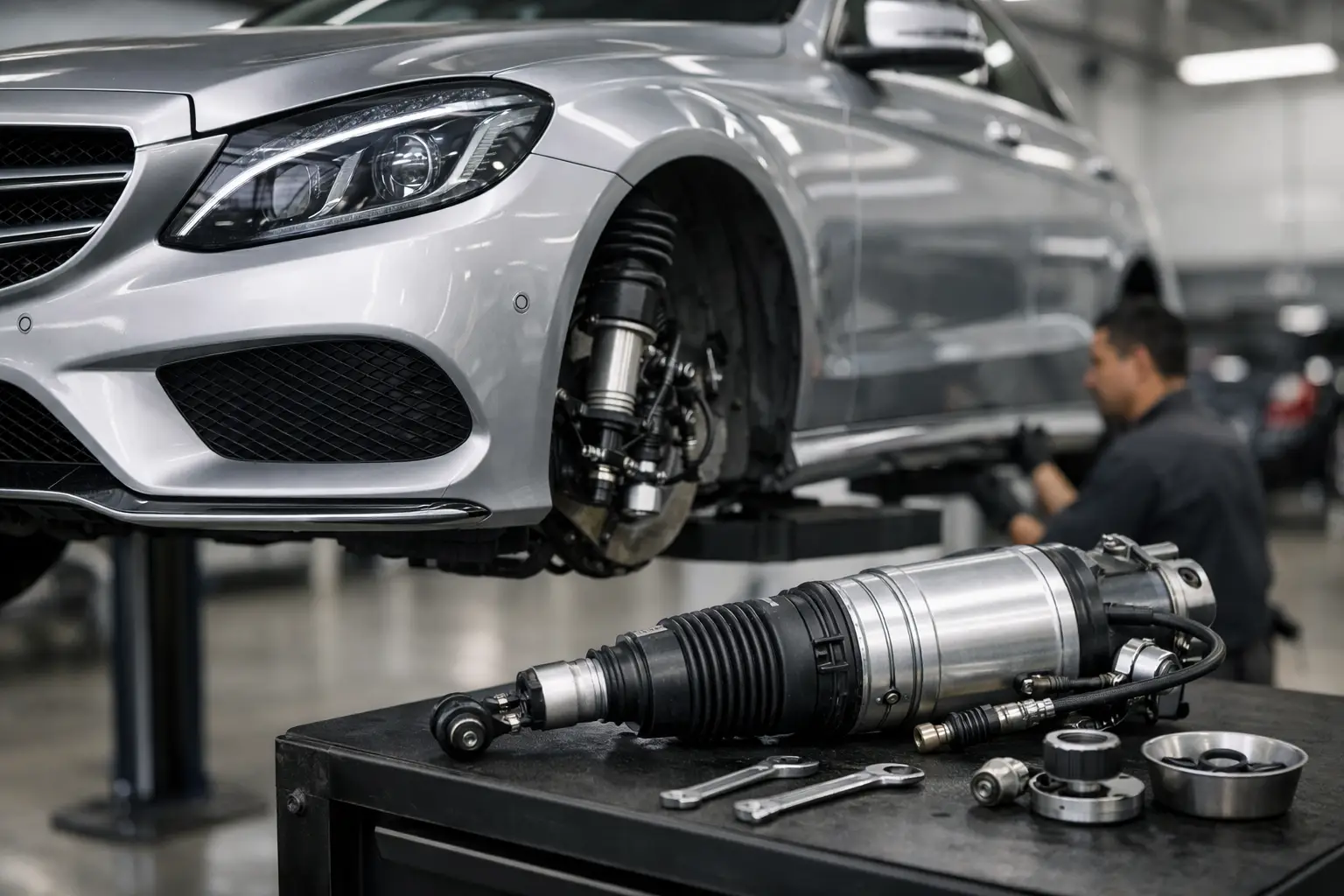
If your Mercedes suddenly feels harsh over bumps, sags at one corner, or flashes a suspension warning on the dash, mercedes abc suspension repair needs attention sooner rather than later. ABC, short for Active Body Control, is a sophisticated hydraulic suspension system designed to keep the car level, stable, and composed. When it works properly, the ride feels controlled and confident. When it starts to fail, small symptoms can turn into expensive repairs if they are ignored.
What makes ABC different from a standard suspension
Mercedes ABC is not a basic spring-and-shock setup. It uses high-pressure hydraulic components, sensors, valves, and an electronic control strategy to actively manage body movement while driving. That means the system is constantly adjusting to reduce body roll, squat, and dive.
For the driver, the benefit is obvious. Large sedans and roadsters feel flatter in turns, more settled during braking, and smoother over changing road surfaces. For the technician, it also means diagnosis has to be precise. A problem in one area can look like a problem somewhere else if the vehicle is not properly tested.
That is why guessing does not work well with this system. Replacing parts based only on a warning message or a visible leak can lead to unnecessary cost and the original issue still not being fixed.
Common signs you may need Mercedes ABC suspension repair
Most ABC problems start with a change in ride quality or vehicle height. Sometimes the car sinks overnight. Other times it stays level but rides stiffly, especially at low speeds. You may also notice the car leaning more than usual in corners or taking longer to recover after bumps.
A warning such as Drive Carefully or Visit Workshop often appears when the system sees a pressure, sensor, or control issue. That message does not automatically mean the same repair every time. In some cases, the root cause is a leaking hydraulic strut. In others, it may be the valve block, pump, accumulator, hydraulic line, ride height sensor, or contaminated fluid.
Fluid leaks are another major clue. ABC hydraulic fluid can leak from struts, hoses, fittings, or the tandem pump area depending on model and condition. If fluid level drops too far, the system can lose pressure and performance quickly.
Symptoms owners often notice first
The first sign is usually not dramatic. It may be a front corner that sits slightly lower after parking overnight, a rougher ride on familiar roads, or a subtle change in how the vehicle responds in turns. Those details matter. Catching the problem early can sometimes keep the repair more focused and less expensive.
Why ABC issues should not be ignored
This is one of those systems where waiting rarely helps. A minor leak today can overwork the pump tomorrow. Low pressure can affect multiple suspension functions. If fluid contamination is involved, that can create broader system wear over time.
There is also the drivability side. Mercedes engineered ABC to support both comfort and control. When the system is compromised, the vehicle may not handle or ride the way it should. That matters for safety, tire wear, and overall confidence behind the wheel.
The good news is that not every ABC repair turns into a full system overhaul. Some vehicles need one failed component replaced and the system properly bled, calibrated, and tested. Others need a more comprehensive approach. The difference comes down to honest diagnostics.
The most common causes behind ABC failures
Hydraulic struts are a frequent source of problems, especially as vehicles age. Internal wear or external seal failure can lead to fluid loss and poor damping. Valve blocks can also stick or leak internally, which affects how pressure is distributed through the system.
The pump is another area that deserves close attention. If the system has been running low on fluid or working against leaks, the pump may be under added stress. Accumulators can weaken over time as well, reducing the system’s ability to manage pressure smoothly.
Sensors and electrical faults should not be overlooked. ABC depends on accurate ride height and system feedback. A wiring issue, faulty sensor, or communication problem can trigger warnings and poor operation even when the hydraulic hardware is still in decent condition.
It depends on the model and service history
Not all Mercedes ABC vehicles fail the same way. Model, mileage, climate, driving habits, and maintenance history all play a role. A well-maintained vehicle may need one targeted repair. Another with multiple aging components and old fluid may need a broader plan to restore reliability.
That is why a one-size-fits-all estimate is rarely helpful. The right starting point is inspection, pressure testing, scan tool evaluation, and a close look at fluid condition and visible leaks.
What proper Mercedes ABC suspension repair should include
A real repair process starts with confirming the complaint and checking the full system, not just the most obvious symptom. That means scanning for manufacturer-specific fault codes, inspecting hydraulic components for leaks, verifying system pressure, and evaluating how the car sits and responds.
Once the fault is identified, the repair should address the actual cause and any related issues. For example, replacing a leaking strut without checking fluid level, pump condition, or contamination can leave the system vulnerable. On the other hand, replacing too many parts at once without evidence is not the right answer either.
After component replacement, the system needs to be serviced correctly. Depending on the repair, that may include fluid handling procedures, bleeding, ride height checks, and final road testing. On modern European vehicles, the quality of the repair is not just about the part installed. It is also about the process used to confirm the fix.
Dealer alternative or specialist shop?
Mercedes owners often assume the dealership is the only safe choice for ABC work. In reality, what matters most is whether the shop has Mercedes-specific diagnostic capability, experience with hydraulic suspension systems, and technicians who understand how these systems behave in the real world.
An independent specialist can be a strong option when they combine factory-level equipment, OEM-quality parts, and clear communication. For many owners, that also means more transparency and a more personal service experience than a large dealership environment.
At Wizard Werks, that approach matters because luxury vehicle owners are not looking for guesswork. They want to know what failed, what needs attention now, what can wait if appropriate, and what the repair means for long-term reliability.
How to make a smart repair decision
If your vehicle has an ABC warning or ride-height issue, the best next step is to have it diagnosed before the symptoms spread. Be cautious of very low estimates given before testing. ABC systems are too specialized for off-the-cuff pricing to be meaningful.
Ask whether the shop can identify the exact failed component, explain whether any additional wear was caused by that failure, and verify the repair after installation. That conversation should be straightforward. You should not have to choose between technical competence and clear communication.
It also helps to ask about parts quality and warranty coverage. On a system this complex, the cheapest path up front is not always the least expensive path overall. Good parts, proper testing, and careful workmanship usually save money compared with repeating repairs.
When preventive attention can save money
ABC systems do not always give a lot of warning before a bigger issue develops, but small signs still matter. If you notice a corner sagging occasionally, fresh fluid residue near a suspension component, or a ride that feels more brittle than it used to, it is worth having the car checked.
Routine inspection can catch leaks, weak components, and fluid issues before they place more strain on the rest of the system. That does not mean replacing parts that still have life left in them. It means making informed decisions while the repair options are still more manageable.
Luxury vehicles reward proper care, especially when their systems are as advanced as Mercedes ABC. If your suspension is sending signals that something is off, getting the right diagnosis early is usually the best way to protect both the driving experience and your repair budget.