
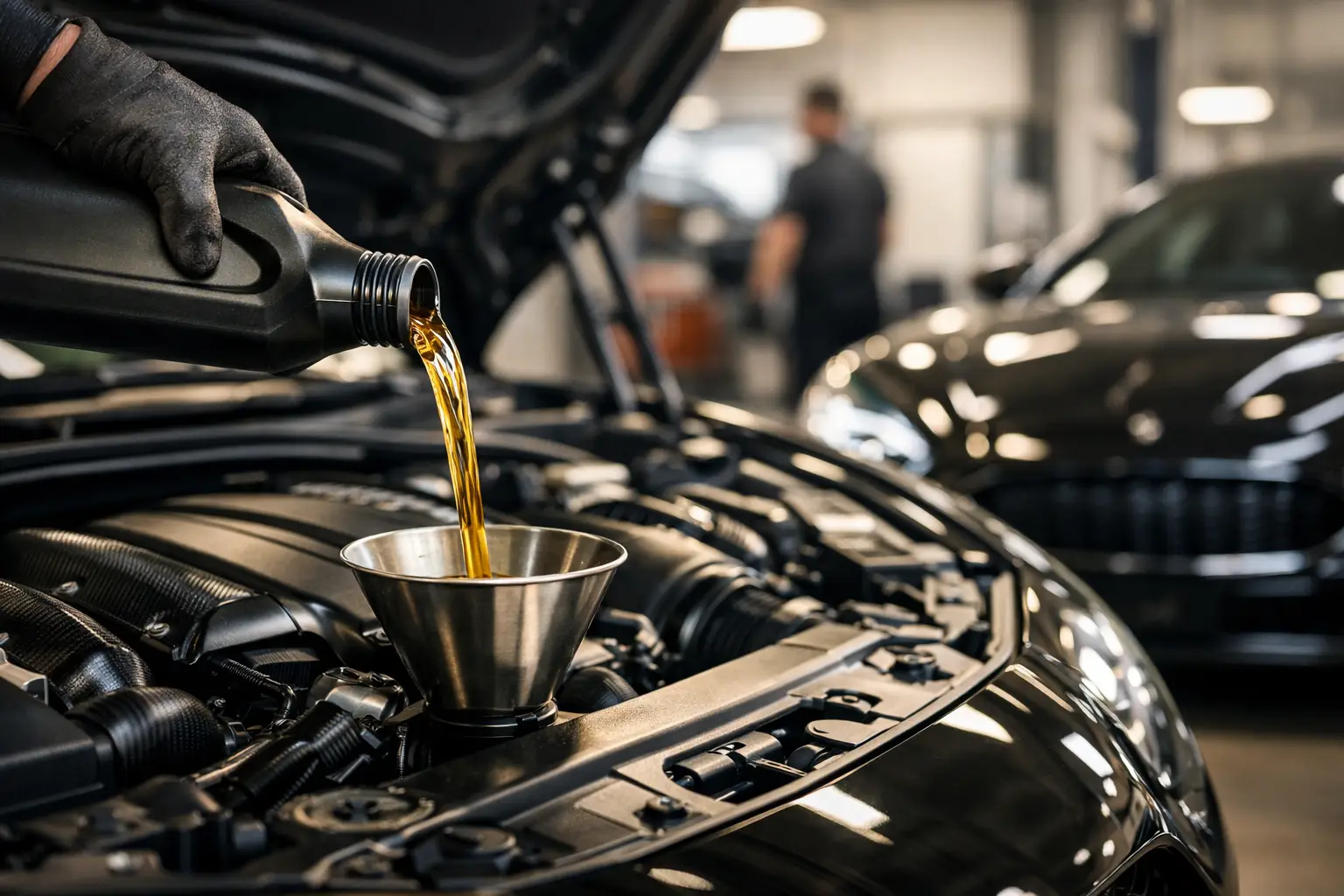
A luxury car oil service is not simply a quick oil change with a premium price tag. On a BMW, Mercedes-Benz, Audi, Porsche, Land Rover, or other high-end import, the oil, filter, service interval, and reset procedure all play a role in protecting the engine you rely on every day. Getting one of those details wrong may not cause an immediate problem, but it can affect performance, efficiency, and long-term reliability.
For owners in Palatine and the northwest suburbs, the goal is straightforward: keep the vehicle performing as designed without paying dealership prices for service that can be handled by a qualified independent specialist. That starts with understanding what your vehicle actually needs – not what a generic quick-lube menu suggests.
Why Luxury Car Oil Service Is Different
Modern luxury engines are engineered with tight tolerances, advanced turbocharging systems, variable valve timing, and sophisticated emissions equipment. Their oil is expected to do more than lubricate moving parts. It must manage heat, help control deposits, protect turbocharger components where equipped, and maintain the proper flow characteristics during cold Illinois starts and summer traffic.
That is why the correct oil specification matters as much as the viscosity printed on the bottle. Two oils may both be labeled 0W-20 or 5W-30, yet only one may meet the manufacturer approval required for your particular engine. BMW, Mercedes-Benz, Volkswagen Group, Porsche, Jaguar Land Rover, Volvo, and other brands each publish specifications based on their engine designs and service requirements.
Using an oil that is merely “close enough” can be a false economy. It may not provide the intended protection under high temperatures, extended intervals, or turbocharged operation. A proper service uses manufacturer-approved oil and an OEM-quality filter selected for the specific vehicle.
What a Proper Oil Service Should Include
An oil service should be a maintenance appointment, not a rushed transaction. The oil and filter replacement is central, but the technician should also look for early signs of concerns that can become more expensive when overlooked.
A thorough appointment begins by confirming the vehicle identification information, engine type, oil specification, and manufacturer maintenance requirements. The old oil is drained correctly, the filter is replaced, and the engine is filled to the proper level with approved oil. On many European vehicles, the electronic service reminder must then be reset through the appropriate diagnostic system.
During the visit, it also makes sense to inspect for fluid leaks, check the visible condition of belts and hoses, review tire condition and pressures, and look for warning messages or stored service indicators. This does not mean adding work that your car does not need. It means giving you useful information before a minor issue becomes an inconvenient repair.
At Wizard Werks, that approach is built around transparent communication. If an inspection identifies something worth watching, you should receive a clear explanation of what was found, how urgent it is, and what your options are. Honest recommendations are more valuable than a list of unnecessary add-ons.
The Right Interval Depends on How You Drive
The service reminder in your dashboard is a valuable guide, but it is not the only factor. Manufacturer intervals are often calculated from mileage, time, operating temperature, and driving patterns. Still, real-world conditions in the Chicago area can justify a more conservative schedule for some owners.
Short trips are a common example. If the engine rarely reaches full operating temperature, moisture and fuel dilution can accumulate in the oil. Stop-and-go commuting, long periods of idling, severe winter weather, and frequent spirited driving can also place additional stress on the lubricant.
Many luxury vehicles have factory intervals that extend to 10,000 miles or longer under ideal conditions. Whether that interval is right for your car depends on the brand, engine, age, mileage, and how it is used. A newer vehicle driven mostly on highway trips may be well suited to its factory schedule. An older turbocharged vehicle used for short suburban trips may benefit from more frequent service.
The best answer is not a blanket mileage rule. It is a service plan based on the manufacturer recommendation and your vehicle’s actual operating conditions. If you are uncertain, ask for a recommendation that explains the reasoning rather than simply pushing the shortest possible interval.
Oil Quality Matters More in Turbocharged Engines
Turbocharged engines are common across the luxury market because they deliver strong power while supporting fuel efficiency. They also create intense heat around the turbocharger, where oil is essential for lubrication and cooling.
When oil breaks down or the wrong formulation is used, deposits can form more easily in high-temperature areas. Over time, that can affect oil flow and component durability. This is one reason premium European vehicles should not be treated like ordinary vehicles at a one-size-fits-all service center.
The same principle applies to vehicles with performance-oriented engines, high-output V8s, and advanced hybrid powertrains. The correct product, correct fill quantity, and correct procedure are part of the maintenance requirement. A specialist familiar with the vehicle platform knows where those details matter.
Common Oil Service Mistakes to Avoid
The most avoidable mistake is waiting until a warning light appears. Low-oil or low-pressure warnings require attention, but they should not be treated as a routine maintenance reminder. If you see an oil pressure warning, stop driving as soon as it is safe to do so and arrange for professional guidance. Continuing to operate the engine can cause serious damage.
Another issue is assuming every oil filter is interchangeable. Filters vary in design, material quality, sealing surfaces, and bypass-valve operation. An OEM or high-quality equivalent filter is a small but meaningful part of doing the job correctly.
Owners should also avoid relying on the oil level alone to decide whether service is needed. Adding oil can correct a low level, but it does not replace degraded oil or a filter that has reached the end of its service life. If your vehicle is consuming oil between services, that is worth documenting and discussing with a technician.
Finally, do not overlook service records. Clear documentation helps you follow the maintenance schedule, supports resale value, and gives your repair shop a more complete picture of the vehicle. Keep invoices that identify the oil specification, filter used, mileage, and date of service.
Signs Your Vehicle May Need Attention Sooner
Your dashboard service reminder remains the first place to look, but several signs deserve a closer inspection before the next scheduled visit. A burning-oil smell, fresh oil spots where you park, an unusual increase in oil consumption, or a new engine warning message should not be ignored.
Changes in engine behavior can matter, too. Rough running, ticking noises after startup, reduced performance, or excessive smoke from the exhaust are not automatically oil-related, but they warrant a professional diagnosis. The right next step is to identify the cause, not to guess or approve repairs without a clear explanation.
For vehicles with electronic oil-level measurement, check the level only according to the manufacturer procedure. Some systems require the engine to be warm, the vehicle to be parked level, or the measurement to be taken after a specific period. Incorrect readings can lead to overfilling, which is also harmful to an engine.
Choosing an Independent Luxury Service Shop
A dealership is not the only place to receive proper maintenance, but a luxury vehicle does deserve more than a general oil-change lane. Look for an independent shop with ASE-certified technicians, experience with your vehicle brand, manufacturer-grade diagnostic equipment, and access to OEM parts and approved fluids.
Just as important, choose a shop that communicates clearly. You should know what service is being performed, why it is recommended, and what it will cost before the work begins. A trusted local specialist can provide dealership-level care while offering a more personal relationship and often more sensible pricing.
Your oil service is one of the simplest ways to protect a sophisticated vehicle. Schedule it on time, use the exact specification your engine requires, and let a qualified technician keep an eye on the details that make luxury ownership feel dependable rather than complicated.