
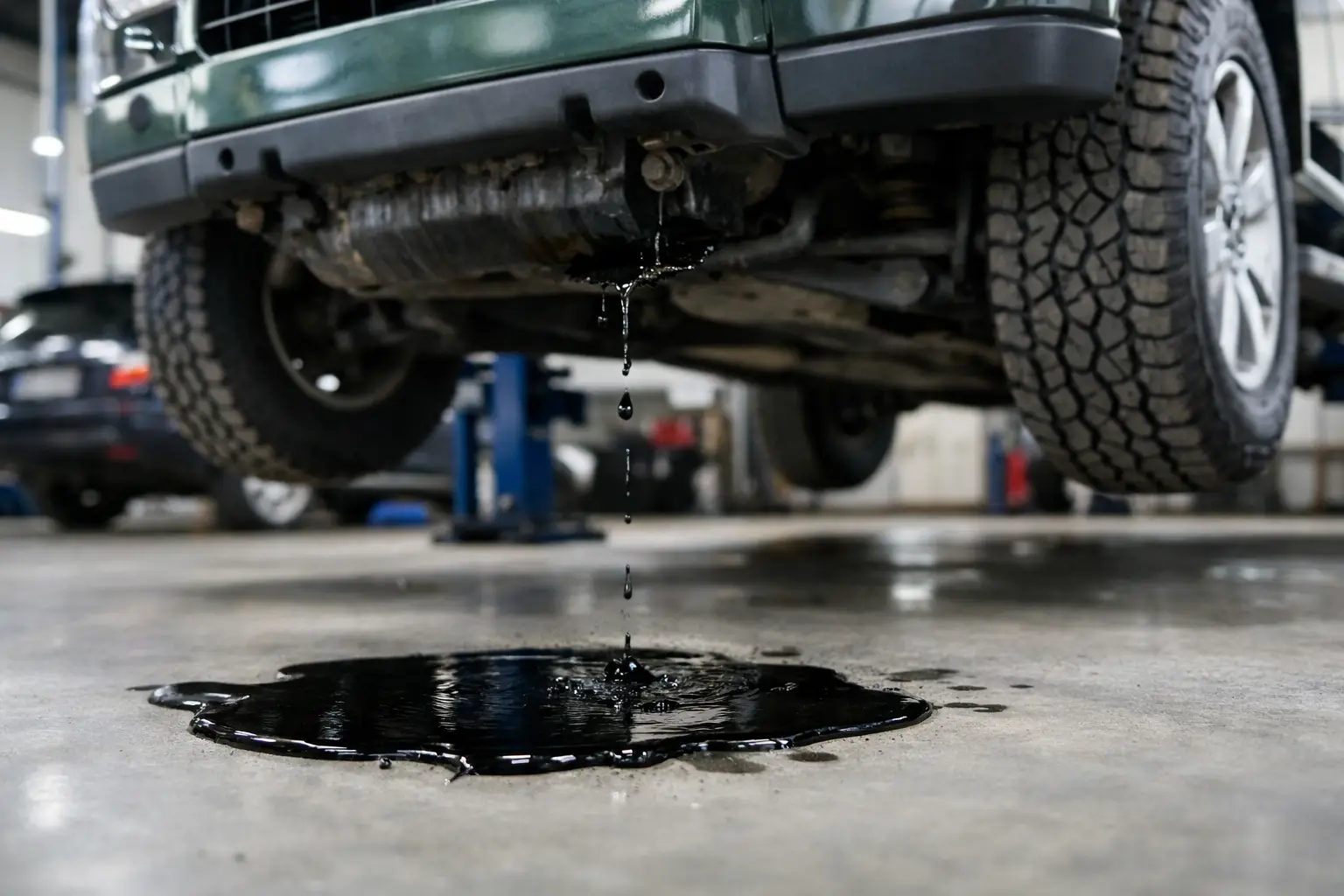
A few drops on the garage floor can feel out of proportion to their size when they appear under a Land Rover. That is understandable. A Land Rover oil leak example can range from a light gasket seep that should be monitored to a leak that lowers the oil level quickly and deserves prompt attention. The difference is not guesswork. It comes down to identifying the fluid, tracing its true source, and understanding how the vehicle is being used.
For Land Rover and Range Rover owners in the northwest suburbs, the right response is neither to ignore every spot nor to approve repairs based on a quick glance. These vehicles have tightly packaged engines, underbody panels that can move oil away from its origin, and several possible leak points. A careful inspection protects both the engine and your repair budget.
A Land Rover Oil Leak Example: From Spot to Diagnosis
Consider a common real-world scenario: A driver notices a small, dark spot near the front passenger side after the vehicle has sat overnight. There is no warning light, the engine sounds normal, and the spot is only about the size of a coin. After an oil change, the area may appear wet, which makes it tempting to assume the filter or drain plug is the problem.
A proper inspection starts by confirming that the fluid is engine oil rather than coolant, power steering fluid on older applications, or condensation mixed with road grime. The technician then checks the oil level, looks for fresh oil around the filter housing and valve covers, and inspects the underside after removing panels as needed. Cleaning the area and rechecking it after operation can be more reliable than diagnosing a source through accumulated residue alone.
In this example, oil may be collecting along the lower edge of the engine even though the actual source is higher up. Airflow and gravity carry it downward, while an undertray holds it until the vehicle is parked. Replacing the lowest wet gasket without tracing the leak can mean paying for a repair that does not solve the issue.
Common Places Land Rovers Can Leak Oil
The exact source depends on the model, engine, mileage, maintenance history, and previous repairs. Still, several areas deserve attention during a Land Rover oil leak inspection.
Valve cover gaskets
Valve cover gaskets seal the top of the engine. Heat cycles eventually harden the gasket material, and oil can begin to seep around the cover perimeter. A minor seep may leave a light film, while a more developed leak can travel down the engine and create an oil smell when it reaches hot components.
The repair should include inspection of the cover itself, fasteners, and surrounding ventilation components. Simply tightening bolts is not always the answer. Over-tightening can damage components or create uneven sealing.
Oil filter housing and cooler seals
Many modern European engines use an oil filter housing and, in some configurations, an oil cooler assembly with multiple sealing surfaces. When a gasket in this area begins to fail, oil often appears around the upper or front section of the engine before working its way down.
Because this area can be crowded, diagnosis matters. Oil from a filter housing seal can resemble a valve cover leak from below. The technician should also look for signs of coolant contamination or external coolant loss where applicable, since related components may share the same general area.
Oil pan and drain plug area
Oil around the bottom of the engine can come from the oil pan gasket, a damaged pan, or a drain plug sealing issue. This is one reason a leak that starts shortly after service should be checked rather than assumed to be normal. A fresh oil change does not cause every leak, but it is reasonable to inspect the filter, plug, and sealing surfaces first.
Road conditions also matter in the Chicago area. A low impact with debris, a curb, or packed snow can damage an underbody panel or affect a lower engine component. The repair approach depends on whether the issue is a seal, a fastener, or physical damage.
Front and rear engine seals
Seals at the front or rear of the engine can leak as rubber ages and loses flexibility. These leaks may be harder to confirm because of limited visibility and the amount of disassembly required to reach the area. A technician should establish that the seal is truly the source before recommending work.
This is where an honest conversation is valuable. If the leak is only a light seep, the vehicle maintains its oil level, and no oil is reaching critical components, monitoring it may be a sensible choice. If it is actively dripping or contaminating other parts, repair becomes more urgent.
Turbocharger oil lines and related fittings
Turbocharged Land Rover engines have oil supply and return lines that require close inspection. A leak at a line, fitting, or seal can leave oil in an area that is difficult to see without proper access. Because the turbocharger operates at high temperatures, fresh oil in this region should not be ignored.
How Serious Is the Leak?
The amount of oil on the floor is only one clue. A slow seep can look dramatic after weeks of collecting on an undertray, while a small but active leak may not leave a large puddle if oil burns off on hot parts. The more useful questions are whether the oil level is dropping, whether there is smoke or a burning-oil smell, and whether the leak is reaching belts, hoses, wiring, or hot exhaust components.
A vehicle that needs oil added between normal service intervals should be evaluated soon. The same is true if the oil pressure warning light appears. Do not continue driving with a low oil level or an oil-pressure warning, even if the vehicle otherwise feels normal. Engine lubrication is not an area where waiting for a convenient appointment is worth the risk.
If the leak is light and the oil level remains stable, monitoring may be appropriate for a limited period. Check the level on level ground according to the vehicle’s procedure, note how much oil is added, and watch for new spots after parking. This information helps turn a vague concern into a clear diagnostic starting point.
Why Land Rover Leak Diagnosis Requires a Methodical Approach
Land Rover and Range Rover vehicles benefit from brand-specific experience because their engines, covers, seals, and electronic service procedures vary widely across generations. A technician needs to understand where oil commonly travels on a particular engine, not just where it first becomes visible.
At Wizard Werks, the goal is to identify the source, explain the condition in plain language, and recommend only the work that makes sense for the vehicle. That may mean addressing an active leak now, planning a non-urgent gasket replacement around future maintenance, or confirming that a recently serviced area is dry and secure. Clear findings matter because a repair estimate should tell you what is leaking, why it is leaking, and what happens if you wait.
Quality replacement parts and correct installation procedures are equally important. A low-cost gasket repair is not a value if poor fitment, skipped cleaning, or incorrect torque creates another leak shortly afterward. Proper service also includes checking the oil level after repairs and verifying that the original concern has been resolved.
What to Do When You See Oil Under Your Land Rover
First, avoid washing the engine bay or spraying the underside before an inspection unless safety requires cleaning a spill. Fresh evidence makes diagnosis easier. Take a photo of the spot, note where the vehicle was parked, and check the oil level if you are comfortable following the owner’s manual procedure.
Next, consider timing. Did the spot appear after service, after a long highway drive, or after the vehicle sat for several days? Has there been a burning smell, smoke from under the hood, or an alert on the instrument panel? These details can help a specialist narrow the inspection efficiently.
If oil is actively dripping, the level is low, or you see a warning message, arrange service promptly and avoid unnecessary driving. For a small, stable seep, schedule an inspection before it grows into a larger issue. A well-documented diagnosis gives you options, and it is always easier to make a calm, informed repair decision before a minor leak becomes an interruption to your week.