
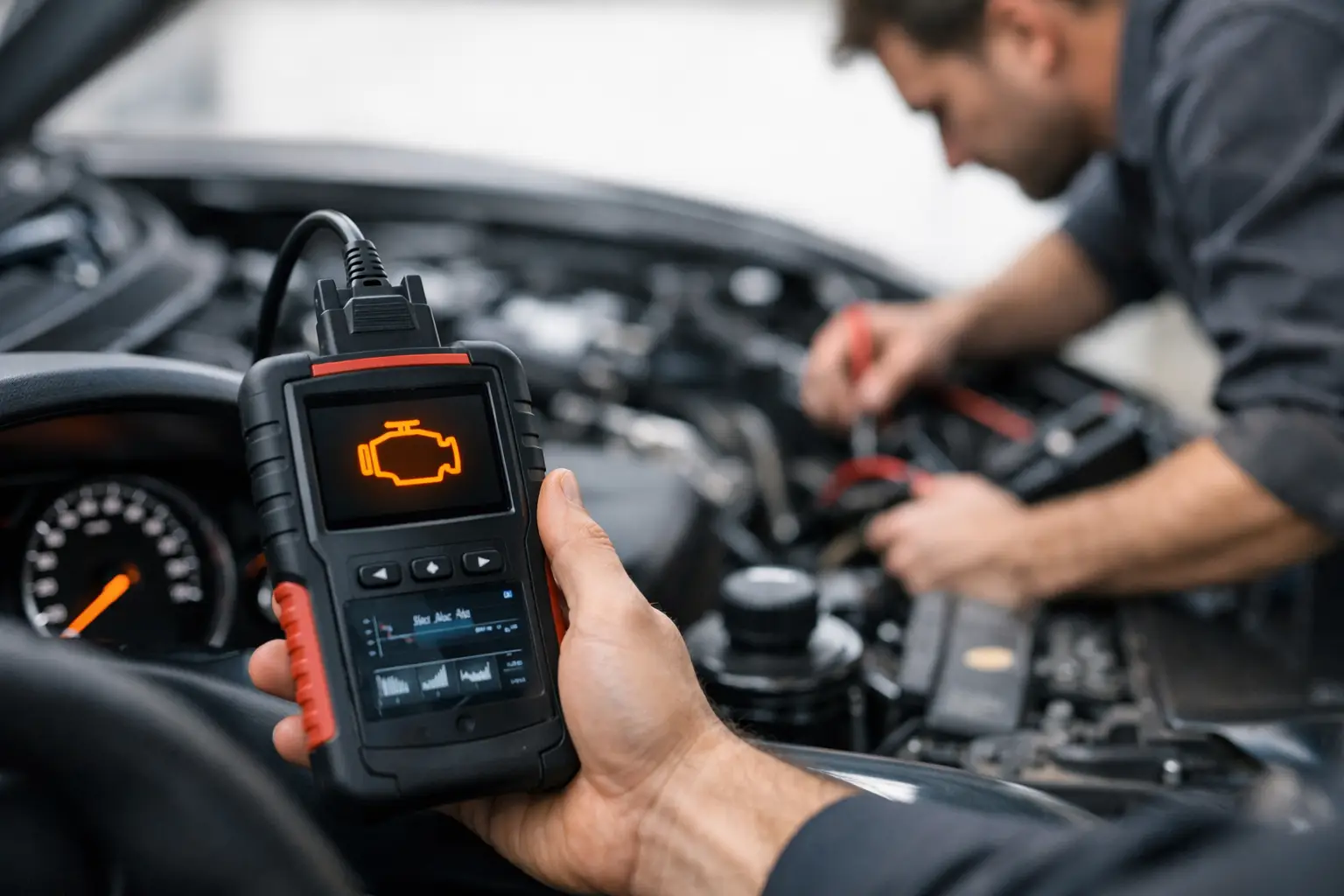
That yellow engine-shaped light rarely shows up at a convenient time. Maybe your BMW still feels normal on the way to work, or your Audi suddenly seems a little rough at idle, but the question is the same: how to diagnose check engine warnings without guessing, wasting money, or making the problem worse.
For owners of European and luxury vehicles, the answer is not as simple as reading one code and replacing one part. The check engine light is a symptom, not a diagnosis. In many cases, the fault stored in the system points to a condition the engine computer noticed, but not necessarily the root cause. That distinction matters when your vehicle relies on brand-specific software, sensitive sensors, and tightly calibrated performance systems.
How to diagnose check engine warnings the right way
The first step is to pay attention to how the light appears. A steady check engine light usually means the vehicle has detected a fault that should be inspected soon. A flashing check engine light is more urgent. That often signals an active misfire that can damage the catalytic converter if the vehicle continues to run under load.
Before anything else, notice the car’s behavior. Is the engine idling rough, hesitating during acceleration, smelling like fuel, running hot, or shifting differently than usual? Does the warning appear only at startup, only after the engine warms up, or only during highway driving? These details help narrow the problem down much faster than the warning light alone.
If the vehicle is flashing the check engine light, running poorly, or showing additional warnings for temperature, oil pressure, or reduced power, it is smart to stop driving and have it evaluated promptly. Continuing to drive can turn a manageable repair into a much more expensive one.
Start with code reading, but do not stop there
Most people associate check engine diagnosis with plugging in a scanner and pulling a trouble code. That is part of the process, but only part. A code such as a misfire, lean condition, oxygen sensor fault, or evaporative emissions fault tells you where the computer noticed an issue. It does not automatically tell you which component failed.
For example, a fault for an oxygen sensor does not always mean the sensor itself is bad. The vehicle may be running too lean because of a vacuum leak, unmetered air, low fuel pressure, or an intake issue. Replacing the sensor without proper testing may clear nothing except money from your wallet.
That is especially true on European cars, where generic code readers often provide limited information. They may miss manufacturer-specific faults, freeze-frame data, adaptation values, and subsystem details that matter when diagnosing BMW, Mercedes-Benz, Audi, Porsche, Volkswagen, Land Rover, or Volvo vehicles.
What a proper diagnosis should include
A real check engine diagnosis goes beyond scanning for codes. It usually starts with a full system scan, followed by reviewing stored faults, pending faults, and freeze-frame information. Freeze-frame data shows what the engine was doing when the fault occurred, such as load, RPM, coolant temperature, and fuel trim. That context can be the difference between a quick answer and a lot of unnecessary parts swapping.
From there, the next step depends on the code pattern and the symptoms. A technician may inspect ignition components, check for vacuum leaks, test fuel delivery, verify sensor signals, evaluate air intake readings, smoke-test the EVAP or intake system, or inspect wiring and connectors. In some cases, software faults or module communication issues also need to be ruled out.
This is where experience matters. A seasoned technician who works on premium import vehicles every day knows the common failure patterns, but just as importantly, knows when a common code is actually being triggered by something less obvious.
Common causes behind a check engine light
There is no single answer, but a few categories show up often. Ignition-related issues are common, including worn spark plugs or failing coils. Air and vacuum leaks are another frequent cause, especially on turbocharged European engines where intake plumbing and PCV system faults can affect drivability quickly.
Fuel system problems can also trigger the light, from injectors and pressure concerns to contamination or delivery irregularities. Emissions-related faults, including catalytic efficiency issues, EVAP leaks, and sensor performance concerns, are also common. Then there are electrical problems, such as damaged wiring, poor connections, or failing sensors that send inaccurate information to the engine control unit.
Sometimes the issue is minor, and sometimes it is not. A loose fuel cap may trigger certain evaporative emissions faults on some vehicles, but luxury and European models are also known for faults that require deeper testing. Assuming every check engine light is minor can be a costly mistake.
Can you keep driving with the check engine light on?
It depends on how the vehicle is behaving. If the light is steady and the car feels normal, you may be able to drive a short distance while arranging service. Even then, it should not be ignored. What starts as a small performance or emissions issue can affect fuel economy, drivability, and other components over time.
If the light is flashing, if the engine is shaking, if power drops noticeably, or if there is smoke or a strong fuel smell, driving further is a bad gamble. Those symptoms suggest an active problem that can lead to further damage.
For European vehicles in particular, warning systems can be layered. A check engine light may appear alongside traction, drivetrain, or reduced-power messages because modern systems share information across modules. That is another reason generic advice from the internet does not always apply cleanly to your specific vehicle.
Why generic scan tools often fall short
Many parts stores and low-cost code readers can retrieve basic emissions-related codes. That can be helpful for a first clue, but not for a complete answer. These tools often do not access the full range of manufacturer data or run the tests needed to verify a repair path.
On premium vehicles, brand-level diagnostics matter. A BMW, Mercedes-Benz, Audi, or Porsche may store additional faults in related systems that do not show up on a basic scan. Adaptation data, sensor plausibility checks, and guided test plans can all play a role in finding the actual cause.
That is why check engine diagnosis is one area where cutting corners often costs more. Replacing parts based on internet forums or code descriptions alone can lead to repeated visits, repeated warning lights, and no real fix.
When professional testing makes the most sense
If the light returns after being cleared, if more than one code is present, or if the car has any drivability issue at all, professional testing is usually the smartest move. The same is true if you drive a vehicle with turbocharging, direct injection, multiple control modules, or known brand-specific diagnostic procedures.
At a specialist shop, the goal should not be to sell you the biggest repair. It should be to identify the fault accurately, explain what was found in plain language, and recommend what is necessary now versus what can be monitored. That kind of transparency matters when you own a higher-end vehicle and want to protect it without defaulting to dealership pricing.
For drivers in Palatine and the northwest suburbs, that is where a shop like Wizard Werks can make the process much less stressful. Dealer-level equipment, experienced technicians, and honest communication are what turn a warning light from a guessing game into a clear plan.
The most practical next step
If you are wondering how to diagnose check engine issues on your own, start by observing the symptoms and taking the warning seriously. Note whether the light is steady or flashing, avoid long drives if the vehicle is running poorly, and do not assume the code equals the part.
A proper diagnosis should identify the cause, not just the category of the fault. That is what saves time, avoids repeat repairs, and protects the performance your vehicle was built to deliver.
When the check engine light comes on, the best move is not panic and it is not guesswork. It is getting a clear answer from someone equipped to find it.