
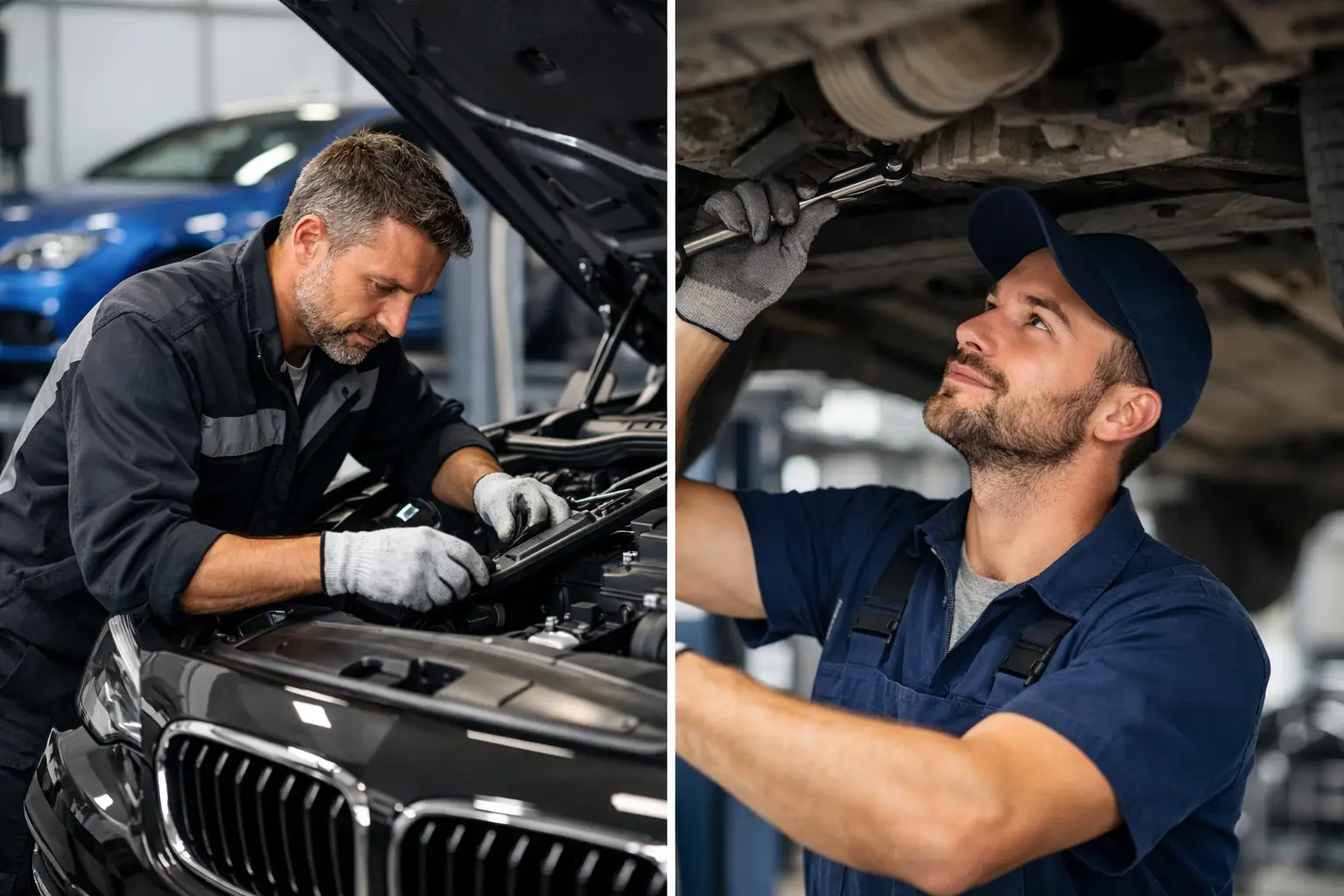
If you drive a BMW, Mercedes-Benz, Audi, Porsche, Volkswagen, Land Rover, or another premium import, the choice between a european specialist vs general mechanic affects more than convenience. It can change how accurately problems are diagnosed, how long repairs last, and how well your vehicle performs over time.
For some jobs, a capable general repair shop may be perfectly fine. For others, especially on modern European vehicles, specialized experience makes a real difference. The key is knowing where that line is and why it matters before a small issue turns into an expensive one.
European specialist vs general mechanic: what is the real difference?
A general mechanic works on a wide range of makes and models. That broad experience can be useful for routine service on many vehicles, especially simpler systems that are common across the industry. Oil changes, battery replacements, basic brake work, and standard maintenance may fall well within a general shop’s comfort zone.
A European specialist is different by design. Their training, equipment, and daily workflow are centered around brands with brand-specific engineering, software, and service procedures. That means they are more likely to understand common failure patterns, factory maintenance intervals, diagnostic logic, and the small details that matter on performance-oriented or luxury vehicles.
That difference is not about one shop being universally better than another. It is about fit. A domestic sedan with straightforward systems and a European SUV with multiple control modules, adaptive suspension, and manufacturer-specific diagnostic routines are not asking for the same kind of service environment.
Why European cars often need brand-specific experience
European vehicles are built with a different level of complexity than many drivers realize. Even routine maintenance can involve precise fluid specifications, electronic service resets, sensor calibrations, and software-guided procedures. If those steps are skipped or handled incorrectly, the vehicle may still run, but not necessarily the way it should.
Take diagnostics as an example. A warning light on a BMW or Mercedes-Benz does not always point directly to the failing part. In many cases, it points to a system response. The real issue may be hidden behind fault codes, live data, and manufacturer-specific test plans. A shop that sees these platforms every day can often identify the root cause faster, which helps avoid replacing parts based on guesswork.
That matters for cost as much as quality. One inaccurate repair can quickly erase any savings from choosing the cheapest option upfront.
The tools matter more than most owners think
On European and luxury vehicles, scan tools are not all equal. Generic diagnostic equipment can read some codes, but it may not access the full picture. Many repairs require deeper communication with the vehicle’s modules, service functions, adaptation procedures, and coding capabilities.
A specialist shop is more likely to invest in manufacturer-grade or high-level diagnostic equipment because it uses it constantly. That leads to more precise testing, more efficient troubleshooting, and fewer situations where the car has to be sent elsewhere to finish the job.
Experience with patterns saves time
European vehicles tend to develop predictable issues as they age. An experienced specialist knows what commonly happens on certain BMW cooling systems, which suspension concerns are familiar on specific Audi platforms, or how a Land Rover electrical complaint should be approached before parts are ordered.
That pattern recognition is hard to replicate in a shop that only sees these vehicles occasionally. It does not mean a general mechanic lacks skill. It means repetition builds speed and accuracy.
When a general mechanic may be enough
There are cases where a general repair shop can be a reasonable choice. If your vehicle needs straightforward tire service, a battery, or basic maintenance and the shop is careful about using the correct parts and fluids, the experience may be perfectly acceptable.
The question is whether the shop follows European service requirements rather than treating the vehicle like every other car in the parking lot. If they are comfortable verifying factory specifications, using quality parts, and handling service resets properly, that can work for simpler jobs.
Still, the risk grows as complexity increases. Once the issue involves drivability concerns, electrical problems, warning lights, suspension systems, cooling system faults, or anything that depends heavily on software and model-specific knowledge, a specialist becomes the safer choice.
European specialist vs general mechanic on cost
Many owners assume the general mechanic is always cheaper. Sometimes that is true on the initial invoice. But lower pricing only helps if the problem is diagnosed correctly and repaired properly the first time.
With European vehicles, the real cost is often tied to accuracy. A shop that misdiagnoses an issue may replace parts that were never needed, miss underlying faults, or use parts that do not perform as expected on that platform. The car comes back, more time is lost, and the total spend climbs.
A specialist may charge more for expertise on certain jobs, but that expertise often reduces wasted labor and unnecessary parts. In many cases, an independent European shop also offers a better value than the dealership while still providing the right tools, OEM-quality parts, and technicians who understand the vehicle.
That is why the better comparison is not just labor rate versus labor rate. It is total ownership cost over time.
Signs your car should go to a European specialist
If your vehicle has recurring warning lights, odd electrical behavior, suspension concerns, fluid leaks that are difficult to trace, performance issues, or service needs tied to manufacturer-specific procedures, specialized care is usually the better route.
The same applies if your car is newer, heavily computerized, turbocharged, or equipped with advanced driver and comfort systems. Modern European vehicles rely on communication between many modules. A repair in one area can affect another, so proper diagnostics matter.
Owners who plan to keep their car long term should also think beyond the immediate repair. Consistent service from a shop that knows the platform can help preserve reliability, resale value, and the driving feel that made the car worth buying in the first place.
Questions worth asking any shop
Before scheduling service, ask what brands the shop works on most often, what diagnostic equipment they use, whether they follow factory service procedures, and what kind of parts they install. Ask how they approach diagnosis before recommending repairs and whether they clearly explain what is urgent versus what can wait.
Those answers reveal a lot. A trustworthy shop should be comfortable being direct, transparent, and specific.
The dealership is not the only specialist option
Some owners think the alternative to a general mechanic must be the dealership. That is not necessarily the case. An independent European repair shop can often provide the same category of specialized care with a more personal experience, clearer communication, and more reasonable pricing.
That matters when you want honest recommendations instead of feeling pushed into every possible service at once. A strong independent specialist typically focuses on what your vehicle truly needs now, what should be monitored, and how to plan maintenance in a practical way.
For owners in the northwest suburbs, that local relationship can be just as valuable as the technical side. You want a shop that knows your car, knows your driving habits, and treats your concerns like more than just another service ticket. That is where a specialist-focused independent shop such as Wizard Werks often stands apart.
Choosing based on the job, not just the label
The smartest answer to european specialist vs general mechanic is not automatic. It depends on the vehicle, the symptom, and the standard of care you expect.
If the work is simple and the shop is disciplined about following the right procedures, a general mechanic may be enough. If the issue involves diagnostics, electronics, performance, or anything brand-specific, a European specialist usually gives you better odds of a correct and lasting repair.
For luxury and premium import owners, that peace of mind is worth something. Not because your car is impossible to service, but because it was engineered with details that reward specialized knowledge.
The best shop is the one that respects those details, explains your options clearly, and helps you maintain the car without guesswork. When your vehicle was built for a higher standard, it makes sense to service it with the same mindset.