
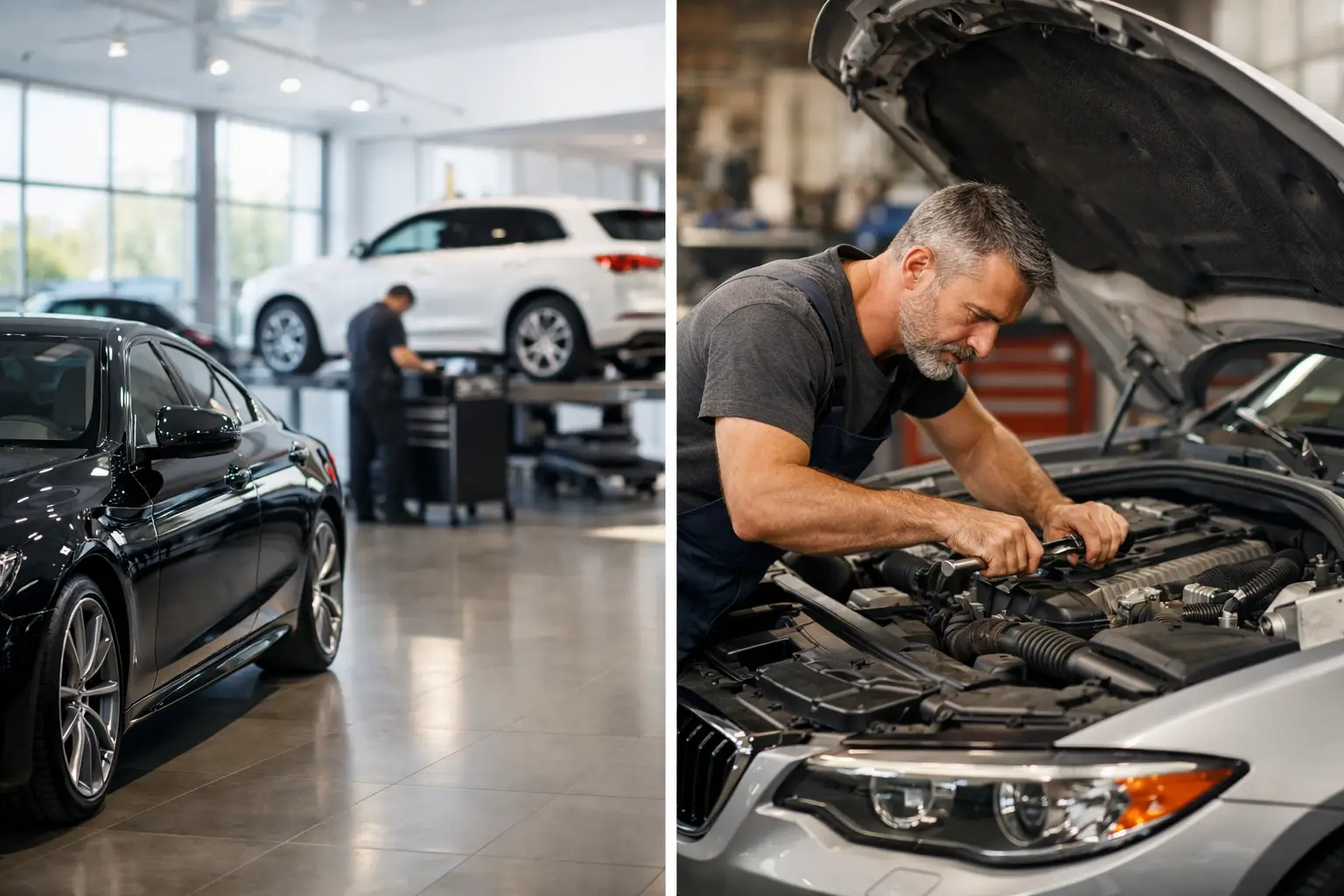
Your BMW warning light comes on during the morning commute. Your Audi needs scheduled service. Your Range Rover has an electrical issue that cannot wait. In the dealership vs independent mechanic decision, the right answer is not simply about finding the lowest estimate. It is about choosing a shop with the equipment, training, parts access, and communication needed to care for a sophisticated vehicle correctly.
For European and luxury vehicle owners in Palatine and the northwest suburbs, both options can have a place. The better choice depends on your vehicle’s age, the type of work it needs, whether it is under warranty, and the level of personal service you expect.
Dealership vs Independent Mechanic: The Core Difference
A dealership service department is tied to one manufacturer or manufacturer group. It has direct factory support, access to the newest technical bulletins, and technicians who work within a defined brand system every day. For a brand-new vehicle, a factory recall, or a repair that may be covered by the manufacturer, that relationship can be useful.
An independent specialist takes a different approach. Rather than serving every vehicle on the road, a quality European and luxury repair shop focuses on specific makes and the systems those vehicles share. That means understanding BMW electronic systems, Mercedes-Benz service requirements, Audi and Volkswagen diagnostics, Porsche performance standards, and the common issues that affect Land Rover, Jaguar, Volvo, Mini Cooper, and other premium imports.
The word “independent” should not mean generic. The best independent shops use manufacturer-grade diagnostic equipment, OEM or equivalent-quality parts, current service information, and technicians trained to diagnose rather than guess. The difference is often the experience around the repair: more direct communication, a familiar service team, and recommendations shaped by your vehicle’s actual condition instead of a rigid sales process.
When a Dealership May Make Sense
There are situations where a dealership is a practical choice. If your vehicle has an open recall, the dealership is generally the appropriate destination. Recall work is manufacturer-directed and usually completed at no cost to the owner.
A dealership can also be helpful when a vehicle is still covered by a factory warranty and the concern is clearly warranty-related. It may handle manufacturer authorization internally, which can simplify the process. The same may be true for certain extended warranty plans, although many reputable independent shops can work with third-party warranty providers as well.
For the newest models, dealers may receive the earliest access to manufacturer updates or model-specific procedures. That does not automatically make them the only qualified option for maintenance and repairs, but it is a consideration for a vehicle with very new technology or an unusual issue requiring factory involvement.
Even then, ask clear questions. What does the inspection include? Which repairs are urgent, and which can be monitored? Are the recommended services based on the manufacturer’s maintenance schedule or a shop-specific menu? A premium vehicle deserves thoughtful answers, not pressure.
Where an Independent Specialist Often Has an Edge
For routine maintenance and most out-of-warranty repairs, an independent European auto specialist can offer a compelling balance of expertise, value, and attention. Labor rates are often lower than dealership rates, while the work can still be performed with the proper equipment and quality parts. That matters when a vehicle needs oil and filter service, brakes, suspension work, A/C repair, electrical diagnostics, or scheduled maintenance.
The biggest advantage is often diagnostic focus. Luxury vehicles are complex, and a dashboard warning does not tell the full story. A capable specialist uses brand-specific scan tools and testing procedures to identify the underlying cause before recommending repairs. Replacing parts until a symptom disappears is expensive and frustrating. Proper diagnosis protects both the vehicle and your budget.
Independent shops also tend to build longer-term relationships with owners. Instead of seeing your vehicle only at prescribed intervals, the team gets to know its service history, mileage, driving habits, and priorities. If you plan to keep your Mercedes-Benz or BMW for years, that continuity can make maintenance planning more sensible.
At Wizard Werks, that means explaining what we found, what it affects, and what can reasonably wait. The goal is dealership-quality workmanship without the impersonal experience or unnecessary upselling that many luxury owners want to avoid.
Cost Is More Than the Initial Estimate
Price matters, but the lowest number is not always the best value. A service estimate should account for the quality of parts, the technician’s diagnostic time, the scope of the repair, and the warranty behind the work. A low quote that leaves out needed procedures or uses inferior components can create a second repair bill later.
Dealership pricing is often higher because of facility overhead, manufacturer branding, and standardized pricing structures. An independent specialist may offer more flexibility, particularly on older vehicles where the owner wants to make thoughtful decisions about maintenance priorities.
That does not mean every repair should be delayed. Neglected cooling issues, brake concerns, oil leaks, worn suspension components, or electrical faults can become more expensive and may affect safety or reliability. The right shop helps you separate immediate needs from preventive work that can be scheduled later.
Before approving service, ask whether the estimate includes parts, labor, shop supplies, taxes, programming, and any required follow-up procedures. A transparent estimate should make it easy to understand what you are paying for and why.
Parts, Tools, and Warranty Questions to Ask
European vehicles often require more than a universal scan tool and an aftermarket part that happens to fit. Many systems need manufacturer-level diagnostics, service resets, calibrations, software procedures, and parts designed to meet the vehicle’s specifications.
A dealership will typically use genuine manufacturer parts. A qualified independent shop may offer OEM parts – components made by the original supplier – or high-quality alternatives when appropriate. The right choice varies by repair. For critical components and brand-specific systems, OEM parts are often the sensible path. For some maintenance items, a trusted equivalent can provide dependable performance and better value.
Warranty coverage deserves the same attention. Ask how long the shop stands behind parts and labor, what the warranty covers, and whether the work is documented clearly in your service records. Good records matter for resale value, future diagnostics, and your own confidence in the vehicle’s care.
Convenience and Communication Are Part of the Service
Luxury ownership should not require vague answers or repeated calls for updates. Dealerships can offer amenities, loaner programs, and broad appointment availability, though the experience can feel less personal when you are passed between advisors.
An independent shop may be more convenient in other ways: easier access to the technician’s findings, a more flexible conversation about priorities, and a local relationship built on trust. For busy professionals and families, knowing that someone will explain the issue plainly can be just as valuable as a waiting lounge.
Pay attention to how a shop handles your first call. Do they ask useful questions about the symptom, vehicle history, and warning messages? Do they set realistic expectations for diagnosis? Do they explain their process without making promises before the vehicle has been inspected? Those details tell you a great deal about how the rest of the service experience will go.
How to Choose the Right Shop for Your Vehicle
Start with specialization, not proximity alone. A general repair shop may be excellent for many vehicles, but European and luxury brands have their own diagnostic systems, maintenance requirements, and known failure patterns. Look for ASE-certified technicians, manufacturer-grade equipment, and a clear record of working on your make.
Then consider the repair itself. A recall or a factory warranty claim may point you to the dealership. Routine maintenance, brakes, steering and suspension, climate control, engine performance concerns, and many electrical issues are often well suited to an independent specialist with the proper tools and experience.
Finally, choose the team that treats you like a long-term customer rather than a ticket number. Your vehicle should receive careful work, honest recommendations, and a plan that fits both its needs and your ownership goals. That kind of service makes it easier to enjoy the vehicle you chose to drive, mile after mile.