
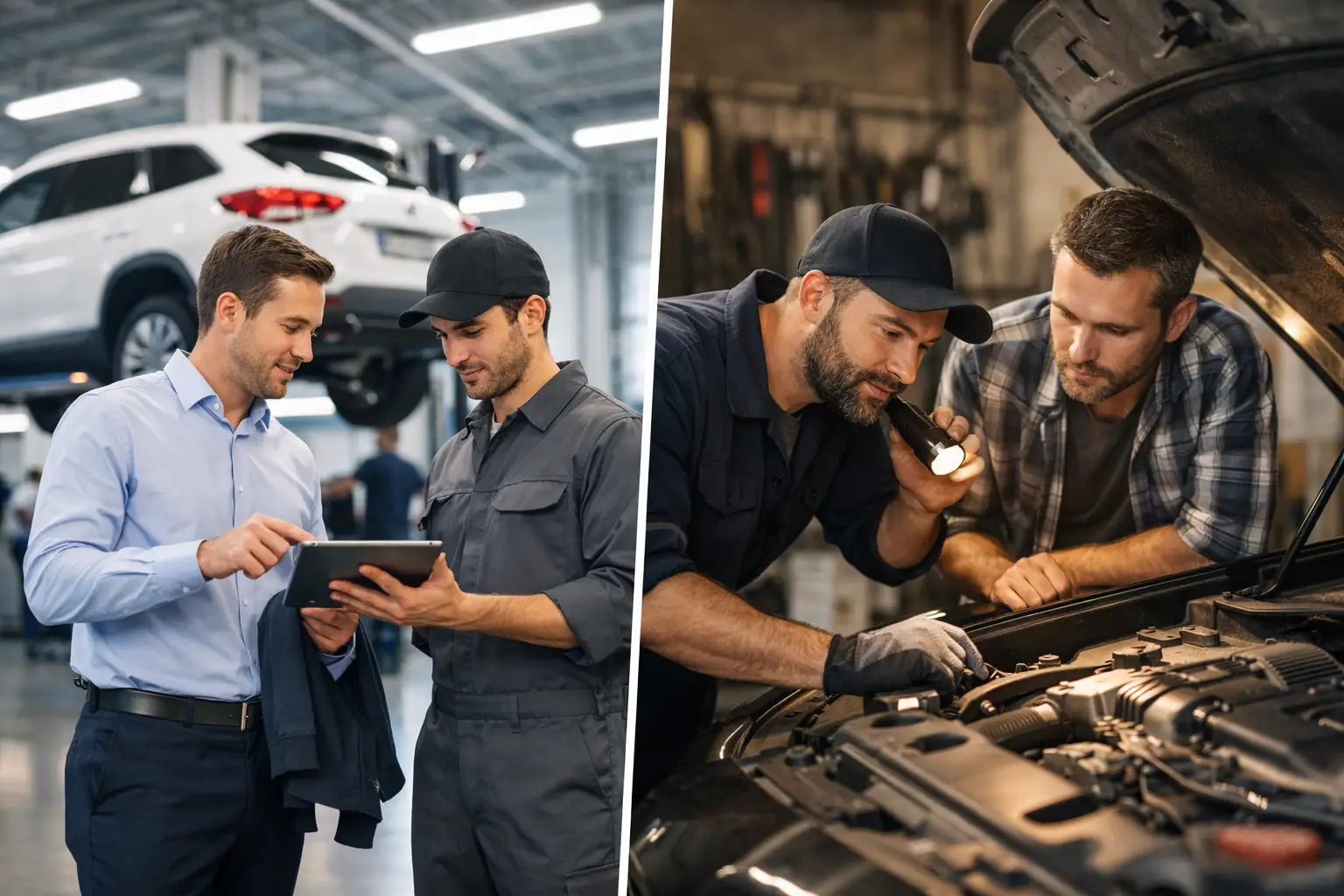
A dashboard warning light on a BMW, an A/C issue in a Mercedes-Benz, or an overdue Porsche service does not automatically mean the dealership is your only option. The dealer service vs independent decision comes down to more than the estimate on the counter. It is about who understands your vehicle, explains the work clearly, uses the right tools and parts, and stands behind the result.
For European and luxury vehicle owners in Palatine and the northwest suburbs, the best choice depends on the age of the vehicle, the type of work needed, warranty status, and the quality of the shop itself. A qualified independent specialist can provide dealership-level maintenance and repair with a more personal experience. But there are situations where dealer service may still make sense.
Dealer Service vs Independent: The Real Difference
A dealership service department works exclusively within one manufacturer family. That brand focus can be valuable, especially when a vehicle is new, covered by a factory warranty, or needs a manufacturer campaign completed. Dealers also have direct access to factory technical updates and can often handle certain warranty-related approvals in-house.
An independent European and luxury repair shop takes a different approach. The best specialists build their expertise around the vehicles they service every day, not just basic maintenance. They invest in manufacturer-grade diagnostic equipment, software access, brand-specific service information, and technicians who understand the patterns behind common concerns in BMW, Audi, Mercedes-Benz, Porsche, Land Rover, Volkswagen, and other premium imports.
The distinction is not simply dealer equals expert and independent equals general repair. A general repair shop may not be the right fit for a complex European vehicle. A dedicated independent specialist, however, can offer advanced diagnostics and precise repair procedures while providing the direct communication that many dealership customers miss.
Expertise Matters More Than the Sign Outside
Luxury vehicles are engineered differently from many domestic and mainstream models. Their systems are often tightly integrated, from adaptive suspension and electronic steering to turbocharged engines, climate control modules, and driver-assistance features. Diagnosing a concern properly requires more than reading a generic fault code.
At a qualified independent shop, technicians should be able to identify whether a warning light points to a failed component, a wiring issue, a software-related fault, or a condition caused by another system. That level of diagnosis helps avoid replacing parts based on guesswork.
Ask an independent shop what brands it services regularly, whether its technicians are ASE-certified, and what diagnostic platforms it uses. The answers should be specific and easy to understand. A trustworthy shop will explain its capabilities without making vague promises or pressuring you into work you do not need.
For example, a Range Rover with a suspension warning may need a careful inspection of the air suspension system, electrical connections, compressor operation, and fault history. Recommending the first expensive part that appears on a scan report is not the same as diagnosing the source of the problem.
Pricing Is About Value, Not Just a Lower Number
Dealership labor rates are often higher because of larger facilities, manufacturer programs, and the overhead associated with a franchised operation. That does not mean dealer pricing is automatically unreasonable. It does mean you should understand what is included in an estimate and whether every recommendation is necessary now.
Independent specialists commonly have lower operating costs and can pass some of that difference along to customers. For routine maintenance, brakes, steering and suspension work, electrical diagnostics, oil and filter service, heating and A/C repair, and many engine-related repairs, an independent shop may offer meaningful savings without sacrificing quality.
The lowest quote is not always the best value, particularly on a European vehicle. A bargain repair that uses poor-quality parts, skips required programming, or overlooks related issues can cost more later. Look for an estimate that identifies the concern, the recommended repair, the parts being used, and the warranty coverage.
There can also be more flexibility at an independent specialist. Depending on the repair and vehicle, the shop may discuss OEM parts, manufacturer-supplied parts, or high-quality equivalent components. The right choice should be based on fit, reliability, warranty, and your ownership plans – not a one-size-fits-all sales script.
Maintenance Should Follow Your Vehicle, Not a Generic Menu
Dealerships often package maintenance into intervals and service menus. Those recommendations can be useful, but they should be viewed in the context of your vehicle’s mileage, condition, driving habits, and factory maintenance requirements.
An independent specialist should do the same. If your Audi is driven mostly on short trips, if your BMW sees heavy Chicago-area stop-and-go traffic, or if your Porsche is stored part of the year, its maintenance needs may differ from a vehicle that accumulates steady highway miles. A thoughtful service plan accounts for those realities.
Good maintenance is not about selling every possible item at every visit. It is about protecting the systems that affect reliability, safety, and performance while documenting what can reasonably wait. That approach gives you control over the plan and helps prevent small concerns from becoming expensive disruptions.
Warranty and Recall Questions Deserve Straight Answers
Many owners worry that using an independent shop will void their factory warranty. In most cases, routine maintenance and repairs performed by a qualified independent facility do not void a vehicle warranty simply because the dealership did not do the work. Keeping clear records matters. Save your invoices, including the date, mileage, services performed, and parts used.
That said, dealers remain the appropriate destination for factory recalls, manufacturer service campaigns, and repairs approved under the vehicle’s factory warranty. If a repair may be covered, it makes sense to check before paying out of pocket elsewhere.
For vehicles outside factory coverage, the question becomes whether the independent shop provides a strong parts and labor warranty of its own. Read the terms, ask what is covered, and make sure the shop will be there to support its work. A clear warranty is a sign that the business expects its repairs to last.
The Service Experience Can Be Very Different
At a dealership, you may work with a service advisor who manages a large volume of appointments. The process can be efficient, but it can also feel distant. The person explaining the estimate may not be the technician who inspected the vehicle, and getting a detailed answer can take time.
Independent shops are often better positioned to offer a direct, local relationship. You should be able to discuss priorities, understand the findings, and get honest guidance about what needs attention today versus what should be monitored. That personal communication matters when you plan to keep a luxury vehicle for years.
Wizard Werks is built around that kind of service experience: specialized care for European and luxury vehicles, transparent recommendations, OEM-quality parts, and manufacturer-grade diagnostics without the impersonal dealership atmosphere. The goal is not to sell the most work. It is to help you make an informed decision about your vehicle.
When Dealer Service May Be the Better Choice
An independent specialist is not the answer to every situation. Dealer service may be preferable when your vehicle has an open recall, an active factory warranty concern, or a manufacturer-specific campaign that requires dealer authorization. A dealer can also be practical if a highly unusual issue needs direct factory escalation.
For most out-of-warranty maintenance, diagnostics, and repair needs, a well-equipped independent specialist is often the more compelling option. You can receive brand-aware technical care, clear explanations, and a more cost-conscious estimate without treating your vehicle like a generic car.
The key is to choose based on the shop’s qualifications, process, and reputation rather than assuming the dealership is always necessary or that every independent shop is equally prepared.
Your European or luxury vehicle deserves more than a quick answer to a warning light or a generic service package. Choose the team that listens to the concern, explains the findings in plain language, and gives you a practical path forward – whether the repair is needed now or simply worth planning for at the next visit.