
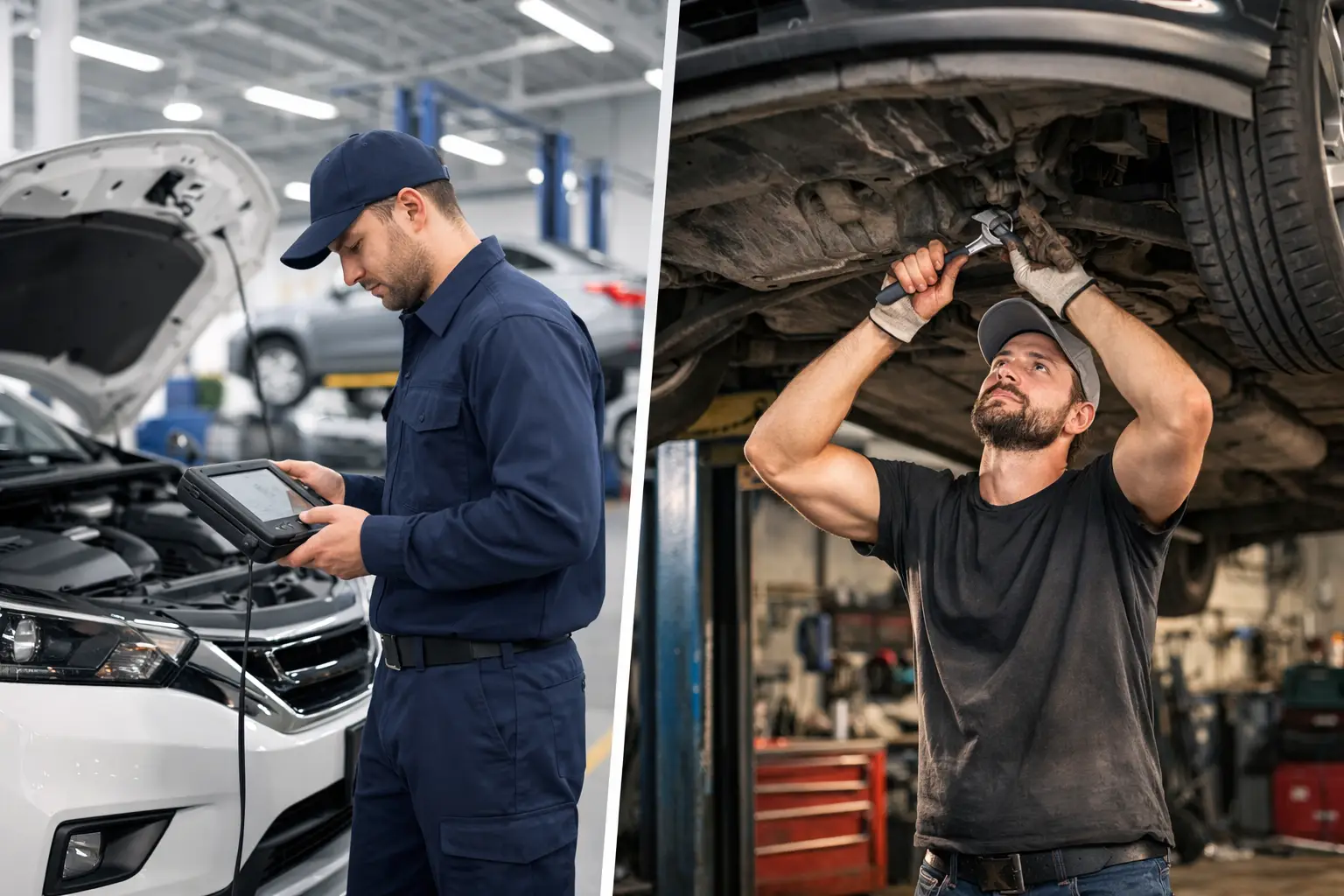
A service reminder appears on the dash of your BMW, Mercedes-Benz, Audi, or Land Rover, and the familiar question follows: where should you take it? The dealer maintenance versus independent shop decision is not simply about paying the lowest invoice. It is about choosing the right level of expertise, diagnostic capability, communication, and care for a vehicle built with sophisticated systems.
For luxury and European vehicle owners in the northwest Chicago suburbs, both options can be appropriate. The better choice depends on your vehicle’s age, warranty status, service needs, and the qualifications of the specific shop you are considering.
Dealer Maintenance Versus Independent Shop: The Real Difference
A dealership service department is tied directly to one manufacturer. It has access to factory training, brand-specific equipment, service campaigns, and the latest technical information for that make. If your vehicle has an open recall, needs warranty authorization, or has a concern that requires manufacturer involvement, the dealer is often the most direct route.
The trade-off is that dealership operations typically carry higher overhead. Large facilities, manufacturer programs, administrative processes, and franchise requirements can affect labor rates and pricing. The experience can also feel less personal, particularly when your vehicle moves from a service advisor to a technician and then back through several layers of communication.
A qualified independent European repair shop takes a different approach. Rather than serving every make with general tools and broad repair knowledge, a true specialist focuses on brands with similar engineering, electronics, and maintenance requirements. The shop may use manufacturer-grade diagnostic equipment, OEM-quality parts, and technicians who work with European and luxury vehicles every day.
That specialization matters. A warning light on a modern Audi or Range Rover can involve multiple modules, software data, sensors, and system-specific testing procedures. Replacing a part based on a generic code alone is not a diagnostic strategy. A capable independent shop should identify the underlying cause, explain the findings clearly, and recommend only the work the vehicle actually needs.
Where Dealership Service Makes Sense
There are times when taking your vehicle to the dealer is the practical choice. Factory recalls and certain warranty repairs generally need to be handled through the manufacturer’s network. The same may apply when a vehicle needs a manufacturer software update that is not available outside the dealer system, or when a brand-specific goodwill request is being reviewed.
Dealers can also be useful for a very new model with a concern that has not yet become familiar in the independent market. New platforms often introduce updated electronics, hybrid components, driver-assistance technology, and service procedures. A dealer may have immediate access to the latest factory bulletins and specialized processes for those issues.
Still, a dealer visit is not automatically necessary for routine maintenance. Oil and filter service, brake inspections, fluid services, suspension repairs, A/C concerns, electrical diagnostics, and many other maintenance needs can be completed by an experienced independent specialist. The key is verifying that the shop has the right tools, training, information, and parts standards for your vehicle.
Why Many Owners Choose an Independent Specialist
For vehicles outside their original warranty period, an independent specialist often delivers the strongest balance of capability, value, and personal service. The difference begins with the service conversation. You should be able to speak with people who understand your vehicle, ask questions without pressure, and receive a clear explanation before work begins.
Pricing is another factor. Lower overhead can allow an independent shop to offer dealership-level workmanship at a more reasonable rate. That does not mean choosing cheap parts or cutting corners. For premium vehicles, proper repairs depend on correct procedures, quality components, and accurate diagnostics. A reputable independent shop saves money by operating efficiently and avoiding unnecessary recommendations, not by compromising the work.
Continuity is valuable as well. When the same local team maintains your Porsche, Volvo, Mini Cooper, or Lexus over time, they develop a useful history of the vehicle. They can spot patterns, monitor wear items, and help you plan maintenance around your schedule and budget. That relationship is especially helpful for owners who intend to keep a luxury vehicle well beyond its warranty coverage.
At Wizard Werks, the goal is not to create a long list of repairs for every visit. It is to provide honest recommendations, identify priorities, and perform the work needed to keep your vehicle dependable and enjoyable to drive.
Warranty Questions Deserve a Clear Answer
Many owners assume that visiting an independent shop automatically voids their factory warranty. In most cases, that is not true. You are generally allowed to have routine maintenance and repairs performed outside the dealership, provided the work is completed correctly and documented. Keep invoices showing the date, mileage, services performed, and parts used.
However, warranty situations can have details that matter. A manufacturer may deny coverage for a failure if it can show that improper maintenance, incorrect parts, or an outside repair caused the problem. Some maintenance plans and extended service contracts also have their own terms. If your vehicle is under warranty, ask the shop how it handles factory-required procedures and service records before authorizing work.
An independent specialist should be comfortable discussing this directly. Transparency is part of protecting both your vehicle and your ownership investment.
How to Compare Shops Without Guesswork
The name on the building matters less than the standards behind the service. Before choosing either a dealer or an independent shop, ask practical questions about how your vehicle will be diagnosed, repaired, and returned to you.
Look for these signs that a shop is equipped for premium import service:
- Technicians with ASE certifications and meaningful experience with your vehicle’s make
- Brand-appropriate diagnostic equipment and access to current repair information
- OEM or equivalent-quality parts, with a clear explanation of what will be installed
- Written estimates, straightforward findings, and approval before additional work proceeds
- Warranty coverage that stands behind both parts and labor
You can also pay attention to the way the shop communicates. Does the advisor explain what is urgent, what can be monitored, and why? Are recommendations tied to inspection results, maintenance intervals, or a documented problem? A trustworthy service experience should leave you informed, not pressured.
Cost Is More Than the Initial Estimate
A low estimate can become expensive if a shop lacks the equipment or experience to diagnose the vehicle accurately. On the other hand, a higher dealership estimate does not always mean the repair is more thorough. Compare the scope of work, parts being used, labor operations, warranty, and the diagnosis behind the recommendation.
For example, a brake service on a European vehicle may involve more than replacing pads. Depending on the model, it can require rotor measurement, electronic parking brake service mode, sensor replacement, brake-fluid condition checks, and a proper road test. The right shop will explain what applies to your vehicle rather than treating every brake job as identical.
This is why the best value is usually found in accurate diagnosis and appropriate maintenance. Paying for work that solves the real issue is better than paying less for a temporary fix or more for parts that were never needed.
Choose the Service Partner That Fits Your Vehicle
The dealership may be the right place for recalls, specific warranty matters, and certain manufacturer-only needs. An independent European specialist can be an excellent choice for ongoing maintenance, diagnostics, and repairs when it offers the correct expertise and equipment.
Your luxury vehicle was engineered for a distinctive driving experience. Choose a service partner that respects that engineering, explains the work in plain language, and treats your time and trust as seriously as the repair itself.