
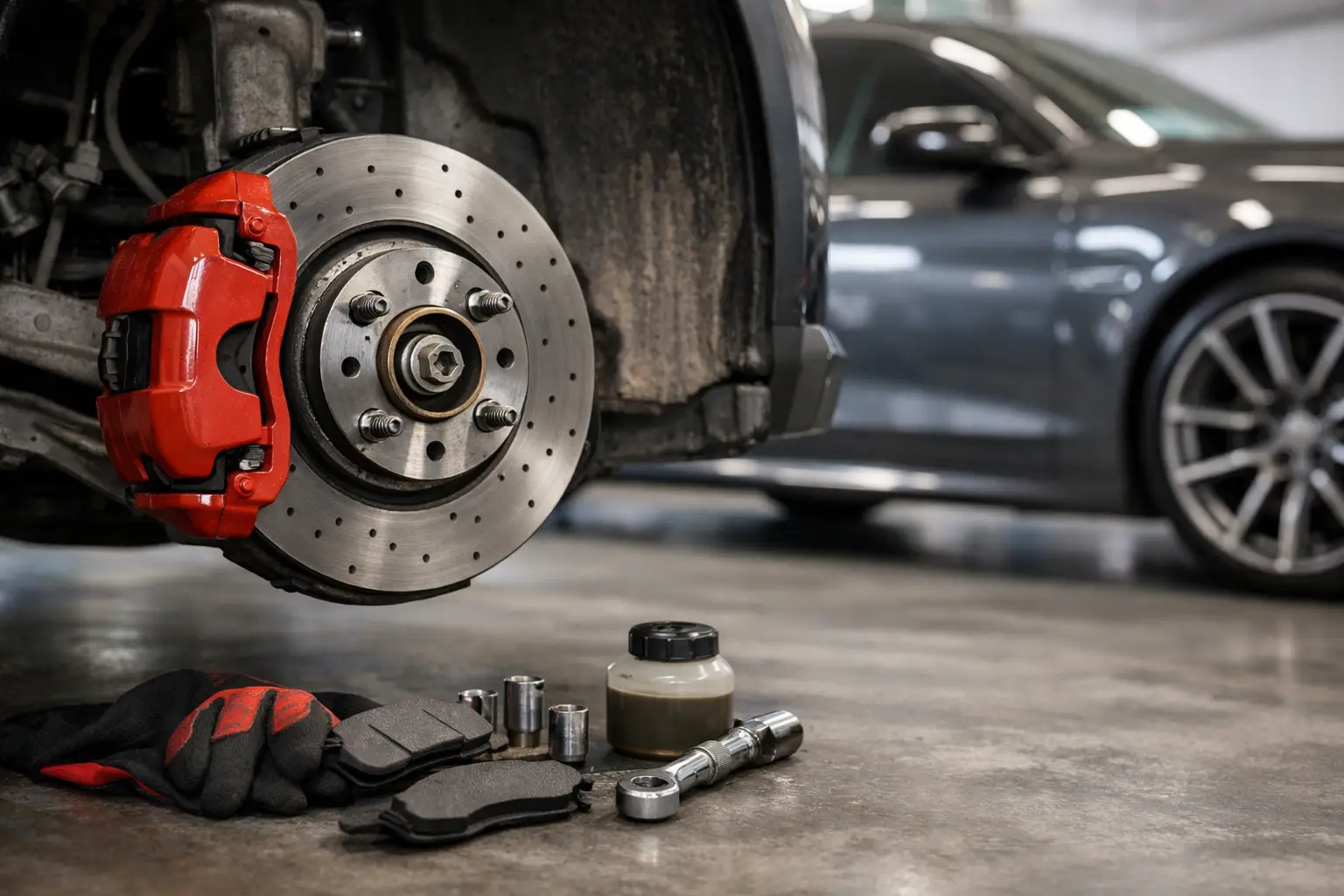
That faint squeal backing out of the driveway, the longer stop at the next light, the slight shake through the steering wheel – brake problems rarely show up all at once. They usually build gradually, which is why a practical brake service guide matters for owners of European and luxury vehicles. On a BMW, Mercedes-Benz, Audi, Porsche, Land Rover, or other premium import, brake service is not just about replacing worn parts. It is about protecting performance, safety, and the feel that made you buy the car in the first place.
Why a brake service guide matters
Modern brake systems are more sophisticated than many drivers realize. On premium vehicles, the brakes are carefully matched to the car’s weight, suspension design, electronic systems, and driving characteristics. That means a shortcut approach can create problems you notice right away – noise, pulsation, uneven wear, reduced stopping confidence – or issues that show up later.
A good brake service guide helps you understand when service is truly needed, what should be inspected, and why quality parts and proper procedures matter. It also helps you avoid the two extremes drivers often face: waiting too long and causing more expensive damage, or agreeing to work that is not actually necessary.
The signs your brakes need attention
Some brake issues are obvious. Others are easy to dismiss until they become harder and more expensive to address. If your vehicle makes squealing or grinding noises, pulls during braking, vibrates through the pedal or steering wheel, or takes longer to stop than it used to, it is time for an inspection.
Warning lights also matter, especially on European models with electronic brake wear sensors and integrated monitoring systems. If a brake warning appears on the dash, the system is telling you something specific. In some cases, it may be worn pads. In others, it could point to sensor issues, hydraulic concerns, or an electronic parking brake fault.
You may also notice less dramatic changes. A brake pedal that feels softer than normal, a sharper bite than usual, or brake dust that suddenly becomes excessive on one wheel can all point to uneven wear or developing hardware problems. These are the kinds of details an experienced technician should catch before they turn into a larger repair.
What wears out during brake service
Pads and rotors get the most attention, and for good reason. Brake pads wear down through normal use, and rotors absorb and dissipate heat created during stopping. Over time, both components wear together. On many European vehicles, rotor replacement is commonly recommended along with pads because the rotor material and design may not leave enough margin for repeated resurfacing.
That said, brakes involve more than pads and rotors. Calipers, guide pins, brake fluid, wear sensors, hoses, and mounting hardware all play a role. If one part is sticking, corroded, leaking, or wearing unevenly, replacing only the most visible component may not solve the real issue.
Brake fluid deserves special attention. It absorbs moisture over time, which lowers its boiling point and can affect braking feel and system reliability. For many luxury and European vehicles, regular brake fluid service is part of factory maintenance, not an optional add-on.
Brake service intervals depend on how you drive
There is no universal mileage number that fits every car and every driver. Some owners need front brake service at 25,000 to 35,000 miles. Others may go much longer. Rear brakes can wear faster or slower depending on the model, the brake balance, traffic patterns, road conditions, and driving habits.
If you spend most of your time in stop-and-go suburban traffic, your brakes will wear differently than someone who does mainly highway commuting. Performance-oriented models also tend to use more aggressive brake setups, which can trade longer life for better stopping response.
This is where experience matters. A shop familiar with premium import vehicles can inspect wear patterns and tell you not only what is worn, but why. That makes future maintenance easier to plan and helps prevent repeat issues.
What should happen during a proper brake inspection
A thorough inspection should go beyond a quick glance through the wheel spokes. The technician should measure pad thickness, inspect rotor condition, check for scoring or heat damage, examine caliper operation, look for fluid leaks, inspect brake hoses, and review wear sensor status if your vehicle uses them.
Electronic systems may also need to be checked. Many newer European vehicles integrate the braking system with stability control, ABS, parking brake functions, and condition-based service software. If the vehicle requires electronic parking brake retraction or service interval resets, that work should be done with the proper equipment.
This is also the right time to evaluate whether the issue is truly in the brakes. A vibration during braking can come from brake components, but it can also be influenced by suspension wear or wheel issues. Honest diagnostics matter because replacing parts without confirming the cause wastes time and money.
A brake service guide for European vehicles
European and luxury models often have service requirements that differ from mass-market vehicles. Brake pad materials may be more performance-focused. Rotors may be designed for replacement rather than machining. Some systems use electronic wear monitoring, while others require specific service procedures to avoid damaging sensors or parking brake motors.
That does not mean every brake job needs dealership pricing. It does mean the repair should be handled by technicians who understand the platform, use quality parts, and follow the correct procedures. OEM or equivalent components, proper torque specs, clean mounting surfaces, and correct bedding procedures all affect the result.
For drivers in Palatine and the northwest suburbs, that dealer alternative matters. A specialized independent shop such as Wizard Werks can provide the same careful approach many owners expect from a dealership, but with more direct communication and a clearer explanation of what the car actually needs.
Why cheap brake work often costs more later
Brake service is one of the most common areas where price shopping can backfire. Lower-cost work may rely on generic pads, lower-grade rotors, or incomplete service steps. The car may stop, but the result can include squeaking, dust, vibration, or shortened part life.
On a premium vehicle, those compromises are more noticeable. The braking system was engineered for a certain feel, and low-quality parts can change that feel in ways drivers immediately recognize. There is also the issue of fitment and electronic compatibility. If wear sensors, hardware, or software procedures are skipped, the vehicle may continue to show warnings or develop uneven wear.
Value is not about paying the least. It is about getting the right repair once, with clear documentation and no guesswork. That is especially true if you plan to keep your vehicle for the long term.
How to know whether you need pads, rotors, or more
This depends on actual measurements and condition, not assumptions. If the pads are worn but the rotors remain within specification and in excellent shape, one recommendation may make sense. On many European cars, though, rotor wear, heat checking, lip formation, or manufacturer guidance often points toward replacing both together.
If the brake pedal feels soft or the fluid is old, a brake fluid service may be part of the solution. If one wheel is wearing faster than the others, the problem may involve caliper operation or hardware condition. If a warning light remains on after mechanical parts are replaced, sensor or electronic reset procedures may be needed.
The best shops explain these distinctions clearly. You should know what is worn, what is still serviceable, and what can reasonably wait. That kind of transparency builds trust and helps you make an informed decision without pressure.
Choosing the right shop for brake service
For European and luxury vehicles, brake service should be handled by a shop that understands the brands it works on every day. That includes model-specific service procedures, manufacturer-grade diagnostic equipment, and access to quality OEM parts or equivalent components that match the vehicle’s standards.
Just as important, the shop should communicate well. You should get a clear inspection result, a straightforward estimate, and an explanation that makes sense without a sales pitch. If a repair is urgent, the reason should be obvious. If something can be monitored, that should be said too.
Brakes are one of the few systems you use every time you drive. When they feel right, the whole car feels right. If they feel off, do not wait for the noise to get worse or the warning light to become constant. A careful inspection now is usually the simplest way to protect both your safety and the driving experience you expect from your vehicle.