
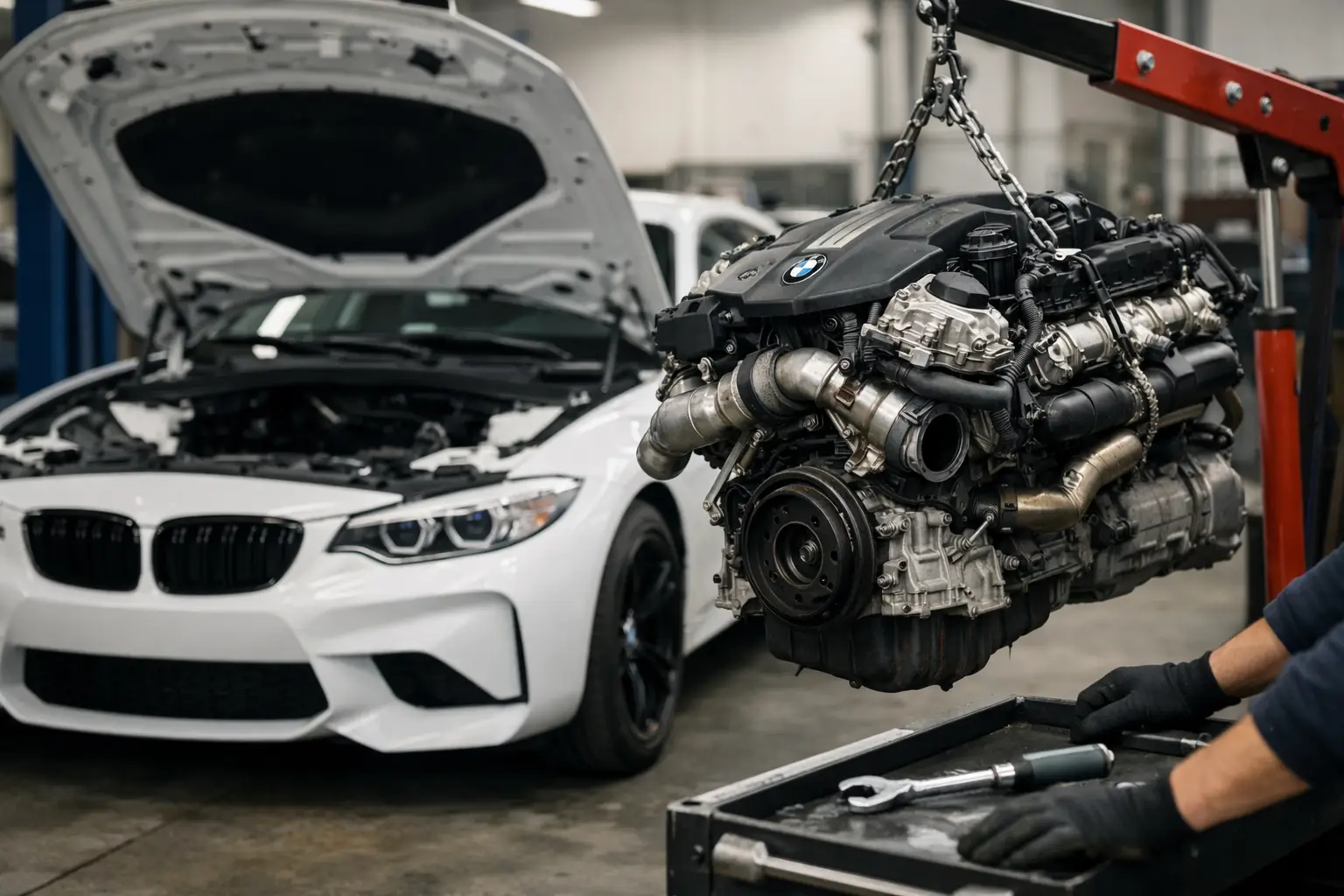
A bmw engine swap usually sounds simple right up until the first real question comes up: what, exactly, are you trying to fix or improve? For some owners, it is about saving a favorite chassis. For others, it is a performance project that has lived on a notepad for years. And for plenty of BMW drivers, the smarter move is not a swap at all. That is where honest evaluation matters.
BMWs are tightly integrated vehicles. The engine is only part of the equation. Electronics, cooling, fuel delivery, exhaust routing, coding, drivability, emissions compliance, and even how the transmission communicates with the rest of the car all affect whether a swap works well or becomes an expensive headache. If you own a BMW in the Palatine area and you are weighing your options, the goal should not be chasing the biggest engine on paper. It should be making the right decision for your car, your budget, and how you actually drive.
When a BMW engine swap makes sense
There are cases where a swap is completely reasonable. If the original engine has suffered major internal damage, replacement may be the most practical path to getting the car back on the road. If you have a well-kept chassis with sentimental value, a clean donor engine can preserve a vehicle you already know and trust. Some owners also pursue swaps because they want a different powerband, stronger reliability from a proven BMW engine family, or better parts availability than the factory setup offers.
That said, there is a big difference between a swap that is mechanically possible and one that is financially smart. A direct replacement or a closely related BMW engine tends to be more realistic than trying to force in something that was never intended for that platform. The farther you move from factory compatibility, the more labor, fabrication, coding, and troubleshooting the project usually demands.
The first question is fitment, not horsepower
Many swap ideas start with output numbers. In the real world, fitment decides everything. Engine mounts, oil pan clearance, accessory placement, wiring harness compatibility, and cooling system layout can all turn a promising plan into a long project. Even if the engine physically fits, that does not mean the car will start, idle properly, shift correctly, or pass emissions testing.
Modern BMWs rely heavily on communication between control modules. The engine computer, body electronics, immobilizer system, instrument cluster, and transmission control all need to cooperate. If they do not, you may end up with warning lights, limp mode, no-start conditions, or a car that feels wrong every time you drive it.
This is one reason owners are often surprised by the total cost. The engine itself may not be the expensive part. The supporting work usually is.
Common BMW engine swap realities
A straightforward BMW engine swap is typically one where the replacement engine came from the same generation, the same model family, or a closely related platform with known compatibility. These projects still require planning, but they avoid some of the major roadblocks that come with one-off combinations.
More ambitious swaps bring more variables. You may need custom wiring solutions, adaptation of cooling and intake systems, changes to the exhaust, and programming work to keep the car functional. On newer BMWs, software integration is not optional. You are not just installing an engine. You are trying to make the entire vehicle accept it.
There is also the condition of the donor engine to consider. A used engine can look like a bargain until it arrives with hidden issues, missing components, or unknown service history. Saving money upfront can create risk later if the engine needs substantial correction before it can be installed reliably.
Cost depends on more than the engine
Owners often ask for a ballpark figure, and that is understandable. The problem is that swap pricing varies widely depending on the chassis, engine choice, parts availability, and how much supporting work is needed. Labor can increase quickly when fitment problems, electrical issues, or missing parts show up mid-project.
Beyond the engine itself, costs may include mounts, hoses, sensors, fluids, gaskets, belts, filters, wiring work, module coding, exhaust adaptation, cooling upgrades, and transmission-related changes. If your current engine failure also sent debris through related systems, that adds another layer. A swap can be worth it, but it rarely stays within the fantasy budget people set after browsing classifieds for used engines.
For many drivers, a realistic inspection and estimate are more valuable than broad online claims. A specialist can tell you whether you are looking at a manageable replacement or a custom project with a lot of unknowns.
BMW engine swap vs repair
This is the point where many owners need a clear, honest answer. Not every engine problem calls for a swap. Misfires, oil leaks, cooling system failures, timing issues, sensor faults, and drivability problems can all mimic catastrophic engine failure to someone reading warning lights at home. Proper diagnostics matter because replacing an engine when the real issue is elsewhere is an expensive mistake.
Even when the engine has serious damage, repair may still make better sense than a swap depending on the car’s age, mileage, condition, and market value. If the rest of the vehicle has electrical issues, suspension wear, or neglected maintenance, installing another engine may not deliver the dependable result you expect. On the other hand, if the car is structurally sound, well maintained, and otherwise worth keeping, replacement can extend its life in a meaningful way.
That is why a professional evaluation should start with the whole vehicle, not just the engine bay.
What to ask before approving a BMW engine swap
Before moving forward, ask practical questions. Is the replacement engine verified to fit your exact chassis? What components must be transferred from the original engine? Will the car need module coding or immobilizer adaptation? What is the condition and mileage of the donor engine? Are there any known weak points that should be addressed while access is available?
You should also ask about the end result. Will the air conditioning, gauges, transmission behavior, emissions equipment, and onboard diagnostics function as intended? A swap that produces a running engine but a compromised vehicle is not a good outcome for most daily drivers.
A trustworthy shop will not rush past these questions. It should be willing to explain trade-offs, discuss budget honestly, and tell you when another path makes more sense.
Why specialist diagnostics matter
BMW owners already know these cars are not best served by guesswork. A quality engine decision depends on accurate diagnostics, brand familiarity, and the right equipment. That includes identifying the true cause of failure, checking system compatibility, and understanding what the car will need after installation to operate correctly.
This is especially important with European vehicles because one unresolved issue can affect several systems at once. A cooling problem can damage an engine. A coding mismatch can create drivability complaints. A sensor issue can send you chasing the wrong repair. Specialist diagnosis keeps the process grounded in facts instead of assumptions.
For drivers in the northwest suburbs, that is often the real value of working with an experienced independent BMW specialist. At Wizard Werks, the goal is not to sell the biggest repair. It is to give you a clear picture of the car, the options, and the costs so you can make the right call with confidence.
Is a BMW engine swap worth it?
Sometimes yes. Sometimes absolutely not. If you have the right chassis, the right donor engine, and a clear use case, a swap can be a practical way to keep a BMW you love on the road. If the plan depends on questionable compatibility, uncertain parts, or unrealistic cost expectations, it can become more trouble than value.
The best decision usually comes from stepping back and looking at the whole ownership picture. How long do you plan to keep the car? Is reliability your priority, or is this a project vehicle? Does the rest of the car justify the investment? And are you prepared for the extra labor and troubleshooting that often come with nonstandard work?
A BMW deserves more than a rushed answer. If you are considering a bmw engine swap, start with a thorough inspection and an honest conversation about what will serve you best now, not just what sounds exciting in theory. That approach saves money, reduces surprises, and gives you a much better chance of ending up with a BMW that feels right every time you turn the key.