
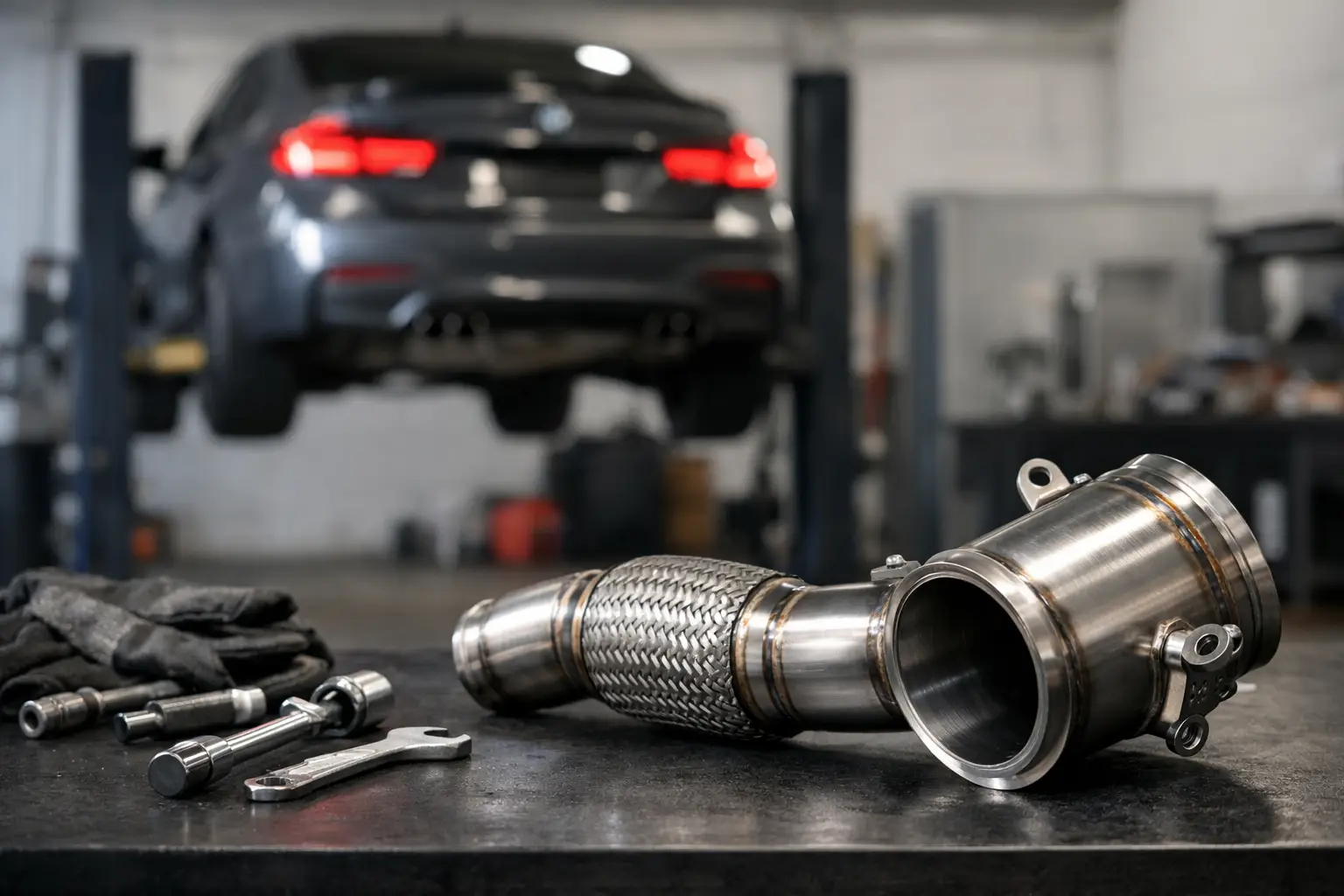
A bmw downpipe install usually starts with one goal – better flow and a sharper response from a turbocharged BMW. What many owners find out later is that the install itself is only part of the story. On modern BMWs, the real question is whether the part, the tuning, the emissions impact, and the long-term drivability all make sense for how you actually use the car.
What a BMW downpipe install actually changes
The downpipe connects the turbocharger outlet to the rest of the exhaust system. On many turbo BMW models, that section includes a catalytic converter designed to control emissions and keep the car compliant for street use. Replacing it with a less restrictive component can reduce backpressure and change how quickly the turbo builds boost.
That is why drivers often look at a BMW downpipe install when they want stronger mid-range pull, quicker spool, and a more aggressive exhaust note. On the right vehicle, those changes can be noticeable. The trade-off is that less restriction often brings more smell, more cabin noise, and more complexity around check engine lights and software calibration.
This is where expectations matter. If your BMW is a daily driver used for commuting around Palatine and the northwest suburbs, the best choice is not always the loudest or most aggressive setup. For some owners, the extra performance is worth it. For others, smooth operation, predictable diagnostics, and fewer headaches matter more.
Why BMWs need a more careful approach
BMW exhaust and engine management systems are tightly integrated. A downpipe change affects sensor readings, exhaust temperatures, catalytic efficiency monitoring, and in some cases how the engine control unit responds under load. That means this is not the same as bolting on a simple universal part and calling it done.
A proper BMW downpipe install should account for fitment, sensor placement, hardware condition, and the vehicle’s current health. If the car already has boost leaks, failing oxygen sensors, exhaust leaks, or pre-existing fault codes, installing a downpipe can make diagnosis more confusing instead of improving performance.
That is one reason experienced BMW technicians usually start by evaluating the vehicle before any modification work begins. If the engine is not running correctly now, changing the exhaust path is rarely the first fix.
The most common reasons owners consider this upgrade
Some BMW owners want more performance from a turbo platform that clearly has room for it. Others want a deeper, more pronounced exhaust tone without replacing the entire exhaust system. There is also a cost factor. Compared with larger power upgrades, a downpipe is often seen as a relatively straightforward entry point.
Still, straightforward does not always mean simple. Different BMW engines have different packaging constraints, heat management needs, and tuning sensitivity. Access on some models is tight, rusted hardware is common, and damaged fasteners can turn a short job into a much longer one.
What can go wrong during a BMW downpipe install
The biggest installation problems are rarely dramatic. They are the small issues that create repeat visits later. A poor seal at a connection point can create an exhaust leak. An oxygen sensor can be damaged during removal or reinstalled incorrectly. Mounting stress can cause rattles, vibration, or contact with surrounding components.
On higher-mileage BMWs, seized fasteners and heat-cycled hardware are common. If a stud snaps or threads are damaged, repair time increases quickly. On some models, underbody panels, braces, and tightly packed engine bay components add another layer of labor that DIY guides tend to gloss over.
Then there is the software side. Many owners focus on the mechanical install and underestimate what happens afterward. A check engine light, catalyst efficiency fault, or drivability issue can leave you with a car that is technically modified but not enjoyable to drive.
Tuning, check engine lights, and drivability
This is the part many customers appreciate hearing clearly. A downpipe alone does not guarantee clean operation on a modern BMW. Depending on the vehicle and the part used, engine software may need to be addressed to avoid recurring fault codes or inconsistent performance.
Even when the car feels faster, that does not mean everything is working as it should. Short-term gains can hide long-term issues if the vehicle is running too hot, throwing adaptation faults, or compensating for sensor readings outside expected ranges. Professional diagnostics matter here because guessing gets expensive fast.
For owners who want the car to remain refined, daily usable, and easy to service in the future, the right path depends on the exact model, engine, and goals. Sometimes the answer is moving forward with the install and supporting calibration. Sometimes the better answer is to leave the factory setup in place and address maintenance items that restore lost performance first.
Emissions and legal considerations matter
A BMW downpipe install can affect emissions compliance, especially if the replacement changes or removes catalytic function. That is not a minor footnote. It can affect inspections, registration requirements, fault monitoring, and whether the car remains appropriate for regular street use.
Owners should also think beyond the initial install. If a warning light comes on later, future diagnostics become more involved because the exhaust system is no longer in its original configuration. That does not mean an upgrade is automatically a bad idea. It does mean the decision should be made with open eyes, not just based on a claimed horsepower number.
When professional installation is the better choice
There are some jobs where DIY makes sense. On a BMW downpipe install, the margin for error is smaller than it looks. Tight clearances, sensor handling, heat shielding, proper torque, and post-install fault checking all matter. If one step is rushed, the car may end up louder and less reliable at the same time.
Professional installation is especially worthwhile if your BMW is newer, still expected to deliver daily-driver comfort, or already showing warning lights. Having technicians who understand BMW systems means the conversation is not just about whether the part fits. It is about whether the vehicle is a good candidate, what supporting issues should be handled first, and what you should realistically expect afterward.
At a specialist shop, the value is not only in turning wrenches. It is in inspecting the car beforehand, spotting worn hardware and existing faults, and giving you a straight answer about the pros and cons. That is often what saves owners money in the long run.
Is a BMW downpipe install right for your car?
It depends on how you use the vehicle and what you want from it. If you have a turbo BMW that is mechanically healthy, you understand the emissions implications, and you are prepared for the tuning side, a downpipe upgrade may be a worthwhile performance modification. If your priority is quiet operation, factory-like refinement, and minimal complication, the gains may not justify the trade-offs.
This is especially true for owners who came to BMW for balance. A BMW should feel strong, responsive, and well sorted. Any change that improves one area but creates constant warning lights, odd noises, or questionable drivability works against that experience.
That is why honest guidance matters. At Wizard Werks, conversations like this should be clear and practical, not sales-driven. If a modification makes sense for your BMW, you deserve to know what it will take to do it properly. If it does not, you deserve to hear that too.
Before making the call, start with the condition of the car in front of you. The best upgrade is the one that fits your BMW, your expectations, and the way you actually drive it.