
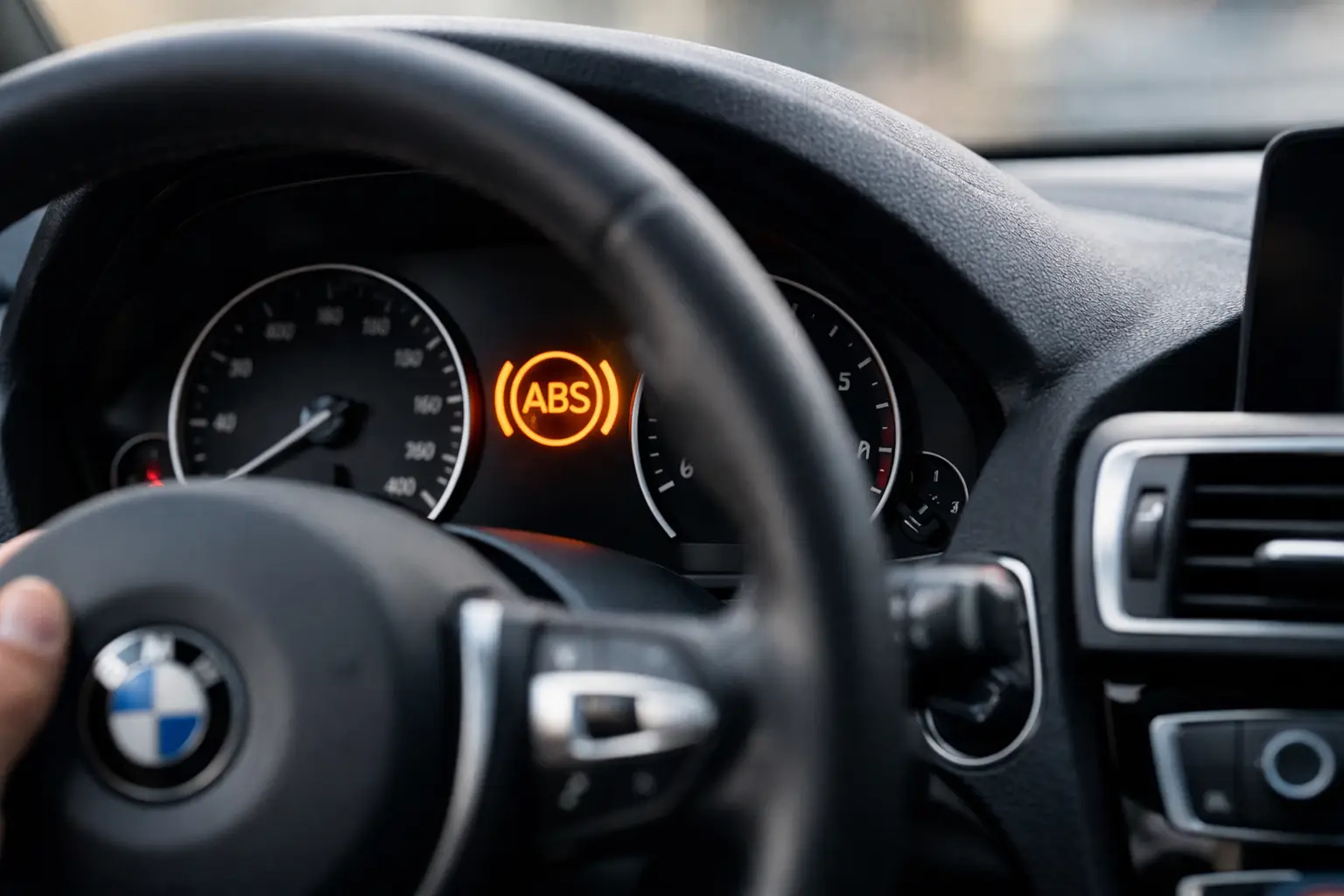
You start your BMW, glance at the cluster, and there it is – the bmw abs light staring back at you. Sometimes it appears by itself. Other times it shows up with traction control, brake, or stability warnings too. Either way, it is not a light to ignore, especially on a vehicle designed around precise braking and electronic control.
For BMW owners, this warning can mean anything from a simple wheel speed sensor issue to a more involved problem with the ABS module, wiring, or hydraulic unit. The tricky part is that the symptom on the dash often looks the same even when the actual cause is very different. That is why a proper diagnosis matters more than guessing and replacing parts.
What the BMW ABS light actually means
The ABS system, or anti-lock braking system, helps prevent the wheels from locking during hard braking. On your BMW, it also works closely with traction control and stability control systems. These systems share information from wheel speed sensors, steering angle inputs, brake pressure data, and other vehicle signals.
When the bmw abs light comes on, the system has detected a fault and may disable some or all ABS-related functions. In many cases, your standard brakes still work, but the added electronic assistance may not. That means the car can behave differently in a panic stop, on wet pavement, or during a sudden maneuver.
This is where owners can get caught off guard. The car may feel mostly normal in everyday driving, so the warning seems easy to postpone. But an ABS fault is often most noticeable when you need the system most.
Common causes of a BMW ABS light
A failed wheel speed sensor is one of the most common reasons this warning appears. Each wheel uses a sensor to monitor rotation, and if one sensor stops reporting correctly, the ABS system loses a key part of its data. Dirt, corrosion, road debris, wiring damage, or internal sensor failure can all trigger that fault.
Another common issue is a damaged tone ring or reluctor ring. This component works with the wheel speed sensor to produce a readable signal. If it cracks, corrodes, or goes out of alignment, the sensor may read erratically even if the sensor itself is still good.
On some BMW models, the ABS control module or hydraulic unit can also fail. This is a more involved repair, and it is one of the reasons generic scan tools often fall short. A basic code reader may tell you there is an ABS issue, but it may not provide the BMW-specific data needed to identify whether the fault is in the sensor circuit, module communication, pump operation, or another subsystem.
Low system voltage can create confusion too. A weak battery, charging problem, or voltage drop during startup can trigger multiple warning lights, including ABS and stability control. In that case, the warning is still real, but the root cause may be electrical rather than a direct brake system component failure.
Brake fluid level and related hydraulic faults can also play a role, though this depends on the model and the exact warning combination. If the ABS light is accompanied by a red brake warning, that raises the urgency.
What you may notice while driving
Not every ABS problem changes the way the car feels right away. Sometimes the only sign is the warning light. Other times, drivers notice the traction control light staying on, cruise control acting differently, or the speedometer behaving oddly on certain models.
In a harder braking situation, you may feel that the brakes respond without the normal anti-lock pulsing. On slippery roads, wheelspin control and stability intervention may be reduced or unavailable. If the issue is tied to a wheel speed signal, the car can also become more hesitant or inconsistent in how its driver-assistance systems respond.
That does not always mean the vehicle is unsafe to move a short distance. It does mean you should drive cautiously and avoid assuming the car still has full electronic braking support.
Can you keep driving with the BMW ABS light on?
It depends on what caused it and what other warnings are present. If the bmw abs light is on by itself and the brake pedal feels normal, the vehicle may still be drivable for a short trip to a qualified shop. But that is not the same as saying the problem is minor.
If the ABS light appears with a red brake light, major traction or stability warnings, a very hard or very soft brake pedal, or obvious braking changes, the vehicle should be evaluated as soon as possible. Those signs point to a broader issue that should not be pushed off.
For drivers in the northwest suburbs who rely on their BMW for daily commuting, this matters even more in rain, snow, and cold weather. ABS and stability systems are not just convenience features on these cars. They are part of the overall safety and handling package BMW engineered into the vehicle.
Why BMW ABS diagnosis should not be guesswork
A lot of ABS repairs go sideways because someone replaces the first part that sounds likely. A wheel speed sensor gets installed, but the light stays on. Then a second sensor gets replaced. Then maybe a module is suggested. At that point, the cost starts climbing without a clear answer.
BMW diagnostics need more than a parts-store scanner and a hunch. Proper testing includes reading manufacturer-level fault codes, checking live wheel speed data, inspecting wiring and connector integrity, evaluating voltage supply, and confirming whether the control unit is receiving and sending the right signals.
That process matters because different failures can create nearly identical dashboard warnings. A bad sensor, broken wire, corroded connector, damaged tone ring, or failing module may all turn on the same light. Good diagnostics separate the symptom from the cause.
This is one area where a European specialist earns their keep. Shops that work on BMWs every day know the repeat failure points, the common platform-specific issues, and the testing sequence that avoids unnecessary parts replacement.
What to expect during a professional inspection
A proper ABS diagnosis usually starts with a full system scan, not just a quick code pull. The technician checks the stored faults, current faults, and communication between ABS, traction control, and related modules. From there, the inspection moves into testing.
That may include road-speed sensor readings from each wheel, visual inspection of wiring near the hubs, checking for damage from road debris, and evaluating the condition of related brake components. If the fault points toward the module or hydraulic unit, more advanced testing may be needed to verify whether the unit is functioning correctly or if the issue lies elsewhere in the circuit.
The goal should be simple: identify the exact failure, explain it clearly, and recommend only the repair the car actually needs. That is especially important on premium vehicles, where owners expect accuracy and do not want to pay dealer-level prices for trial-and-error work.
Preventing ABS issues on a BMW
Not every ABS problem is preventable, but regular inspection helps. Brake service is a good time to check sensor areas, wiring routing, and signs of corrosion or damage around the hubs. Battery and charging system health also matter more than many drivers realize, because BMW electronic systems are sensitive to voltage problems.
If you have had recent suspension, brake, or wheel bearing work done elsewhere and the warning started soon after, that timing is worth mentioning. Sensor wiring can be stressed during related repairs, and a clue like that can shorten the diagnostic process.
It also helps to pay attention to small changes before a warning becomes a bigger problem. An intermittent traction control light, occasional speed signal issue, or warning that comes and goes in wet weather can all point to an ABS-related fault developing over time.
When it is time to have it checked
The best time to address a bmw abs light is early, before the issue expands into reduced stability control performance or more complicated electrical faults. Waiting does not usually make diagnosis easier. If anything, intermittent problems become harder to pin down once they start appearing less predictably.
For BMW owners who want dealership-level diagnostic capability without the dealership experience, that means choosing a shop that understands the platform, uses the right tools, and explains the findings in plain English. At Wizard Werks, that approach is part of the job – accurate testing, honest recommendations, and repairs that make sense for the car and the customer.
If your BMW ABS light is on, treat it as the car asking for attention, not panicking. The right diagnosis usually brings the situation back into focus quickly, and that is the first step toward getting your BMW back to feeling like a BMW again.