
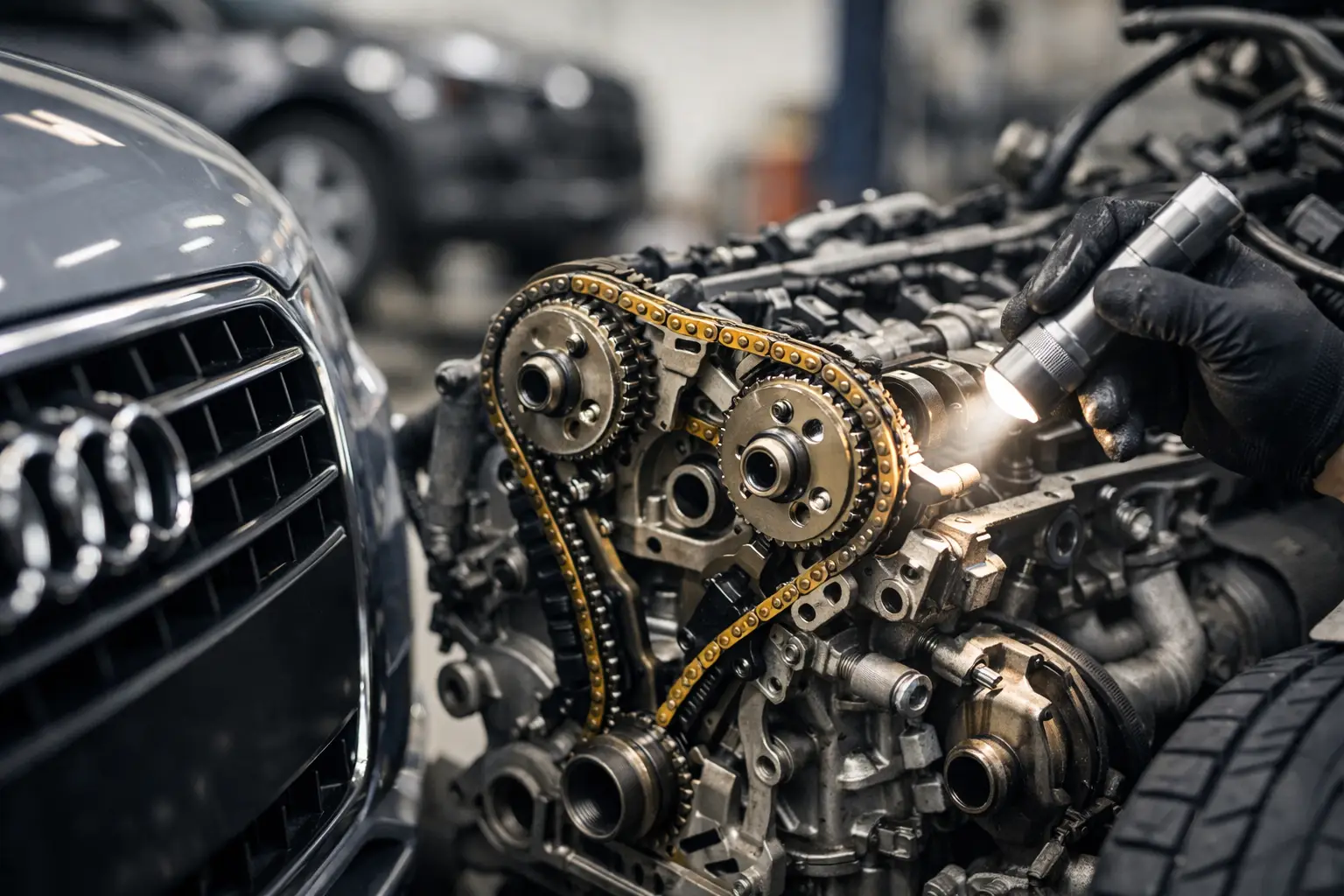
A brief rattle on a cold start can be easy to dismiss, especially when your Audi drives normally a few minutes later. But when that sound comes from the timing system, putting off Audi timing chain service can turn a manageable repair into a far more serious engine concern. The right response is not panic or guesswork. It is an accurate diagnosis from a shop that understands Audi engines, their common patterns, and the tools required to verify mechanical timing.
What the Timing Chain Does in Your Audi
Your Audi’s timing chain synchronizes the crankshaft and camshafts so the engine’s valves open and close at the correct moment. That timing has to be precise. Even a small amount of chain stretch, guide wear, or tensioner trouble can affect how the engine starts, idles, accelerates, and responds to diagnostic monitoring.
Unlike a timing belt, a chain is designed to be durable and is not always tied to one universal replacement interval. That does not mean it lasts forever. The chain, tensioners, guides, and related components operate under heat, load, and constant exposure to engine oil. Age, mileage, oil condition, driving habits, and the specific Audi engine all influence how long the system performs properly.
This is why a recommendation based only on mileage is not enough. Some Audis may show no timing-related concern at high mileage, while another vehicle needs attention earlier because of startup noise, stored faults, or a measurable timing deviation.
7 Signs Audi Timing Chain Service May Be Needed
A warning light does not have to be on for a timing chain concern to exist. Paying attention to changes in how your Audi sounds and runs gives you a better chance of addressing an issue before it escalates.
1. Rattle at Cold Startup
A metallic rattle lasting a second or two just after starting is one of the better-known symptoms of a worn chain tensioner or excessive chain slack. It can be more noticeable after the vehicle has been parked overnight. A brief noise is not automatic proof that the timing chain is failing, but it deserves professional attention, particularly if it becomes louder or lasts longer.
2. Check Engine Light and Timing-Related Faults
Audi engine computers carefully monitor camshaft and crankshaft correlation. When the readings move outside their expected range, the vehicle may store timing-related fault codes and trigger a check engine light. Those codes still need context. A qualified technician should evaluate scan data, symptoms, and mechanical condition rather than simply clearing the light or replacing parts based on a code description.
3. Rough Idle or Extended Cranking
An engine that cranks longer than usual before starting, idles unevenly, or occasionally stumbles may have a timing issue. These symptoms can also come from ignition, fuel, air, or sensor faults, which is exactly why a complete diagnostic process matters. Replacing a timing chain without confirming the cause is not the honest or cost-effective approach.
4. Reduced Performance or Hesitation
If valve timing is no longer where the engine management system expects it to be, you may notice hesitation, reduced power, or a less responsive feel under acceleration. The change can be gradual, so owners often adapt to it before recognizing that the car no longer feels as sharp as it once did.
5. Misfire Symptoms That Keep Returning
Misfires have many possible causes, including spark plugs, ignition coils, injector issues, vacuum leaks, and carbon buildup. But if misfire-related symptoms continue after common causes have been checked, timing data should be part of the evaluation. A specialist can determine whether the concern is mechanical, electronic, or a combination of both.
6. Oil Service Has Been Delayed
Clean oil supports the components that keep chain tension properly controlled. Long gaps between oil services, incorrect oil specifications, or low oil levels can contribute to wear over time. This does not mean one overdue oil change guarantees a timing chain problem. It does mean a consistent maintenance history is meaningful when assessing the condition of an older Audi engine.
7. A Known Concern on Your Specific Engine
Audi uses a wide range of engines, and timing system designs vary by model year and engine family. Some configurations have a stronger history of timing-chain-related concerns than others. Vehicle-specific knowledge matters here. The engine code, service history, diagnostic results, and actual symptoms should guide the recommendation, not internet advice intended for a different Audi.
Why Diagnosis Comes Before Audi Timing Chain Service
Timing chain work is detailed labor. Access to the timing components can require significant disassembly, and correct installation depends on manufacturer procedures, proper locking tools, accurate torque specifications, and confirmation through diagnostic testing. It is not a repair to approach with assumptions.
A thoughtful diagnosis typically begins with a conversation about the noise, starting behavior, warning lights, oil service history, and when the concern occurs. The technician can then scan for stored and pending faults, review live engine data, inspect for related issues, and determine whether the camshaft timing values suggest a mechanical concern.
In some cases, the results point clearly toward timing component wear. In others, the evidence points elsewhere. That distinction protects you from paying for work your Audi does not need. At Wizard Werks, the goal is to explain what the vehicle is telling us, outline the appropriate repair path, and give you a clear estimate before work moves forward.
What a Proper Timing Chain Repair Involves
When replacement is warranted, the job should address the system as a system. Installing only one worn piece while leaving related components with substantial wear can create avoidable risk and duplicate labor later. Depending on the Audi engine and the diagnosis, service may involve the chain, guides, tensioners, seals, and other related components needed to restore proper operation.
OEM-quality parts and manufacturer-grade equipment matter because the tolerances are exact. Once repairs are completed, a proper process includes verifying timing alignment, checking for leaks, clearing applicable faults, and confirming that the engine starts and runs correctly. The final road test and diagnostic verification are not extras. They are part of making sure the repair delivers the confidence it should.
There is a trade-off to consider when an older Audi needs major timing work. The repair can be a sensible investment when the vehicle is otherwise in good condition, has been well maintained, and remains the right fit for your needs. If several unrelated high-cost repairs are also due, it is reasonable to discuss the full picture before deciding. An honest shop should help you understand that decision without pressure.
How to Help Your Timing System Last
The best preventive step is simple: follow the correct oil service schedule using the oil specification approved for your Audi. Check the oil level between services, especially on vehicles that consume oil, and address warning lights or unusual startup noises promptly. Waiting for a sound to become constant rarely makes the repair easier.
It also helps to keep service records. A clear history gives your technician useful context and helps protect the long-term value of a premium vehicle. If you recently purchased a used Audi with limited maintenance documentation, a comprehensive inspection can establish a practical baseline for the road ahead.
When to Schedule an Inspection
Schedule an inspection soon if your Audi has a recurring cold-start rattle, a check engine light, extended cranking, rough running, or a noticeable change in performance. If the engine is running poorly, the warning light is flashing, or the noise is persistent and severe, avoid extended driving until a qualified technician can assess it.
Your Audi is built to deliver precise performance, and its timing system is central to that experience. Listening early, diagnosing carefully, and choosing specialized service can help keep a concerning sound from becoming an interruption to every drive.