
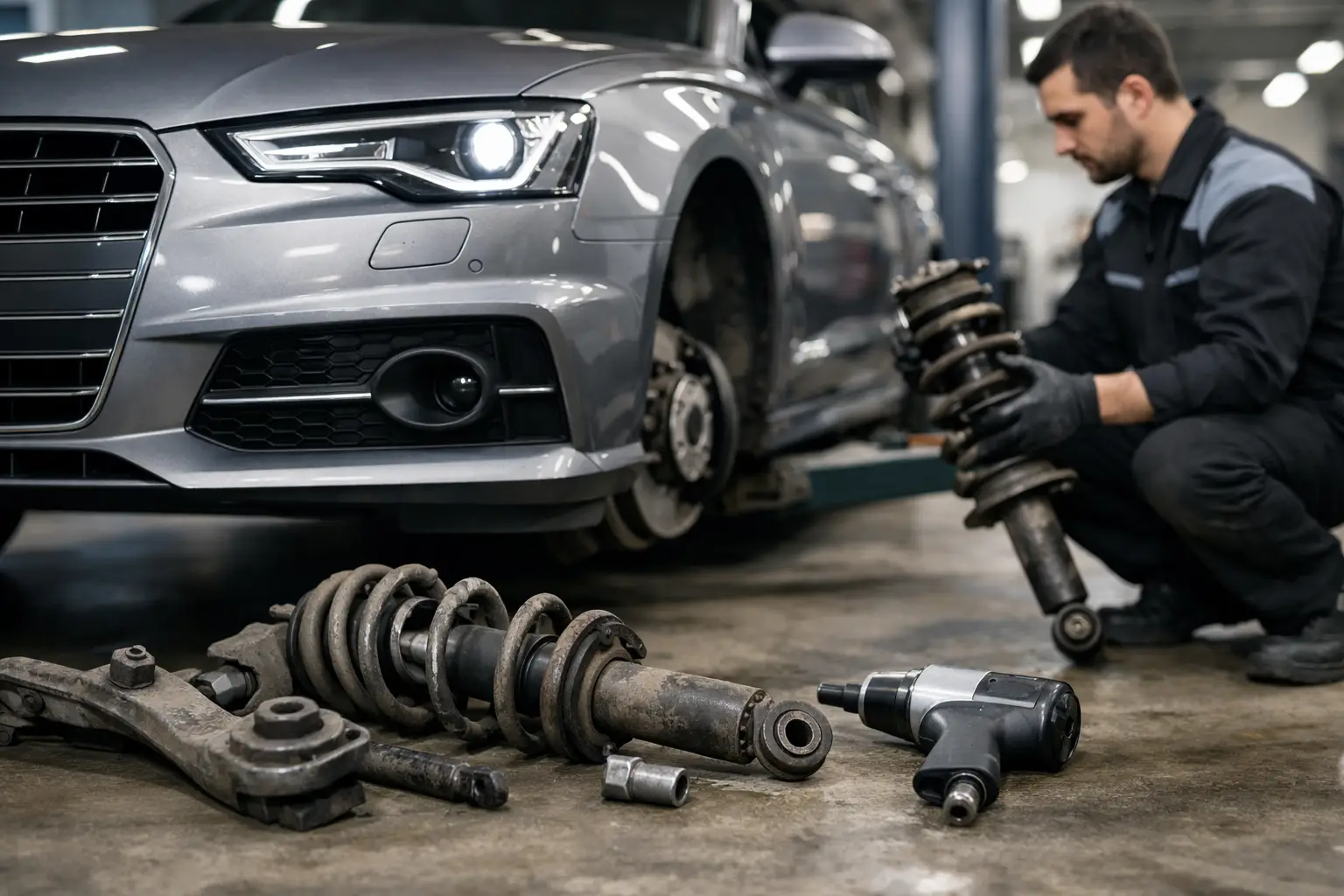
That sharp clunk over a pothole, the front end dipping harder than usual, or a ride that suddenly feels busy and unsettled – those are often the first clues that audi suspension repair is no longer something to put off. On an Audi, suspension problems rarely stay small for long. What starts as a worn control arm bushing or a leaking strut can turn into uneven tire wear, vague steering, and a driving experience that feels nothing like the car you bought.
Audi owners usually notice the change before they can name the exact part. The car may feel loose on the highway, harsher over expansion joints, or slightly off-center in corners. That matters because Audi suspension systems are designed to deliver a very specific balance of comfort, control, and road feel. When one component starts to wear out, the rest of the system often has to compensate.
Why Audi suspension repair needs a brand-specific approach
Suspension work on an Audi is not the same as suspension work on an average commuter car. Even when the symptoms sound familiar, the cause can be very different depending on the model, mileage, drivetrain, and suspension setup. A4, A6, Q5, Q7, S and RS models all have their own wear patterns, and diagnosis needs to account for that.
Audi uses sophisticated front and rear suspension designs that improve handling but also introduce more wear points. Multiple control arms, bushings, links, mounts, electronic dampers, and adaptive systems all have to work together. Replacing one failed piece without checking the surrounding components can lead to repeat visits, poor alignment results, or a ride that still feels wrong.
This is where specialized diagnostics matter. The goal is not just to quiet a noise. It is to restore the way the vehicle should drive and make sure the repair addresses the actual source of the problem.
Common signs you may need Audi suspension repair
Some suspension issues are obvious. Others develop gradually enough that owners adapt without realizing how much the vehicle has changed. If your Audi shows any of these symptoms, it is worth having the suspension inspected.
Clunking, rattling, or knocking over bumps
Noise is one of the most common suspension complaints. Worn control arm bushings, sway bar links, strut mounts, or ball joints can all create knocking or clunking sounds, especially at low speeds over rough pavement. On European vehicles, that noise often points to wear in components that affect both ride quality and steering precision.
Uneven or accelerated tire wear
If one tire edge is wearing faster than the other, the problem may not be the tire itself. Suspension wear can alter alignment angles and allow excess movement under load. You can replace tires, but if the underlying issue remains, the new set will wear the same way.
Pulling, drifting, or unstable highway feel
An Audi should feel planted and predictable at speed. If it wanders, follows road grooves more than usual, or feels unsettled in lane changes, the suspension may be allowing too much play. Sometimes drivers describe it as the vehicle feeling tired or less confident than it used to.
Harsh ride or excessive bouncing
Leaking shocks or struts, worn mounts, or failing adaptive dampers can make the ride harsher or floatier depending on the failure. If the car crashes over small bumps or keeps bouncing after larger ones, damping control may be compromised.
Steering wheel vibration or poor cornering response
Not every vibration is a balance issue. Suspension wear can create instability that shows up through the steering wheel, particularly during braking, turning, or driving on uneven roads. If turn-in feels delayed or the vehicle rolls more than expected, suspension inspection makes sense.
What usually fails on an Audi suspension system
Audi suspension systems are durable, but like any performance-oriented setup, they contain components that wear over time. The exact repair depends on the model and driving conditions, but several parts come up regularly.
Control arms and bushings are frequent wear items, especially on higher-mileage vehicles. The bushings absorb vibration and allow controlled movement, but age, heat, and rough roads eventually break them down. Once that happens, the suspension geometry can shift under load.
Ball joints and sway bar links also wear and can create noise or looseness. Struts and shocks lose effectiveness gradually, which is why many owners do not realize how much ride control they have lost until new components are installed. On some models, upper strut mounts and bearings can contribute to popping, binding, or uneven steering feel.
Audi models equipped with adaptive suspension add another layer. Electronic dampers, ride height sensors, and related control systems need proper testing before parts are replaced. Guessing gets expensive quickly, especially when suspension and electronic fault symptoms overlap.
Why early diagnosis saves money
With suspension problems, waiting usually increases the total bill. A single worn bushing can place extra stress on nearby joints. A weak strut can speed up tire wear. Poor alignment caused by suspension wear can affect braking stability and handling confidence.
There is also the issue of repair efficiency. If the vehicle is inspected early, technicians can identify whether the problem is isolated or if related components are beginning to fail together. In many cases, that helps owners make a practical plan instead of reacting to one problem after another.
It depends on the condition of the vehicle, of course. Not every Audi with one noise needs a major suspension overhaul. But not every small noise is harmless either. Honest diagnosis matters because the right answer is sometimes a focused repair, and sometimes it is smarter to address several worn components at once.
What affects Audi suspension repair cost
Cost is one of the first questions owners ask, and fairly so. Audi suspension repair can vary widely depending on the model, which parts have failed, and whether the vehicle needs alignment or additional related work after repairs are completed.
A straightforward sway bar link or mount replacement is very different from replacing multiple front control arms, struts, and worn bushings. Vehicles with adaptive suspension or air suspension can also carry higher parts and diagnostic costs than conventional setups. Labor time varies too, because some assemblies are more involved to access and calibrate.
The cheapest estimate is not always the best value. If low-cost parts do not hold up or if the diagnosis misses the real issue, the vehicle can end up back in the shop with the same symptoms. For Audi owners, OEM or equivalent-quality parts and proper post-repair alignment are usually the difference between a short-term fix and a repair that actually restores the car.
What a proper suspension inspection should include
Good suspension diagnosis goes beyond a quick visual check. The vehicle should be road tested, inspected under load where possible, and checked for play, leakage, torn bushings, ride height concerns, and irregular tire wear. Steering response and braking stability also matter because suspension faults often show up in those systems too.
On newer Audi models, scan tool diagnostics may also be part of the process, particularly when adaptive damping or electronic suspension control is involved. Fault codes are useful, but they are only one piece of the picture. Physical inspection still matters because many worn components create drivability issues long before they trigger a warning light.
For owners in Palatine and the northwest suburbs, working with a European specialist makes this process more straightforward. Shops such as Wizard Werks are set up to diagnose Audi systems accurately, explain what is urgent versus what can wait, and recommend repairs without the dealership runaround.
When to repair now and when you may have some time
Some suspension issues should be addressed right away. Excessive looseness, severe tire wear, leaking struts, or instability during braking fall into that category. These problems can affect control and safety, not just comfort.
Other issues may allow for some planning. A small amount of bushing wear or light noise without handling changes may not require same-day repair, but it should still be monitored and documented. That gives you time to schedule service before the problem starts affecting tires, alignment, or other suspension components.
The key is not guessing. If your Audi feels different, sounds different, or wears tires differently, inspection is the smart move. Suspension problems tend to announce themselves early. The owners who act on those early signs usually spend less and get back the ride quality they have been missing.
A well-sorted Audi should feel composed, quiet, and confident on the road. If yours does not, that change is worth taking seriously – not because every symptom means a major repair, but because the right diagnosis can often stop a small issue from turning into a much more expensive one.