
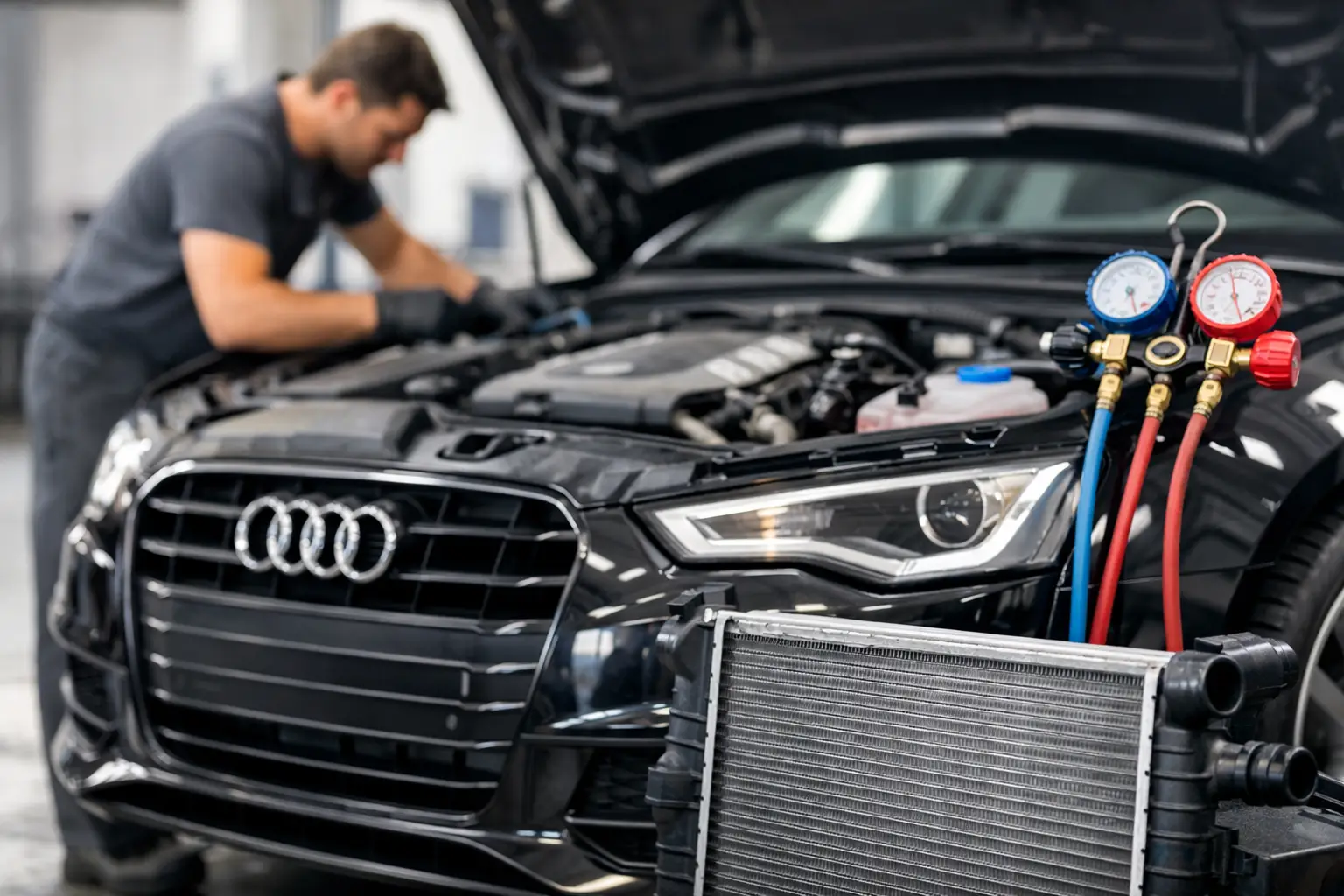
When an Audi starts running hotter than usual, the problem rarely stays small for long. Audi cooling system repair is one of those services where timing matters – not because every issue is catastrophic, but because a minor leak, weak thermostat, or failing water pump can quickly turn into overheating, poor heater performance, or more extensive engine damage.
Audi owners usually notice the early clues before a warning light becomes impossible to ignore. Maybe the coolant level keeps dropping. Maybe there is a sweet smell after parking, a temperature gauge that creeps higher in traffic, or heat from the vents that comes and goes. Those symptoms often point to a cooling system issue that needs proper diagnosis, not guesswork.
Why Audi cooling system repair needs brand-specific diagnosis
Audi cooling systems are efficient, compact, and tightly integrated with the rest of the vehicle. That makes them effective when everything is working as designed, but it also means a problem in one component can affect several others. A thermostat that sticks can create temperature swings. A water pump leak can reduce coolant flow. A cracked expansion tank or aging hose can cause pressure loss that shows up as intermittent overheating.
On many Audi models, diagnosing the source of the issue takes more than topping off coolant and looking for an obvious drip. The system may need pressure testing, inspection for seepage at connection points, a scan for fault data, and a close look at how the cooling fans and thermostat are operating. European vehicles do not respond well to universal shortcuts, especially when the cooling system is involved.
That is why Audi owners are usually better served by a shop that works on European vehicles every day. The right equipment, the right coolant, and technicians who know common Audi failure points can make the difference between a correct repair and a repeat visit.
Common Audi cooling system problems
Cooling system issues are not identical across every Audi, but some failures show up more often than others. Water pumps are a frequent concern, particularly when they begin leaking or lose efficiency. Thermostats can also fail, either sticking open and causing slow warm-up or sticking closed and leading to overheating.
Expansion tanks and coolant hoses can age and crack over time, especially with repeated heat cycles. Radiators may develop leaks at the seams. In some cases, the problem is less obvious, such as a coolant flange, sensor housing, or auxiliary component allowing a slow loss of coolant that is easy to miss without a careful inspection.
Electric cooling fans and temperature sensors can also play a role. If the fan is not engaging at the right time, an Audi may seem fine at highway speed but start overheating in traffic or while idling. If a sensor is inaccurate, the vehicle may trigger warnings even when the underlying issue is somewhere else. That is where a methodical diagnostic process matters.
Signs your Audi may need cooling system service
Some drivers expect a dramatic overheat warning before taking action, but many cooling system problems start more quietly. Repeated low coolant alerts are one of the clearest signs. If the coolant level keeps dropping, there is a reason, even if the leak is small.
Other warning signs include coolant under the vehicle, steam from the engine bay, a heater that blows cold air when the engine is warm, or a temperature gauge that moves unpredictably. You may also notice a sweet odor from leaking coolant or see residue around the expansion tank, hoses, or water pump area.
It depends on the exact failure, but even mild symptoms deserve attention. A small leak can become a sudden failure. A thermostat issue that seems manageable during cooler weather can become a serious overheating problem in summer traffic.
What happens during Audi cooling system repair
A proper repair starts with confirming the fault instead of replacing parts based on a hunch. The first step is usually a visual inspection of the radiator, hoses, clamps, reservoir, water pump area, and related components. From there, the system may be pressure tested to reveal leaks that are not obvious when the engine is off or cold.
If needed, diagnostic equipment is used to check temperature readings, fan operation, and stored fault information. That helps separate a mechanical cooling issue from an electrical control problem. Once the source is confirmed, the failed parts are replaced using the correct components for the vehicle.
In many cases, the job also includes refilling the system with the proper Audi-approved coolant mixture and bleeding air from the system correctly. That step matters more than many drivers realize. Air pockets, incorrect coolant, or incomplete bleeding can create new problems even after the original repair is finished.
Why delaying repair can get expensive
The cooling system protects one of the most important and most expensive parts of the vehicle – the engine. If coolant is leaking, not circulating properly, or not holding pressure, engine temperatures can rise quickly. Modern Audis are engineered with tight tolerances, so they do not leave much room for overheating events.
That does not mean every cooling issue becomes severe overnight. Sometimes the problem is caught early and corrected with a targeted repair. But the longer an overheating condition is ignored, the greater the risk of warped components, damaged seals, or drivability problems that go well beyond the original failure.
There is also the inconvenience factor. A vehicle that overheats in traffic, on a commute, or during a family trip creates a much bigger problem than a scheduled repair appointment. Most Audi owners would rather address the issue while it is still controlled and diagnosable.
Dealer or independent shop?
For many drivers, this is where the decision gets practical. Audi cooling system repair requires specialized knowledge, but that does not automatically mean the dealership is the only place equipped to handle it. A qualified independent European repair shop can often provide the same level of technical capability with more personal communication and a clearer explanation of what the car actually needs.
That matters because cooling system repairs can vary in scope. Sometimes the fix is straightforward. Sometimes one failed component has put added stress on another part, and the best repair plan needs to balance immediate need, preventive value, and budget. Honest guidance is important here. You want a shop that explains what failed, what should be addressed now, and what can reasonably be monitored.
For Audi owners in Palatine and the northwest suburbs, working with an experienced European specialist often means dealership-level equipment, OEM-quality parts, and a more transparent service experience. That combination is hard to beat when the goal is fixing the car correctly without paying for unnecessary work.
How to reduce the chance of repeat cooling system problems
No cooling system lasts forever, especially on a vehicle that sees seasonal temperature swings, stop-and-go commuting, and years of heat cycling. Still, a few habits can help reduce the risk of surprise failures.
Routine inspections make a real difference. If coolant levels are dropping, that should be investigated early. If a water pump, thermostat, or hose is showing wear during scheduled service, replacing it before it fails outright can prevent a roadside problem. Using the correct coolant also matters. Mixing the wrong fluid into an Audi cooling system can lead to contamination, corrosion, or reduced performance over time.
It is also worth paying attention to changes that seem small. A heater that is weaker than normal, a cooling fan that sounds different, or a faint coolant smell after driving can all be early clues. Not every symptom means a major repair is coming, but they are often the first sign that something in the system is no longer working as intended.
When to schedule Audi cooling system repair
If your Audi has a coolant warning light, rising engine temperature, visible leaks, or repeated coolant loss, the answer is simple – schedule service as soon as possible. If the car is actively overheating, it should not be driven until the problem is diagnosed. Continuing to drive an overheated vehicle is where a manageable repair can turn into a much larger expense.
Even if the symptoms are inconsistent, it is smart to have the system checked before the problem becomes more obvious. Intermittent issues are still issues, and they are often easier to resolve before a component fails completely.
At Wizard Werks, that kind of repair starts with listening to what the car is doing, testing the system carefully, and giving you a clear explanation of the next step. Audi owners do not need pressure or guesswork when a cooling problem shows up. They need accurate diagnostics, quality parts, and a repair plan that makes sense for how they drive and how long they plan to keep the car.
If your Audi is showing signs of a cooling system issue, the best move is usually the simple one – get it checked while the problem is still small enough to stay that way.