
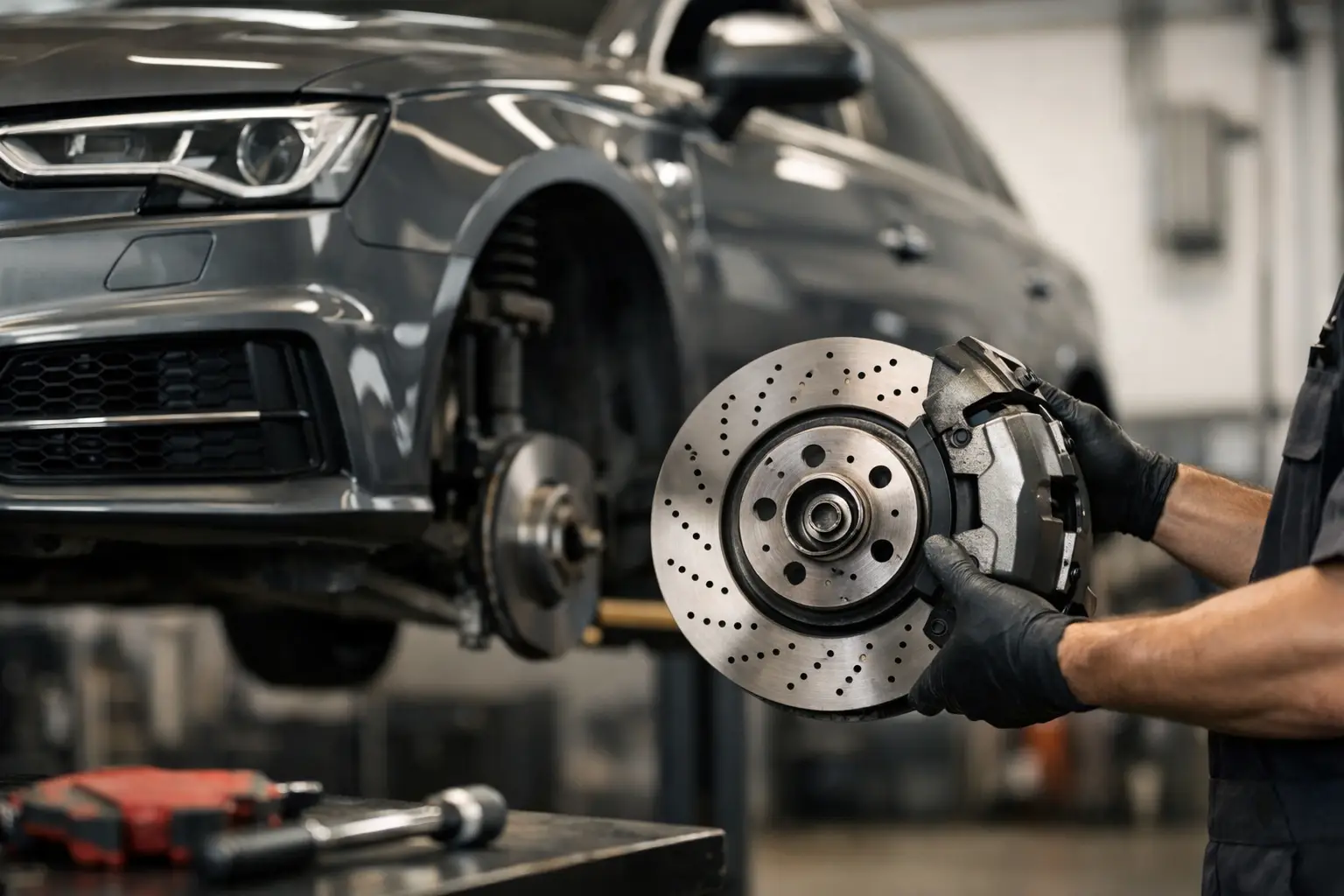
That slight vibration in the pedal at a stoplight, the squeal that shows up only on cold mornings, the warning light that seems to come on out of nowhere – these are usually not problems to put off in an Audi. Audi brake repair is rarely just about swapping pads and sending you back on the road. On modern Audi models, the braking system ties into sensors, electronic wear monitoring, ABS, traction control, and the overall feel that makes the car drive like an Audi in the first place.
For many owners, the first question is simple: do you really need a specialist for brakes? In some cases, yes. Not because brakes are mysterious, but because Audis are built with tighter tolerances, model-specific service procedures, and electronic systems that generic shops do not always handle correctly. If you care about performance, noise levels, and long-term reliability, the details matter.
Why Audi brake repair is different
An Audi braking system is designed to balance stopping power, comfort, and control. That sounds straightforward until you consider what goes into it. Rotor materials, pad compounds, electronic parking brake procedures on certain models, brake wear sensors, and factory service specs all affect the outcome.
A basic brake job done without the right process can create new problems instead of solving the old one. You might end up with uneven wear, pulsation, warning lights, excessive dust, or a pedal feel that does not inspire confidence. That is one reason Audi owners often notice a difference between a repair that is simply completed and one that is done properly.
There is also the issue of parts quality. On European vehicles, cheaper aftermarket parts can sometimes save money up front but change braking feel, increase noise, or wear faster than expected. OEM or high-quality equivalent components usually cost more, but they tend to preserve the way the car was engineered to stop.
Common signs your Audi needs brake service
Brake problems do not always announce themselves with grinding noises. In many cases, the early signs are subtle. A steering wheel shimmy during braking can point to rotor issues or uneven pad deposits. A soft pedal may suggest hydraulic concerns or worn components. A brake warning light can mean pad wear, sensor faults, or a larger system issue that needs proper diagnostics.
Noise is another area where context matters. A brief squeak on a damp morning may not mean immediate failure. Constant squealing, scraping, or grinding is a different story. The same goes for brake dust. Some dust is normal on many European vehicles, but heavy buildup paired with reduced braking performance deserves attention.
If the car pulls when braking, takes longer to stop, or feels less stable in traffic, it is time to have it checked. Those symptoms affect safety first, but they can also point to uneven wear that becomes more expensive if ignored.
Symptoms that deserve quick attention
If your Audi shows a red brake warning light, obvious grinding, leaking fluid, or a brake pedal that feels unusually soft or drops too far, it should be inspected as soon as possible. Those are not wait-until-next-month issues.
For less urgent concerns like light noise or mild vibration, the repair may still be straightforward if caught early. Waiting often turns a pad replacement into pads and rotors, and sometimes more.
What a proper Audi brake repair should include
A quality brake service starts with inspection, not assumptions. The technician should measure pad and rotor wear, check calipers and hardware, inspect fluid condition, review warning lights, and verify whether the issue is mechanical, electronic, or both.
From there, the repair should match the car’s needs. Sometimes that means replacing pads and rotors together. Sometimes it means addressing a sensor, servicing sticking hardware, or diagnosing an ABS-related fault. This is where honest communication matters. Not every recommendation should be a full overhaul, and not every shortcut is a good value.
On many Audi models, service also involves electronic procedures. Rear brakes with electronic parking brake systems may require scan-tool functions to retract and reset components properly. Skipping that step or forcing parts into place can damage the system and create avoidable costs.
Brake fluid is another piece owners often overlook. Because brake fluid absorbs moisture over time, it can affect braking consistency and internal component life. If fluid service is overdue, it may make sense to handle it during brake work rather than treating it as a separate issue later.
Pads, rotors, sensors, and fluid – what usually gets replaced
In many Audi brake repair visits, pads and rotors are replaced together because they wear as a set. Reusing worn rotors with new pads can lead to noise, poor contact, and reduced pad life. On some vehicles, wear sensors are also replaced when triggered or when the service calls for it.
Calipers are not automatically replaced, but they should be inspected carefully. If a caliper is sticking or leaking, replacing pads alone will not fix the underlying problem. Hardware matters too. Small components like guide pins, clips, and mounting surfaces can affect wear patterns and brake noise more than many drivers realize.
Fluid service depends on age, mileage, and test results. If the fluid is contaminated or overdue, this is often the right time to address it. It is one of those maintenance items that does not get much attention until braking feel starts to change.
Dealer or independent shop?
This is where many Audi owners pause. The dealership feels like the safe choice, especially for a premium brand. The trade-off is usually cost, and sometimes a less personal service experience. A qualified independent European shop can often provide the same level of workmanship, OEM-quality parts, and model-specific diagnostics with more transparency and better value.
The key phrase is qualified independent shop. Audi brake repair should not be treated like a one-size-fits-all service. You want technicians who work on European vehicles every day, understand common Audi braking issues, and use the right diagnostic equipment. That combination matters more than a showroom waiting area.
For drivers in Palatine and the northwest suburbs, that is often the sweet spot – dealer-level capability without dealer pricing or the feeling that you are being rushed through a process.
What affects the cost of Audi brake repair?
There is no single price that fits every Audi. Model, year, brake package, driving habits, and parts quality all influence the final number. An A4 commuter car and a performance-oriented SQ5 will not have the same brake service cost. Neither will a vehicle that needs only front brakes compared with one that needs front and rear pads, rotors, sensors, and fluid service.
Driving style matters more than people think. Frequent stop-and-go traffic, short trips, aggressive braking, and carrying extra load can all shorten brake life. So can waiting too long after the first warning signs appear.
The cheapest estimate is not always the best value. If a lower quote leaves out sensors, uses budget parts, or skips needed diagnostics, it can cost more in the long run. A clear inspection report and a straightforward explanation of what is needed now versus what can wait is usually a better sign than a suspiciously low number.
How to avoid premature brake wear
Good brake habits help, but so does regular inspection. Having the brakes checked during routine maintenance can catch uneven wear, fluid issues, or hardware problems before they become larger repairs. If your Audi has started making noise or the pedal feel has changed, early diagnosis is almost always cheaper than delayed diagnosis.
It also helps to use parts that match the vehicle. Some owners want lower dust, some want factory braking feel, and some care most about longevity. A good shop will walk you through those trade-offs instead of pretending there is only one right answer.
What to expect from the service experience
Brake service should not feel confusing. You should be able to explain what you are noticing, get a clear inspection, and receive recommendations that make sense for your car and your budget. That means no vague language, no pressure, and no replacing parts that do not need to be replaced.
At Wizard Werks, that approach matters because Audi owners are not just trying to solve a noise. They are trying to protect a vehicle they depend on and enjoy driving. The right repair restores confidence every time you come to a stop, whether you are commuting through the northwest suburbs or heading out for a weekend drive.
If your Audi is giving you even a small sign that the brakes are off, it is worth having someone look at it before the problem decides the timing for you.