
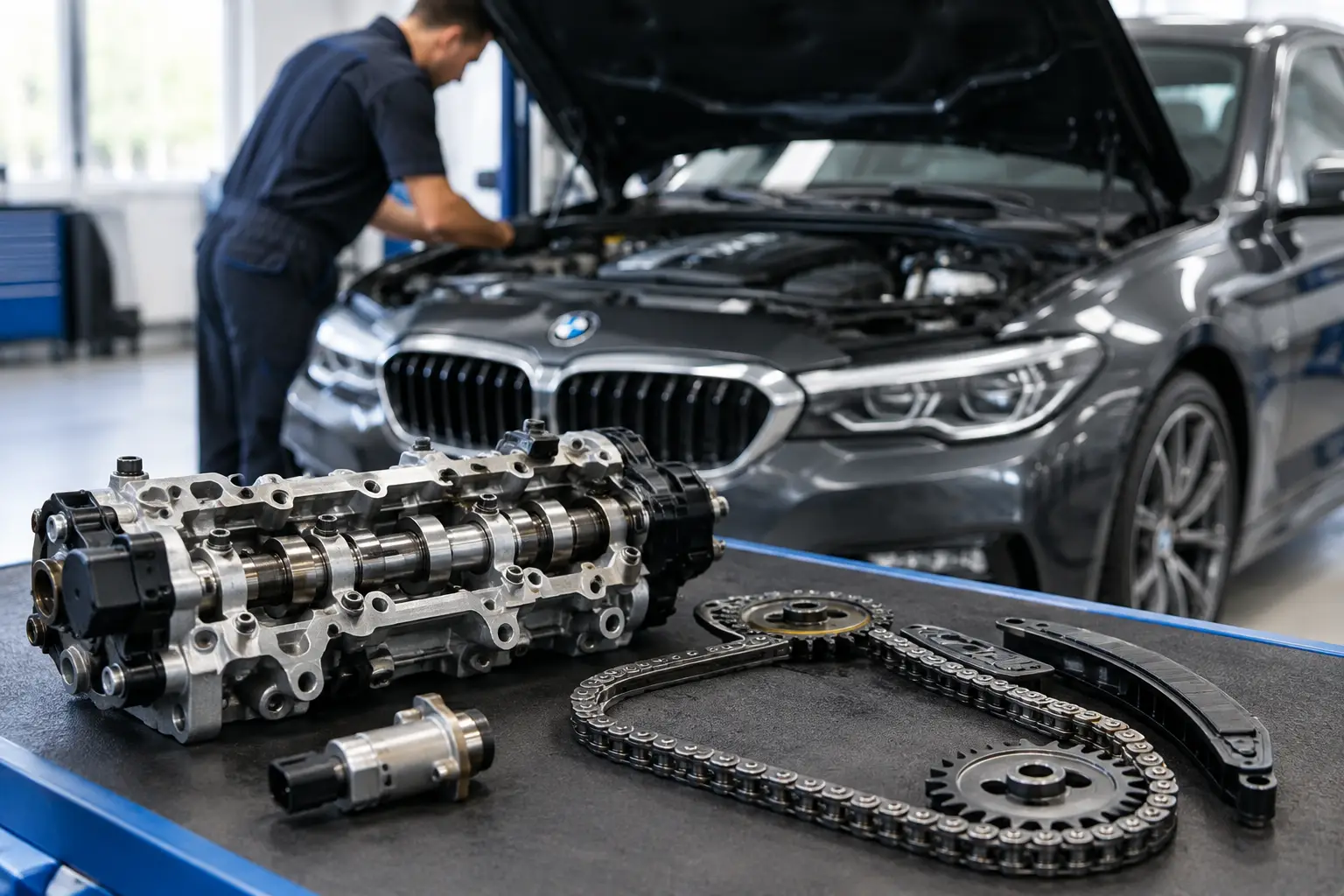
A BMW that hesitates at a stoplight, rattles briefly on a cold start, or suddenly displays a drivetrain warning is not giving a generic maintenance reminder. On many late-model BMWs, those symptoms can point to two systems that directly affect engine operation: Valvetronic and the timing chain. For BMW Valvetronic and timing chain repair in Palatine, IL, the right answer starts with identifying the actual fault before recommending a major repair.
These concerns deserve more than a code read and a quick estimate. BMW engine management relies on precise mechanical movement, electronic feedback, and software calibration. A fault in one area can create symptoms that resemble another. Proper diagnosis protects the vehicle, the driving experience, and the owner from paying for work that does not address the cause.
Why BMW Valvetronic Faults Need Specialized Diagnosis
Valvetronic is BMW’s variable valve lift system. Instead of relying solely on the throttle body to manage incoming air, the system adjusts intake valve lift through an electric motor, eccentric shaft, intermediate components, and position sensors. It is an impressive design that supports efficiency and responsive performance, but it also requires accurate mechanical and electronic diagnosis when something goes wrong.
A Valvetronic issue may appear as rough idle, reduced power, difficult starting, inconsistent acceleration, a check engine light, or a drivetrain malfunction message. In more serious cases, the engine can enter reduced-power operation. The symptoms are frustrating, but they are not a diagnosis by themselves.
The Valvetronic motor, its control circuit, the eccentric shaft sensor, wiring, oil condition, voltage supply, and mechanical movement all need to be evaluated in context. A stored fault code can identify where the system noticed a problem, but it does not automatically prove which component failed. That distinction matters when the repair involves labor-intensive access and precision calibration.
What a Proper Valvetronic Evaluation Includes
Dealer-level BMW diagnostic equipment can read manufacturer-specific fault information, live data, adaptation values, and test plans that a basic scanner may not access. A specialist can then compare the electronic findings with the engine’s actual behavior and perform the required checks before recommending a course of action.
After a repair, the system may require programming, relearn procedures, or adaptation resets so the engine control module can correctly recognize the restored component operation. Skipping those steps can leave a BMW running poorly even when the underlying mechanical concern has been corrected.
Timing Chain Problems Are About More Than Noise
The timing chain keeps crankshaft and camshaft movement synchronized. When the chain stretches, a guide wears, or a tensioning concern develops, valve timing can drift outside the range the engine computer expects. Timing-chain risks and inspection procedures vary by engine and production date. Any warning signs should be assessed for the specific vehicle.
A brief rattle on startup is one symptom owners often notice. Others include camshaft correlation faults, rough running, loss of power, hard starts, oil contamination concerns, or an illuminated check engine light. Some vehicles show only diagnostic faults before the driver hears anything unusual. That is why waiting for a loud, obvious rattle is not a sound strategy.
Timing chain service is not a repair category where guesswork is acceptable. Chain condition, guide integrity, tensioner performance, cam timing data, and related sealing surfaces need to be assessed carefully. The repair process also requires correct locking procedures, exact timing alignment, and verification after reassembly. A small error in timing work can create expensive consequences.
Why Early Action Can Change the Scope of Repair
A chain that has begun to stretch or guides that show deterioration may still allow time for a controlled repair. If the system is ignored until timing slips severely, the vehicle may no longer run properly and the scope of work can become much more involved. Early inspection is not about selling unnecessary work. It is about giving the owner a clear picture of risk while repair options are still more favorable.
Mileage alone does not decide whether a BMW needs timing chain attention. Service history, engine family, oil-change habits, driving conditions, fault data, startup behavior, and inspection findings all matter. A well-maintained vehicle with higher mileage may show no concern, while another BMW may develop symptoms sooner. The honest answer is always based on evidence from that individual vehicle.
When Valvetronic and Timing Concerns Overlap
BMW owners sometimes arrive with one warning light and several possible explanations. A timing-related camshaft fault can affect idle quality and power delivery. A Valvetronic concern can create running complaints that feel similar to a fueling or ignition issue. Low system voltage or a wiring problem can complicate the diagnostic picture further.
This overlap is why replacing the first component associated with a fault code is rarely the best approach. The technician must establish whether the engine’s mechanical timing is correct, whether Valvetronic movement is within specification, and whether the control system is receiving reliable sensor information. Clear diagnostics may take longer than a quick scan, but they prevent uncertainty from becoming a costly repair plan.
For drivers in Palatine, Barrington, Inverness, Arlington Heights, Schaumburg, and nearby northwest suburbs, that level of evaluation offers a practical alternative to a large dealership service department. The goal is not to overwhelm owners with technical language. It is to explain what was found, why it matters, what should be addressed now, and what can be monitored responsibly.
What to Expect From BMW Timing Chain Repair in Palatine, IL
A qualified BMW specialist should begin with a conversation about the symptoms: when they occur, whether they are worse during cold starts, what messages have appeared, and whether the vehicle has lost power or changed its normal driving behavior. That history is useful because intermittent issues often leave patterns before they leave definitive failures.
The vehicle should then receive a full diagnostic assessment using BMW-capable equipment, not just a universal code reader. Depending on the findings, this can include fault-memory review, live data evaluation, mechanical timing checks, inspection of accessible areas, and verification of related systems. Once the cause is confirmed, the shop should outline the recommended repair, the associated labor, the components involved, and any programming or post-repair verification required.
Transparency matters most with complex work. Owners should not be left wondering whether a recommendation is preventive, urgent, or simply optional. A trustworthy repair discussion separates immediate reliability concerns from items that can be watched, explains the trade-offs, and gives the customer enough information to make a confident decision.
Wizard Werks provides BMW diagnostics and mechanical repair in Palatine, IL. That approach is particularly valuable when a Valvetronic or timing chain concern requires both mechanical precision and software-level verification.
Do Not Ignore These BMW Warning Signs
A check engine light does not always mean a timing chain or Valvetronic failure, but certain symptoms warrant prompt scheduling. Pay attention to startup rattles that are new or getting worse, repeated drivetrain warnings, rough idle after the engine is warm, hesitation under acceleration, reduced-power operation, or faults that return after being cleared.
It also makes sense to schedule an inspection when buying a used BMW with incomplete service history or when a repair facility has identified camshaft timing correlation codes without fully explaining the cause. The decision to proceed with repair should come after a meaningful evaluation, not pressure or speculation.
Protect the BMW You Chose to Drive
BMW ownership is rewarding when the car responds the way it was engineered to respond: smooth at idle, confident under acceleration, and predictable on the commute. Valvetronic and timing chain concerns can disrupt that experience, but they do not need to become a mystery or a dealership-only problem.
If your BMW is showing warning signs, a detailed assessment now can provide clarity before a minor symptom becomes a major interruption. The most helpful next step is simple: have the vehicle evaluated by a BMW specialist who can explain the findings in plain language and perform the repair with the precision your vehicle requires.