
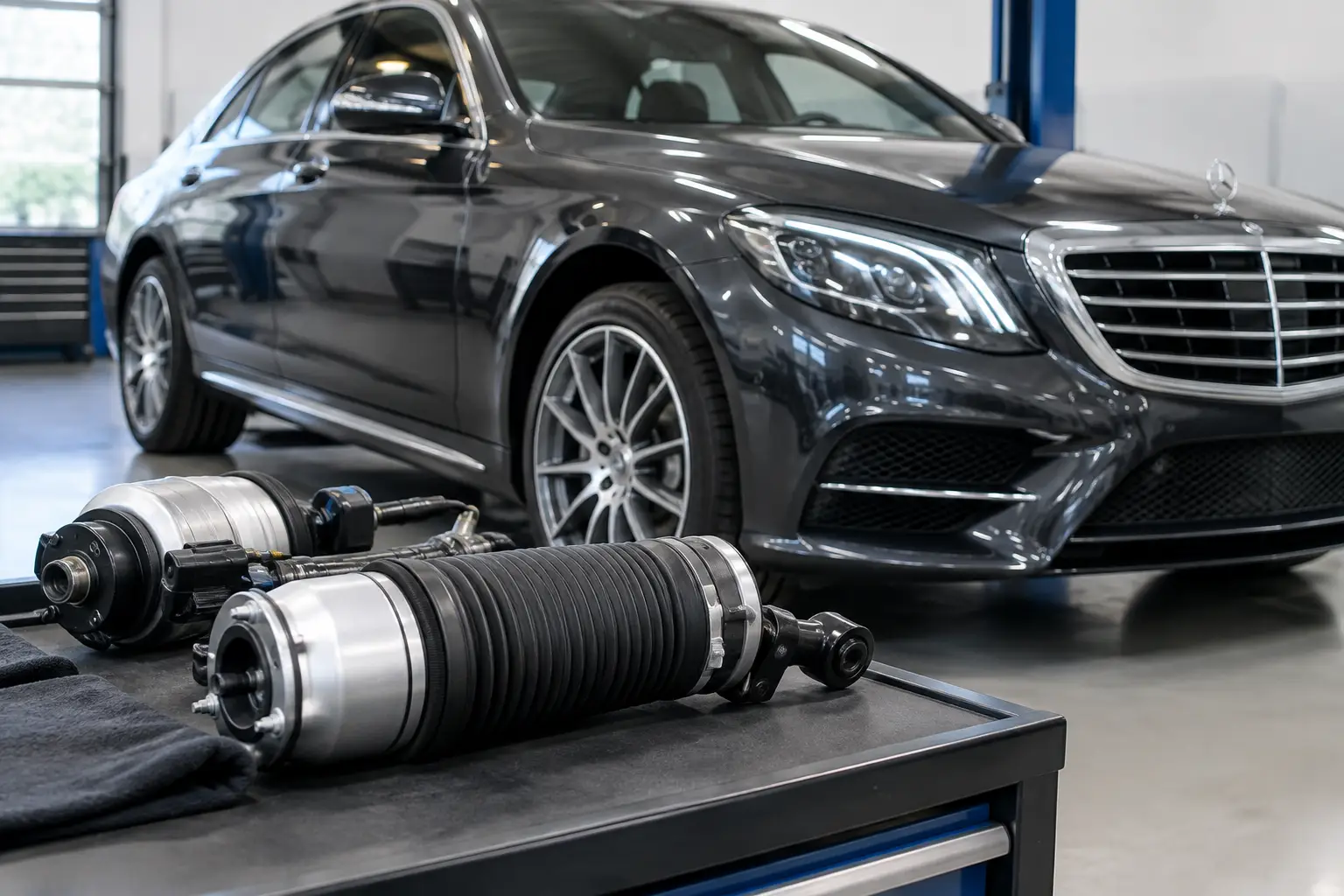
A Mercedes that sits low in one corner after an overnight stop is not being temperamental. It is usually giving you an early warning that deserves attention. Consistent Mercedes air suspension care helps preserve the composed ride, confident handling, and adjustable height that make these vehicles feel distinctly Mercedes-Benz – and it can prevent a small air leak from becoming a larger suspension repair.
Air suspension is sophisticated, but caring for it does not mean replacing parts on a schedule without evidence. The right approach is regular inspection, accurate diagnostics, and prompt attention when the vehicle’s ride height or behavior changes. For owners in Palatine and the surrounding suburbs, that also means accounting for harsh winters, road salt, potholes, and wide temperature swings.
How Mercedes Air Suspension Works
Depending on the model and year, Mercedes-Benz may use AIRMATIC, AIR BODY CONTROL, or another electronically controlled air suspension system. Rather than relying only on conventional steel springs, the system uses air springs or air struts, a compressor, an air reservoir on some models, valve components, ride-height sensors, and a control module.
The system measures vehicle height and adjusts air pressure to keep the vehicle level. It may lower the vehicle at highway speeds, raise it for additional ground clearance, or compensate for passengers and cargo. Those adjustments happen quickly when everything is healthy, but every component depends on the others. A minor leak can make the compressor run longer. A weak compressor can struggle to restore height. A faulty sensor can tell the control module to make the wrong adjustment.
That is why a warning light alone does not identify the failed part. Proper diagnosis matters more than guesswork, especially on a premium vehicle where replacing the wrong component is an expensive way to start.
Warning Signs You Should Not Ignore
A noticeable change in ride height is the most familiar symptom. If one corner of your Mercedes sits lower than the others, especially after the vehicle has been parked for several hours, an air spring, fitting, or air line may be leaking. If the entire vehicle drops, the source may be elsewhere in the system.
A rougher-than-normal ride also deserves a closer look. Air suspension is designed to isolate road imperfections without feeling floaty. A Mercedes that suddenly feels harsh over expansion joints, bottoms out, bounces excessively, or leans through turns may have a suspension fault even if it still appears to sit at the correct height.
Pay attention to the sounds as well. You may hear the compressor operate briefly after starting the vehicle or when the ride height changes. That can be normal. A compressor that runs frequently, runs for an unusually long time, or sounds strained may be working against a leak or losing efficiency. Waiting until it fails completely can turn one issue into two.
Other signs include a “Vehicle Rising” message that never seems to finish, an air suspension warning on the instrument panel, the vehicle refusing to raise or lower, or uneven tire wear. None of these symptoms should be dismissed as normal aging. They are useful diagnostic clues.
The Most Valuable Mercedes Air Suspension Care Habits
The best maintenance plan is practical. Air suspension components are wear items, but their lifespan varies dramatically with mileage, climate, driving conditions, and how quickly problems are addressed.
Inspect the system during routine service
Ask for a visual suspension inspection during scheduled maintenance, tire service, or an oil service. A qualified technician can look for cracking or dry rot in air spring rubber, signs of rubbing, damaged air lines, corroded fittings, loose wiring, and moisture-related concerns around connectors and valves.
In the Palatine area, winter road treatment can accelerate corrosion beneath the vehicle. Cleaning the undercarriage periodically during winter and early spring helps reduce salt buildup around suspension hardware and electrical connections. It will not eliminate wear, but it is a sensible way to reduce unnecessary exposure.
Respond quickly to a sagging corner
A small leak may be most obvious after the vehicle sits overnight, then seem to disappear after startup because the compressor refills the system. That does not mean the concern has resolved. Repeatedly forcing the compressor to replace lost pressure adds wear and may eventually leave the vehicle unable to maintain proper ride height.
If you notice sagging, avoid repeatedly cycling the height settings to test it. Schedule an inspection instead. A technician can check stored fault codes, compare live ride-height data, inspect the system for leaks, and determine whether the fault is mechanical, pneumatic, or electronic.
Protect tires, wheels, and alignment
Potholes and curbs can affect more than a tire or wheel. A hard impact can damage suspension components, alter alignment, or stress an air strut. If your Mercedes pulls to one side, the steering wheel is no longer centered, or you see uneven tire wear, have the vehicle inspected rather than simply replacing tires.
Correct alignment supports predictable handling and helps prevent premature tire wear. It also gives the technician a chance to identify worn suspension links, bushings, or other components that can affect how the air suspension performs.
Keep the electrical system healthy
Modern Mercedes suspension systems rely on stable voltage, sensors, and control modules. A weak battery or charging-system issue can create warning messages that seem unrelated to the battery. That does not mean every suspension warning is electrical, but it is one reason full-system diagnostics should come before parts replacement.
If the vehicle has had intermittent warnings, slow starting, or other electrical concerns, mention them when scheduling service. Accurate information about when a warning appears can save diagnostic time and lead to a more confident repair recommendation.
Why Accurate Diagnosis Saves Money
It is tempting to assume that a low corner automatically means an air strut needs replacement. Sometimes that is the answer, particularly when the air spring rubber is visibly cracked or leaking. But a leak may also occur at a line connection, valve assembly, or another point in the system. Likewise, a vehicle that will not rise could have a compressor issue, a relay problem, a sensor fault, or a control-related concern.
A Mercedes specialist should use manufacturer-grade diagnostic equipment alongside a physical inspection and system testing. The goal is to identify the actual cause, explain the findings clearly, and recommend only the work the vehicle needs. This is especially valuable when a repair involves multiple components: replacing every related part may not always be necessary, but ignoring a stressed component can be a false economy.
There are trade-offs. Replacing a worn air spring before it damages the compressor can be the more economical choice. On the other hand, replacing a compressor without locating the leak that overworked it may only postpone the next failure. A transparent inspection should make those choices easier to understand.
When to Schedule Service
Schedule a prompt inspection if the vehicle is sitting unevenly, displays an air suspension warning, rides noticeably differently, or has a compressor that runs more than usual. If the vehicle is severely lowered, cannot maintain safe ride height, or feels unstable, it should not be driven until it has been evaluated.
For routine care, have the suspension checked at regular maintenance visits and after major pothole impacts. Give the shop useful details: whether the vehicle lowers while parked, which corner is affected, how long it takes to rise, and whether the warning is constant or intermittent. Those observations can make diagnostics more efficient.
At Wizard Werks, Mercedes-Benz service is approached with the same standard owners expect from a dealership, with personal communication and recommendations based on the condition of the vehicle. The objective is not to sell parts by default. It is to protect the ride quality, safety, and long-term reliability you bought the vehicle for.
A smooth, level Mercedes should feel effortless. When it does not, treating that change as useful information – rather than something to watch for another month – is one of the smartest ways to care for the vehicle.