
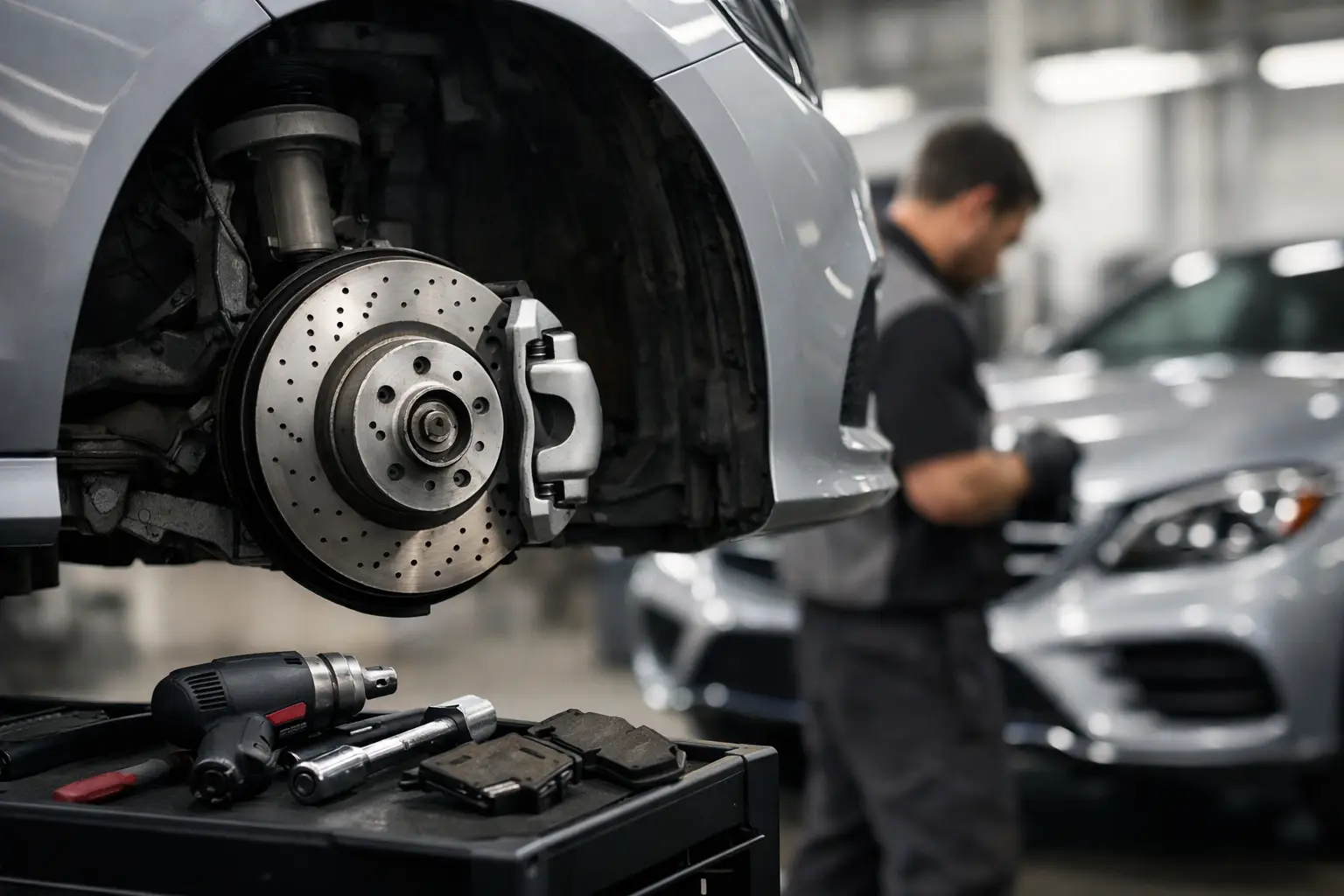
A Mercedes-Benz should feel composed when you press the brake pedal: firm, predictable, and quiet whether you are easing through Palatine traffic or slowing from highway speed. When that feeling changes, it is worth paying attention. This Mercedes brake service guide explains what normal brake wear looks like, which warning signs call for prompt service, and why brand-specific inspection matters for your vehicle.
Mercedes braking systems are engineered around the vehicle’s weight, performance, electronic safety features, and intended driving character. A basic pad replacement may sound straightforward, but the right repair involves more than installing new friction material. The goal is to restore confident stopping power without compromising the refined, controlled feel you expect from your Mercedes.
Why Mercedes Brake Service Is Different
Modern Mercedes-Benz models combine mechanical brake components with sophisticated electronic systems. Anti-lock braking, traction control, stability control, brake assist, electronic parking brakes, and dashboard wear monitoring all depend on the braking system working as designed. Depending on the model and year, service may require scan-tool functions to properly place an electronic parking brake in service mode or reset service-related notifications.
Brake parts also need to match the vehicle. Pad compounds affect noise, brake dust, pedal feel, and performance at different temperatures. Rotor design, thickness specifications, and hardware requirements can vary substantially between a C-Class commuter, an E-Class sedan, a GLE SUV, or an AMG model. Choosing parts based only on the lowest price can lead to squealing, inconsistent feel, excess dust, or premature wear.
That does not mean every Mercedes needs the most expensive option available. The correct choice depends on the vehicle, your driving habits, and the condition of the existing components. An honest inspection should explain what is worn, what can safely remain in service, and why a particular repair is recommended.
Mercedes Brake Service Guide: Signs You Should Not Ignore
Some brake concerns are obvious. Others start subtly and become more expensive when they are put off. If your vehicle displays a brake wear message, schedule an inspection soon. Mercedes brake pad sensors are designed to alert you before the pad material is fully depleted, but the remaining service life can be limited once that message appears.
A high-pitched squeal may be caused by a wear indicator, pad vibration, surface contamination, or normal moisture-related rust after the vehicle has been parked. One brief noise on a damp morning is not necessarily a problem. Repeated squealing, grinding, scraping, or a harsh metallic sound deserves immediate attention. Grinding can indicate that friction material has worn away, allowing metal-to-metal contact that may damage the rotors.
Pay attention to how the brake pedal feels as well. A pedal that has become unusually soft, sinks farther than normal, pulses under everyday braking, or requires more effort than usual should be evaluated. Vibrations through the pedal or steering wheel while braking can point to rotor runout, uneven friction transfer, worn suspension components, or another issue that needs a proper diagnosis rather than a guess.
Pulling to one side, a burning odor near a wheel, or a vehicle that does not roll freely can signal a sticking caliper or related hydraulic concern. These symptoms are not a wait-and-see situation. Continued driving can create excessive heat and affect more than the pads and rotors.
What a Proper Brake Inspection Should Cover
A useful brake inspection is not limited to a quick glance through the wheel spokes. The technician should measure remaining pad thickness and rotor thickness, then compare those measurements with Mercedes specifications. Rotor condition matters just as much as pad thickness. Deep grooves, cracking, heat spotting, corrosion, or thickness below specification can affect braking performance and determine whether replacement is needed.
The inspection should also include calipers, brackets, slide hardware, brake hoses, fluid condition, sensors, and the parking brake system where applicable. On vehicles with electronic parking brakes, the system needs to be handled correctly before and after rear brake service. A trained technician will also check for warning codes or system faults when the dash indicates a braking-related concern.
Road conditions in the northwest Chicago suburbs add another consideration. Winter road salt and repeated freeze-thaw cycles can accelerate corrosion around brake hardware and rotor surfaces, especially on vehicles that sit for extended periods. Surface rust can be normal after rain or snow, but corrosion that interferes with component movement or rotor integrity is not something to overlook.
A transparent service visit should end with clear measurements and an explanation of priorities. You should know whether your brakes need service now, are likely to need it soon, or simply need monitoring at the next maintenance visit. That conversation is more valuable than a vague recommendation to replace everything.
When to Replace Mercedes Brake Pads, Rotors, and Fluid
There is no single mileage interval that fits every Mercedes. City commuting, frequent highway driving, vehicle weight, terrain, driving style, and even how often the vehicle is driven all influence brake life. A vehicle used mostly on open highways may get far more pad life than one that makes short, stop-and-go trips every day.
Pads are replaced when the friction material approaches its minimum safe thickness or when wear is uneven, contaminated, damaged, or causing a performance concern. Front pads often wear sooner because the front brakes handle much of the stopping load, but rear pad replacement is also common and should never be treated as an afterthought.
Rotors should be measured, not judged by appearance alone. Some rotors can remain in service if they meet thickness and condition requirements. Others should be replaced with the pads because they are worn, damaged, or cannot provide a proper braking surface. Replacing pads on rotors that are below specification may save money briefly, but it can result in noise, pulsation, reduced pad life, or another brake visit sooner than expected.
Brake fluid has its own service needs. Over time, it absorbs moisture, which can lower its boiling point and contribute to internal corrosion. Mercedes maintenance requirements vary by model, so the right interval should be based on your vehicle’s schedule and fluid condition. A brake fluid exchange is not the same as simply topping off the reservoir. The system must be serviced with the correct fluid and procedure to protect braking performance.
Choosing the Right Parts for Your Driving Needs
For most Mercedes owners, OEM-quality pads, rotors, sensors, and hardware provide the best balance of fit, longevity, quiet operation, and intended driving feel. This is particularly relevant on luxury vehicles, where cheap or mismatched components can quickly undermine the smooth, quiet experience you paid for.
There can be legitimate choices within a quality repair. Some drivers prioritize low dust, while others want the crisp feel and performance characteristics closer to the original factory setup. Performance-oriented models may call for more specialized components. The key is having those trade-offs explained before work begins, not discovering them after the invoice is written.
At Wizard Werks, Mercedes brake recommendations are based on the measured condition of your vehicle and how you use it. Our ASE-certified technicians use manufacturer-grade diagnostic equipment and quality parts, then explain the work in plain language. You receive dealership-level attention without the impersonal experience or automatic upsell.
How to Help Your Brakes Last Longer
No brake system lasts forever, but consistent habits can reduce unnecessary wear. Leave enough following distance so you can brake gradually instead of repeatedly making hard stops. If you drive infrequently, take the vehicle on regular drives long enough to dry the brakes and limit corrosion buildup. After winter weather, washing road salt from the wheels and undercarriage can also help protect brake components.
Most of all, do not wait for a warning light, grinding noise, or severe vibration to make brakes part of your maintenance plan. Have them inspected during routine service, and ask for actual measurements when wear is found. A good brake repair is not about replacing parts early or stretching them too far. It is about making a clear decision at the right time, so every stop still feels as confident as the drive that came before it.