
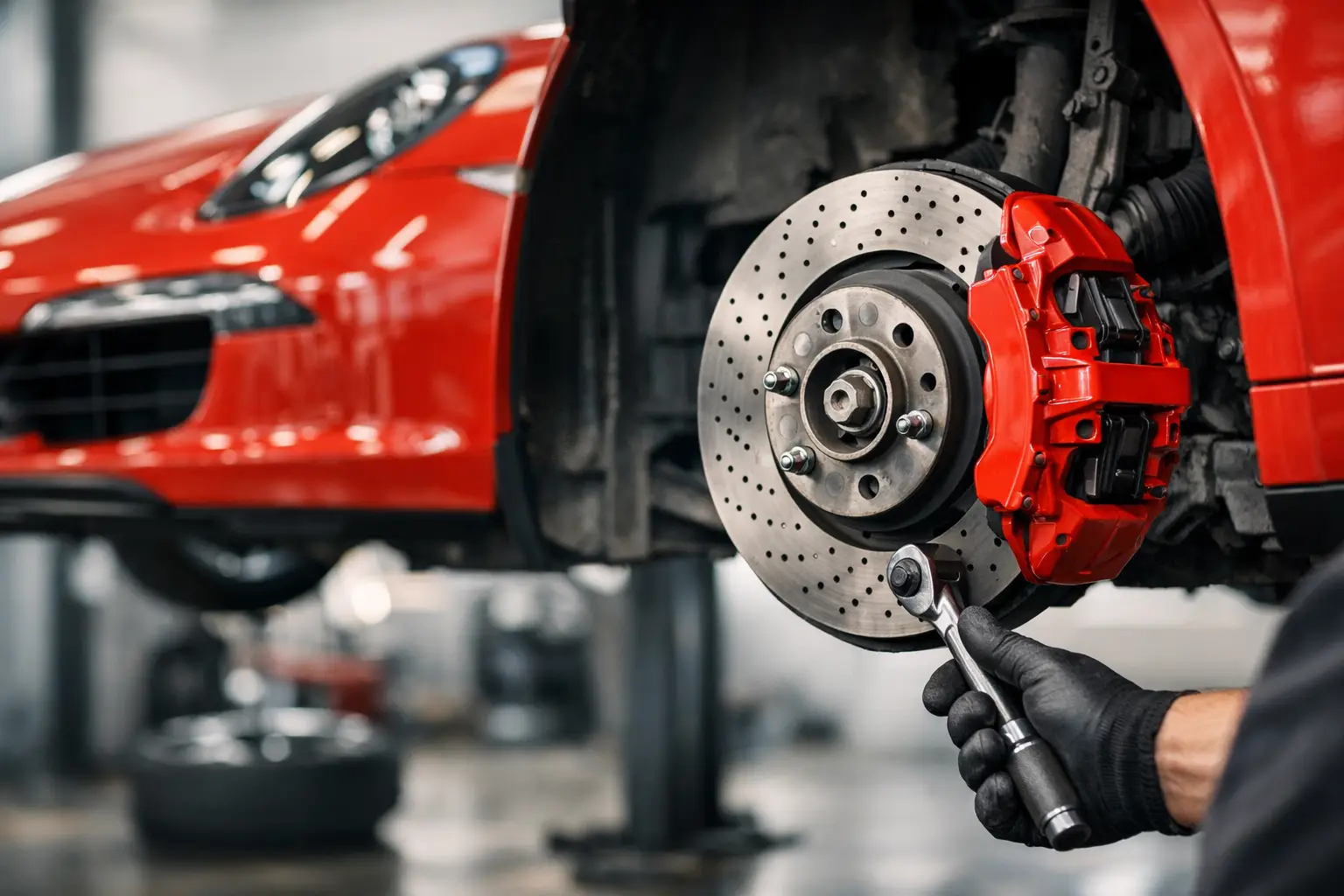
A Porsche should feel composed when you press the brake pedal: immediate response, steady tracking, and strong stopping power without drama. Knowing how to maintain Porsche brakes helps preserve that confidence, whether your car handles a short Palatine commute, weekend back roads, or occasional track use. Brake care is not only about replacing pads when they wear out. It is about inspecting the complete system at the right intervals and responding early when something feels different.
Start With the Porsche Brake System You Have
Porsche brake systems vary substantially by model, model year, and equipment level. A Macan used for daily driving has different demands from a 911, Cayenne, Panamera, or Taycan. Steel rotors, Porsche Surface Coated Brakes, and Porsche Ceramic Composite Brakes each have their own wear characteristics, inspection needs, and replacement costs.
That is why generic mileage estimates can be misleading. Brake pads may last far longer on a highway-driven vehicle than on one that makes frequent short trips in suburban traffic. A performance-oriented driver may use more pad material in a season than another owner uses in several years. The right maintenance plan begins with a technician identifying the brake components fitted to your specific Porsche and measuring their actual condition.
Pay Attention to What the Pedal and Steering Wheel Tell You
Your Porsche often gives clear signs before a brake concern becomes a larger repair. A squeal at low speed can be normal in certain conditions, especially with performance-focused pads, cold brakes, or overnight moisture on the rotors. But repeated noise, vibration, pulling, or a changed pedal feel deserves a proper inspection.
A steering wheel shake during braking may point to uneven rotor material transfer, rotor runout, worn suspension components, or another issue that should not be guessed at. A soft pedal can relate to fluid condition, air in the hydraulic system, pad wear, or a leak. Pulling to one side can indicate a sticking caliper, uneven tire condition, alignment concerns, or braking imbalance.
Do not wait for the warning light if the car feels noticeably different. Porsche brake wear sensors are useful, but they are not a substitute for visual measurements and a complete inspection. They typically alert you only after a pad has reached a predetermined wear point.
Check Pads, Rotors, and Sensors as a Set
Brake pads and rotors work as a matched friction system. Replacing pads without evaluating rotor thickness, surface condition, and runout can lead to noise, reduced performance, or premature wear. In many cases, installing new pads on worn or damaged rotors is a false economy.
During a professional brake inspection, the technician should measure remaining pad material, inspect inner and outer pad wear, and compare rotor measurements with Porsche specifications. Uneven pad wear is particularly valuable information. It may suggest that caliper guide hardware, pistons, or other components need attention before new parts are installed.
Wear sensors also need to be checked rather than assumed to be reusable. Depending on the axle and condition of the sensor, replacement may be recommended when pads are replaced. This helps ensure the Porsche monitoring system continues to provide accurate alerts.
Why aftermarket parts are not all the same
There are quality aftermarket brake options for some Porsche models, but the lowest-priced pad or rotor is rarely the right choice. Friction material affects cold bite, noise, dust, rotor wear, and pedal feel. A pad that seems attractive because it produces less dust may not provide the response an owner expects from the vehicle.
The best option depends on how you use the car. OEM or OEM-quality components are usually the sound choice for normal street driving and preserving factory behavior. Drivers who attend track events may need a different pad compound and fluid strategy, with the understanding that track-oriented parts can create more noise, dust, and rotor wear on the street. An experienced Porsche specialist can explain those trade-offs clearly before work begins.
Change Brake Fluid on Schedule
Brake fluid is one of the most overlooked parts of Porsche maintenance. It absorbs moisture over time, which lowers its boiling point and can affect braking performance during repeated hard stops. Old fluid can also contribute to internal corrosion in hydraulic components.
For many Porsche models, brake fluid service is commonly recommended every two years, but the owner’s manual and maintenance schedule for your exact vehicle should guide the decision. Cars driven aggressively, used in track environments, or exposed to long periods of storage may need more frequent testing or service.
A correct brake fluid service is more involved than simply adding fluid to the reservoir. The system must be bled using the appropriate procedure, correct fluid specification, and, where required, manufacturer-grade diagnostic equipment to cycle relevant systems. Using the wrong fluid or mixing incompatible products is not a shortcut worth taking.
Keep Calipers and Hardware Moving Freely
Porsche calipers are engineered for strong, consistent braking, but they still operate in harsh conditions. Road salt, moisture, heat cycles, and brake dust can affect hardware over time. This matters in the northwest Chicago suburbs, where winter weather can be particularly hard on vehicles that are driven year-round.
At routine brake service, a technician should inspect calipers, mounting hardware, boots, hoses, and the condition of the brake lines. Pads must move freely in their contact points, and caliper operation should be even across the axle. A sticking component can create uneven wear, excess heat, pulling, and costly rotor damage if ignored.
Avoid spraying cleaners or dressings around brake components unless they are specifically intended for that use. A clean wheel is nice, but contaminating brake surfaces with the wrong product can create noise and reduce performance. If brake dust has built up heavily, use a pH-balanced wheel cleaner and follow its instructions carefully, allowing brakes to cool first.
Use Driving Habits That Protect Brake Life
Porsche brakes are built to perform, not to be babied. Still, smooth driving makes a measurable difference in component life. Look farther ahead in traffic, leave room for gradual deceleration, and avoid repeated hard stops when they are unnecessary. This is especially useful on busy routes where abrupt braking becomes a daily habit.
After a long downhill drive or repeated high-speed braking, avoid stopping and holding firm pressure on a hot brake pedal whenever possible. Heat concentrated in one area can contribute to uneven friction deposits. Let the vehicle roll briefly and cool naturally when conditions allow.
If your Porsche sits for extended periods, drive it often enough to bring the brakes up to operating temperature and clear light surface rust from the rotors. Surface rust can appear quickly after rain or snow and may disappear after a few normal stops. Heavy corrosion, grinding, or persistent roughness should be inspected rather than driven through.
How to Maintain Porsche Brakes Between Services
Owners do not need to remove wheels or measure rotors at home to be attentive. A brief monthly walk-around and a consistent feel for the car can catch changes early. Watch for brake warning messages, unusually heavy brake dust on one wheel, visible scoring on accessible rotor surfaces, fluid spots near a wheel, or a sudden change in stopping behavior.
Check the brake fluid reservoir only as directed in your owner’s manual, and do not top it off simply because the level has dropped. As pads wear, the fluid level naturally declines. Adding fluid without finding the reason can create an overfilled reservoir when new pads are installed. If the level is unexpectedly low or falls quickly, arrange an inspection.
Wheel changes are also a smart opportunity for a closer brake review. When seasonal tires are installed, ask for pad thickness, rotor condition, and any signs of uneven wear to be documented. That creates a useful service history and makes future recommendations easier to understand.
Choose a Specialist Who Can Diagnose, Not Just Replace
A Porsche brake service should come with clear measurements and a plain-language explanation of what is needed now, what can be monitored, and why. There is a meaningful difference between a recommendation based on remaining pad thickness and one based on a vague statement that the brakes “look low.”
At Wizard Werks, ASE-certified technicians use manufacturer-grade equipment and quality parts to evaluate the entire braking system, not just the most visible component. The goal is dealership-level care with straightforward communication, so you can make an informed decision without unnecessary upselling.
When your Porsche stops straight, responds predictably, and feels like itself under pressure, keep that feeling in mind. Scheduling service when the first small change appears is usually easier on the car, the calendar, and the budget than waiting for a warning light or a grinding sound.