
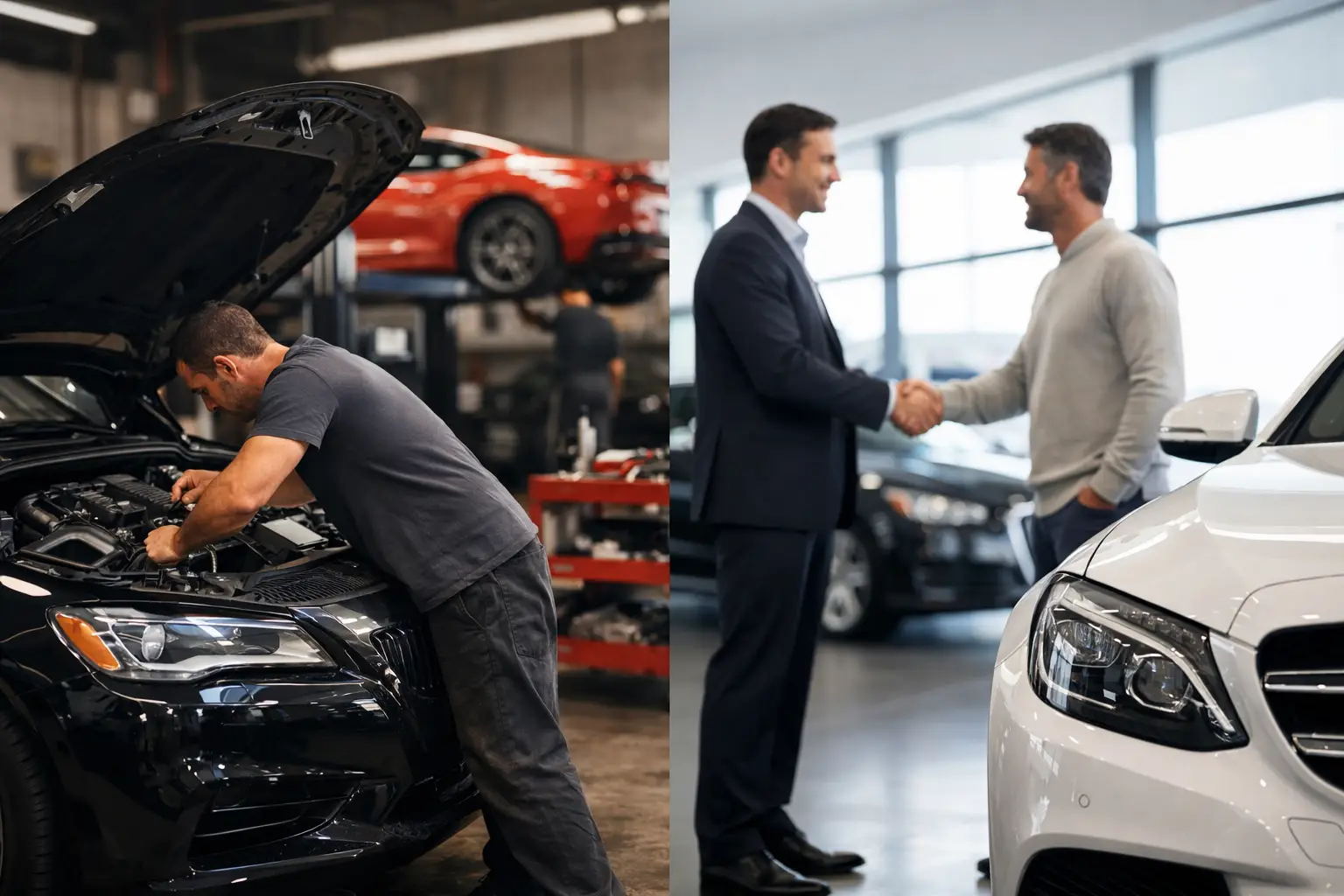
The service reminder appears on your BMW, Mercedes-Benz, Audi, or Land Rover, and the familiar question follows: independent shop vs dealership? For luxury vehicle owners, the answer should not come down to the lowest estimate alone. Your vehicle needs the right diagnostic capability, parts standards, and technician experience – plus clear advice about what it truly needs now.
A dealership can be the right place in certain situations. A qualified independent specialist can be an excellent choice in many others. The difference is less about the sign outside the building and more about the people, equipment, process, and accountability behind the service.
Independent Shop vs Dealership: The Real Difference
Dealership service departments are directly affiliated with a vehicle manufacturer. They have access to factory technical information, brand-specific tools, and the latest manufacturer updates. For a vehicle under factory warranty, a recall, or a campaign issued by the manufacturer, the dealership may be the most practical option.
An independent European and luxury repair shop operates outside that franchise structure. The best independent shops focus deeply on the makes they service, invest in manufacturer-grade diagnostic equipment, use OEM-quality parts, and employ trained technicians who understand the patterns and systems of premium imports.
That specialization matters. A warning light on a Porsche or Volvo is not simply a generic code to clear. It can relate to a networked electrical system, a sensor issue, a software concern, or a mechanical condition that needs proper testing. Accurate diagnosis protects you from replacing parts based on guesswork.
The important distinction is that not every independent shop offers the same level of expertise. A general repair facility may be a fine choice for basic needs on many vehicles, but European and luxury cars often benefit from a specialist with the correct scan tools, service information, and hands-on familiarity with the brand.
When a Dealership Makes Sense
There are valid reasons to schedule dealership service. If your vehicle has an open safety recall, manufacturer service campaign, or warranty-covered concern, a dealership is generally the appropriate first call. These repairs are tied to the manufacturer and may require factory authorization or updates.
Dealerships can also be useful when a very new model has a concern related to newly released software or a manufacturer-specific issue still being evaluated. Their direct channel to the manufacturer can be an advantage in those cases.
For some owners, the dealership experience is also familiar and convenient. You may have purchased the vehicle there, already have a service history on file, or prefer to keep all records in one manufacturer-connected system. Those are reasonable preferences.
Still, dealer service is not automatically the only standard for quality. Once routine maintenance, wear items, diagnostics, or out-of-warranty repairs enter the picture, a capable independent specialist may deliver the same careful technical approach with more personal communication and a more manageable cost.
Where an Independent Specialist Can Stand Out
Independent repair shops often earn loyalty by making the service process feel less transactional. Instead of moving through a large service department, you can work with a team that knows your vehicle, explains the findings, and helps you prioritize maintenance based on condition, safety, and your driving plans.
At Wizard Werks, that approach means looking beyond a dashboard message or a requested repair. The goal is to identify the cause, explain the options in plain language, and recommend work based on what your vehicle needs – not on a generic sales target.
Specialized diagnostics without the dealership overhead
Luxury vehicles are increasingly software-driven. They need more than a basic code reader. Proper diagnosis may involve checking live data, testing electrical circuits, reviewing manufacturer procedures, inspecting related components, and confirming that a repair resolved the original concern.
A well-equipped independent European shop can provide that level of diagnostic work while operating with less franchise overhead than a dealership. That can translate to better value, particularly for vehicles no longer covered by factory warranty.
The right shop should be comfortable discussing its diagnostic process. If the concern is complex, you should hear what testing is needed, what the findings mean, and what happens before any major repair is approved.
More direct, personal communication
At a busy dealership, your primary contact is often a service advisor managing many appointments. The advisor may communicate well, but there can be distance between the owner, advisor, and technician doing the work.
An independent specialist can offer a more direct relationship. You should be able to ask questions, understand the condition of your vehicle, and receive an estimate before work begins. Clear communication is especially valuable when your car has multiple needs. It lets you address urgent repairs first and plan less immediate maintenance without pressure.
A practical difference in cost
Dealer labor rates and facility costs are often higher, especially in major metro areas. Parts pricing can vary as well. An independent shop may be able to provide OEM parts or high-quality equivalents at a lower overall cost while maintaining the standards your vehicle requires.
Lower cost should never mean cutting corners. The real value comes from using appropriate parts, following correct procedures, and avoiding unnecessary work. Ask what parts will be used, what warranty applies, and whether the recommendation is urgent, preventative, or something to monitor.
Service Quality Depends on Standards, Not Labels
The best choice is not simply “dealer” or “independent.” It is a shop’s ability to service your specific vehicle correctly.
For a BMW, Mercedes-Benz, Audi, Volkswagen, Porsche, Jaguar, Land Rover, Range Rover, Mini Cooper, Volvo, Bentley, Rolls-Royce, Lexus, or Acura, look for technicians with demonstrated experience in the brand. ASE certifications are a positive sign, but they should be paired with ongoing training and access to professional diagnostic systems.
Parts standards also deserve attention. OEM parts are made by or for the original manufacturer, while OEM-quality options may come from the same supplier or meet comparable specifications. The right choice depends on the repair, the vehicle, and the part itself. A trusted advisor should explain the recommendation rather than treating every part decision as one-size-fits-all.
Warranty coverage is another sign of confidence. Ask how long the shop stands behind its labor and parts, what the coverage includes, and how a concern will be handled after service. A strong warranty does not eliminate every possibility of a future issue, but it shows that the shop takes responsibility for its workmanship.
How to Choose the Right Shop for Your Vehicle
Start with a few practical questions. Does the shop routinely work on your make and model? Do they have manufacturer-level or manufacturer-grade diagnostic equipment? Will they provide a written estimate and contact you before adding work? Can they explain why a repair is recommended and distinguish between immediate needs and future planning?
Pay attention to the answers, not just the price. A shop that gives a clear explanation of the issue, outlines the repair path, and respects your approval is usually a better long-term partner than one offering an unusually low number without details.
Service records matter, too. Keep invoices for maintenance and repairs regardless of where the work is performed. Detailed records help establish care history, support future resale, and give the next technician useful context if a problem develops.
If your vehicle is still under factory warranty, review your warranty terms before scheduling service. Routine maintenance does not automatically require a dealership visit, but warranty-related repairs, recalls, and manufacturer campaigns may. When in doubt, ask the dealership whether the concern is covered, then choose the service path that fits the situation.
The Better Choice Is the One That Earns Your Trust
A dealership can be the right destination for recalls, factory warranty concerns, and some new-model software issues. An independent luxury specialist can be the stronger fit for ongoing maintenance, precise diagnostics, and repairs after warranty coverage ends.
What should not change is the standard you expect: knowledgeable technicians, appropriate equipment, quality parts, honest recommendations, and communication that leaves you confident about every decision. Your vehicle was engineered for a distinctive driving experience. Choose a service team that treats preserving that experience as personal work, not just another appointment.