
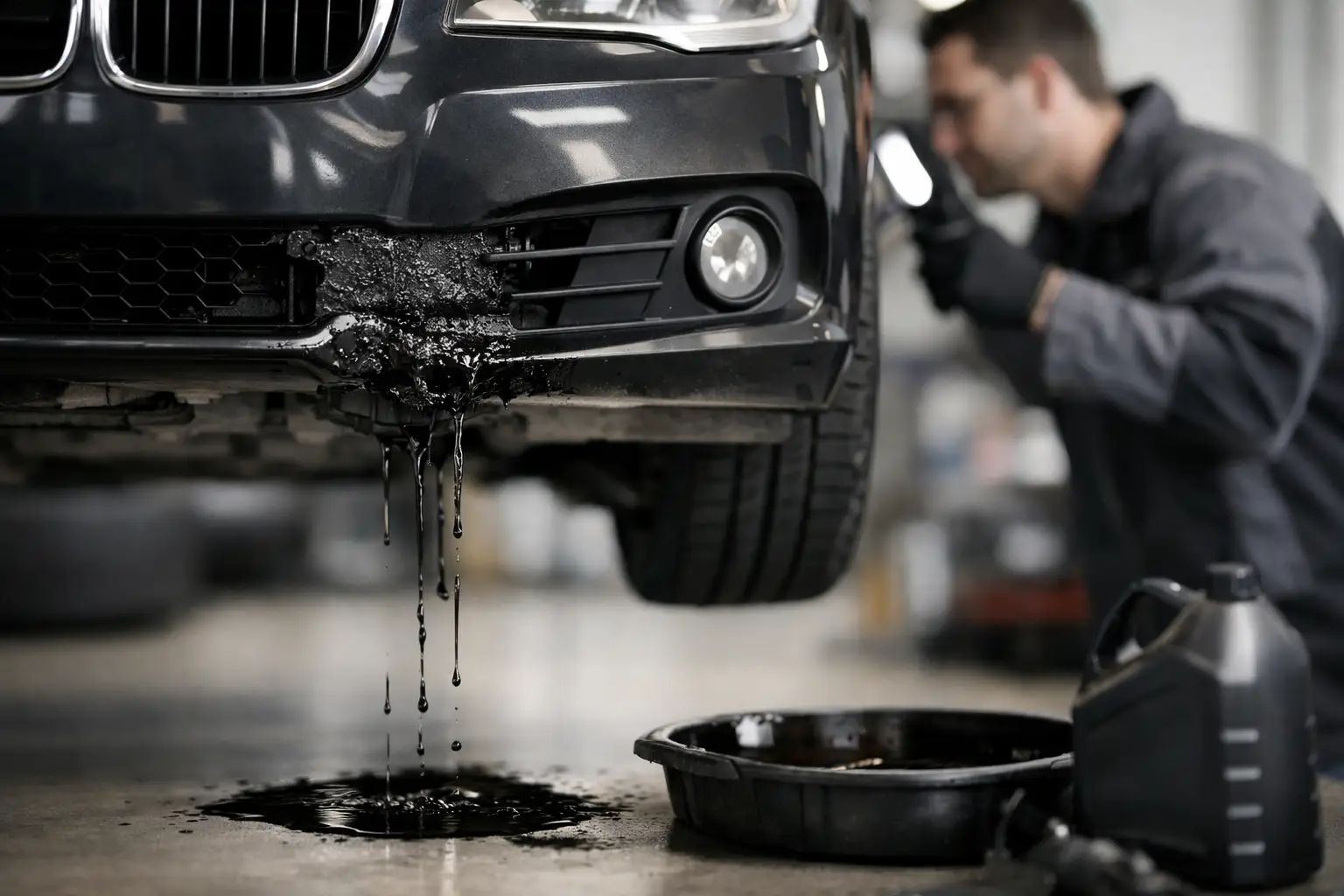
That burning-oil smell after a stoplight, a fresh spot on the garage floor, or smoke drifting from under the hood can turn a normal drive into a concern quickly. A BMW oil leak is not always an emergency, but it should never be treated as normal ownership. BMW engines are tightly packaged, and a small leak can travel across components, hide under the engine cover, or reach parts where oil does not belong.
The good news is that many BMW oil leaks come from known service items rather than a mysterious internal failure. The key is finding the true source before approving repairs. Oil naturally moves downward and rearward as you drive, so the wettest area is not always where the leak began.
Why a BMW Oil Leak Needs Prompt Attention
Engine oil protects moving parts from heat and friction. When the level falls too low, the engine can lose the protection it needs, particularly during highway driving, hot weather, or extended intervals between checks. BMWs with electronic oil-level monitoring may not give a warning until the level has dropped significantly, so a visual leak is worth addressing before the dashboard gets involved.
There is also the mess and risk factor. Oil that reaches a hot exhaust component can create smoke and a sharp odor. Oil near the accessory belt is more serious on certain BMW engines because a saturated belt can slip, shed material, or create additional damage. A leak can also soften rubber components, coat electrical connectors, and make future diagnostics more difficult.
The urgency depends on the amount and location of the leak. A light film around a gasket with no change in oil level may allow time for a scheduled inspection. Active dripping, smoke, a low-oil warning, oil on the belt area, or a sudden increase in consumption calls for prompt professional attention.
Common BMW Oil Leak Sources
Valve Cover Gasket and Valve Cover
The valve cover gasket is one of the most common sources of oil leakage on BMW engines. It seals the top of the engine, where heat cycles gradually harden and flatten the gasket material. Oil may appear along the edge of the cover, run down the side of the engine, or reach the exhaust side and cause a noticeable burning smell.
On some BMWs, the valve cover itself can warp or develop cracks, particularly if it is made from composite material. Replacing only the gasket when the cover is no longer sealing properly may provide a short-term fix, not a lasting repair. A proper inspection looks at the cover, gasket, fasteners, and related crankcase ventilation components before recommending the right repair.
Oil Filter Housing Gasket
The oil filter housing sits high on many BMW engines, which means a leak there can spread widely. Oil may run down the front or side of the engine and collect around the belt drive, alternator, cooling hoses, or engine mounts. Because the oil begins high up, it is often mistaken for a valve cover or oil pan leak.
This is a repair that benefits from BMW-specific experience. Access, gasket selection, correct tightening procedures, and checking nearby components all matter. If oil has reached the belt system, that area needs to be inspected carefully rather than simply cleaned and ignored.
Oil Pan Gasket and Drain Plug Area
Oil found beneath the engine may point to an oil pan gasket, but that conclusion should not be made from a quick look. Oil from above can accumulate on the underbody panels and drip from the lowest point, making the pan look guilty. A technician should clean the area and trace the leak back to its source.
The drain plug and sealing washer are simpler possibilities, especially if seepage begins after an oil service. A damaged plug, incorrect washer, overtightening, or a compromised oil pan thread can all cause a leak. This is why quality oil service is more than changing oil and resetting a reminder.
Oil Cooler, Lines, and Seals
Some BMW engines use oil cooling components, lines, and seals that can become leak points with age. These leaks may be difficult to see without removing covers or inspecting from below. They can also resemble a cooling-system issue if oil and coolant components are located close together.
A technician should confirm whether the fluid is engine oil, identify the exact source, and inspect related hoses and seals. Replacing a visible seal without considering the surrounding system can lead to another appointment for a neighboring aged component soon afterward.
Vacuum Pump and Timing Cover Seals
Depending on the engine family, oil may escape from a vacuum pump seal, timing cover, or other front-engine sealing surface. These areas are often more involved to access, but diagnosis should still come first. The right question is not which repair is most common. It is which component is actually leaking on your BMW.
Signs You Should Not Ignore
An oil spot is the obvious sign, but BMW leaks do not always announce themselves with a puddle. Watch for a burning-oil smell after driving, faint smoke from the engine bay, oily residue on the engine or underbody, and a lower-than-usual electronic oil-level reading. You may also notice oil collecting near the bellhousing or dripping from an undertray after parking.
Do not assume every dark spot under the vehicle is engine oil. Road grime, old residue from a previous repair, power steering fluid on older models, and fluids carried by airflow can make a visual diagnosis misleading. Fresh oil typically feels slick and has a distinct petroleum smell, but confirming the source requires a closer inspection.
If the oil pressure warning appears, stop driving as soon as it is safe to do so and shut the engine off. Oil pressure is different from an oil-level reminder. A pressure warning can indicate that the engine is not receiving adequate lubrication and needs immediate evaluation.
How a Proper BMW Oil Leak Diagnosis Works
A trustworthy diagnosis starts with listening. When did you first notice the smell or drip? Was the vehicle recently serviced? Does it happen only after long drives, or is there oil on the ground every morning? Those details help narrow the search.
The vehicle should then be inspected from above and below, including areas hidden by engine covers and underbody shielding. A technician may clean existing residue and recheck for fresh oil, use ultraviolet dye when appropriate, and inspect the oil filter housing, valve cover, oil pan, belt drive, and nearby components. BMW diagnostic equipment can also help check for related faults, such as crankcase ventilation issues that increase pressure and contribute to seal failure.
This approach takes more care than identifying the first wet gasket and replacing it. It helps prevent duplicate labor and gives you a clear explanation of what is leaking now, what should be monitored, and what work can reasonably wait. At Wizard Werks, that means discussing the findings plainly, with no pressure to approve repairs that are not supported by the inspection.
Can You Drive With a BMW Oil Leak?
Sometimes, but only after the leak has been assessed and the oil level is confirmed to be safe. A minor seep may be manageable for a short period while you schedule service, provided there is no smoke, no active dripping, no oil on the belt system, and no warning light. Check the oil level according to your BMW’s procedure and avoid assuming that a small spot means a small leak.
Avoid long trips, aggressive driving, or repeated topping off as a substitute for repair. Adding oil may protect the level temporarily, but it does not stop oil from reaching hot exhaust parts or other components. It can also mask a leak that is becoming worse.
If you see smoke, smell strong burning oil, find a growing puddle, or receive an oil warning, arrange an inspection promptly. Towing is the safer choice if the oil pressure warning comes on or the engine is visibly losing oil quickly.
Preventing Repeat Oil Leaks
No gasket lasts forever, especially in an engine bay exposed to repeated heat cycles. Still, consistent service can reduce the chances of a minor issue becoming an expensive one. Use the correct oil specification, maintain sensible oil-change intervals, and have the engine inspected when you notice new residue or odors.
It also helps to address the cause, not just the symptom. If a seal has failed because crankcase pressure is abnormal or a mating surface is damaged, replacing the seal alone may not hold. OEM-quality parts, correct installation procedures, and a clean verification after repair are what turn a leak repair into a dependable solution.
A clean BMW engine bay is not merely cosmetic. It makes new leaks easier to identify, protects surrounding components, and lets you enjoy the drive without wondering whether that faint smell will become tomorrow’s repair bill.