
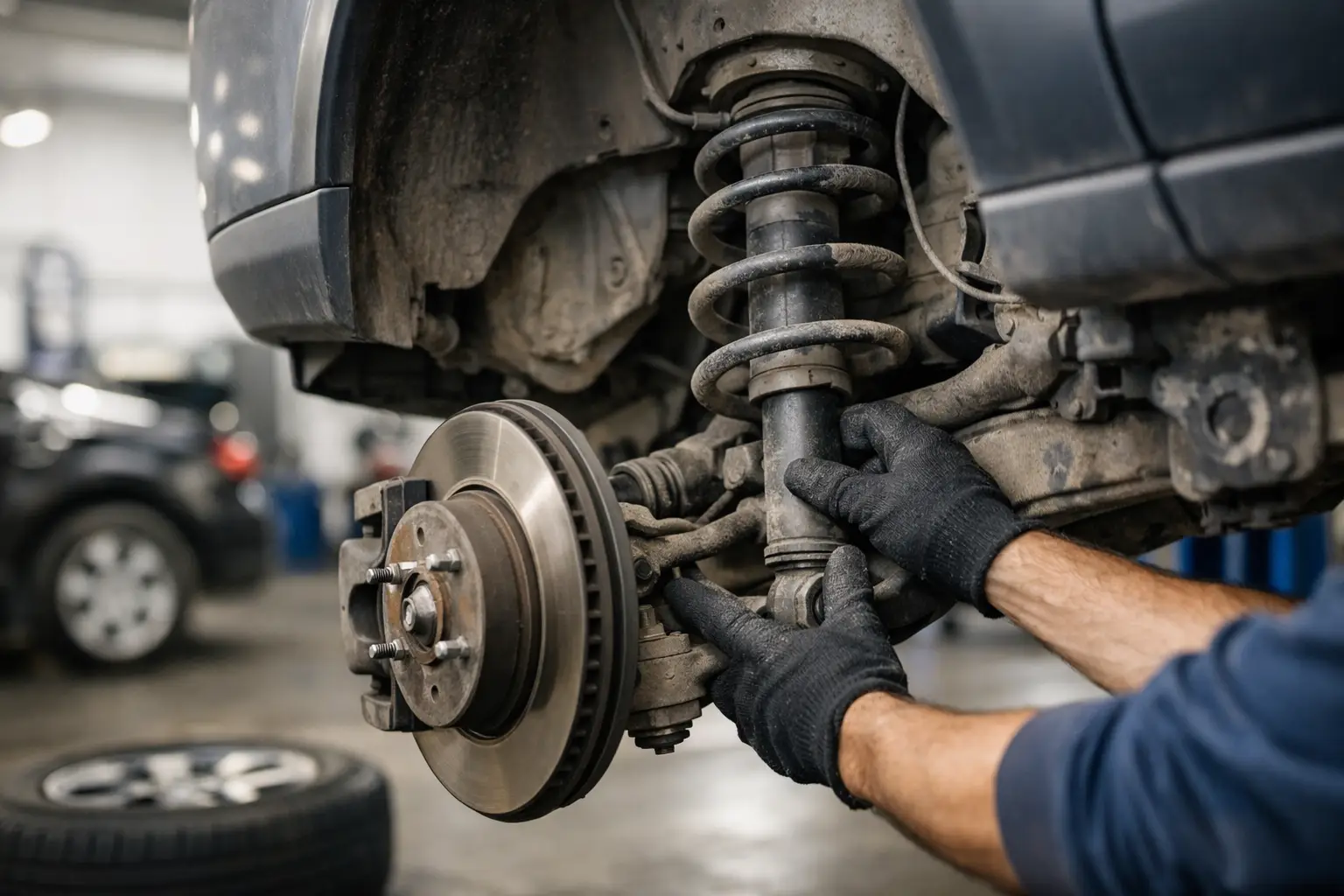
A luxury vehicle can still start, stop, and get you to work while its suspension is asking for attention. The change often arrives gradually: a BMW that feels less planted through a familiar curve, a Mercedes-Benz that dips more than usual under braking, or a Range Rover that no longer delivers the composed ride you expect. Knowing the top signs your suspension needs service helps you address a developing concern before it affects tire life, steering control, or confidence behind the wheel.
Suspension service is not just about restoring a softer ride. On European and premium vehicles, the suspension works closely with steering, braking, electronic stability systems, and, in some models, adaptive damping or air suspension components. A proper inspection should look beyond the obvious symptom to identify the real source of the problem.
Top Signs Your Suspension Needs Service
Your vehicle bounces or continues to rock after a bump
After driving over a speed bump or rough section of road, your vehicle should settle quickly. If it continues bouncing, rocking, or feeling floaty for several seconds, worn shocks or struts may no longer be controlling spring movement effectively.
This can be especially noticeable on highway expansion joints and uneven suburban roads. The issue may feel subtle at first, particularly if the decline has been gradual. But reduced damping can make the vehicle less stable during emergency maneuvers and can affect how consistently the tires maintain contact with the road.
A simple driveway bounce test is not always reliable on modern luxury vehicles. Adaptive suspension systems, electronically controlled dampers, and air springs require a more complete inspection and, when needed, brand-appropriate diagnostic equipment.
The front end dives, squats, or leans more than it used to
A noticeable nose dive when braking can point to worn dampers, though it can also involve other suspension concerns. Excessive rear-end squat during acceleration or pronounced body lean in turns deserves attention for the same reason.
Some degree of movement is normal, and the expected feel varies by vehicle. A Porsche will naturally feel more controlled than a comfort-focused Mercedes-Benz sedan, while an SUV will have more body motion than either. What matters is a change from how your specific vehicle has historically handled. If the car feels less settled, slower to respond, or more reluctant to hold its line through a turn, have it evaluated.
Steering feels loose, wanders, or needs constant correction
A properly maintained suspension helps your vehicle track straight without repeated steering corrections. If you find yourself continually adjusting the wheel on a level road, feel a delay between steering input and vehicle response, or notice looseness around center, the cause could be related to suspension or steering components.
Worn control arm bushings, ball joints, tie rod ends, and other related parts can all contribute to an unsettled steering feel. Alignment may also be involved, but alignment angles do not usually change without a reason. Simply adjusting the alignment without identifying worn parts can lead to a short-lived fix.
Road crown, tire condition, and wind can cause mild drift, so this symptom is not always a suspension failure. The concern is a clear change in behavior, especially when paired with vibration, uneven tire wear, or clunking noises.
You hear clunks, knocks, squeaks, or rattles over bumps
A clunk from the front or rear when crossing potholes, driveway entrances, or railroad tracks is one of the most common reasons drivers schedule suspension service. Worn sway bar links, bushings, control arm bushings, strut mounts, and ball joints are among the possible sources.
The sound alone does not identify the failed part. A light rattle may come from one component, while a heavier knock can come from another, and noise can travel through the chassis in misleading ways. That is why a visual inspection and hands-on check are more reliable than replacing parts based only on what a noise seems to be.
Do not ignore a new clunk simply because the vehicle still drives normally. A worn part can progress from an occasional annoyance to a handling or tire-wear issue, particularly after another Illinois winter or a hard pothole impact.
Tire wear is uneven or returning too quickly
Your tires can reveal suspension problems before the ride becomes noticeably uncomfortable. Cupping or scalloped patches around the tire tread often indicate that the wheel is bouncing rather than staying consistently controlled. Inside or outside edge wear can be caused by alignment settings, but worn suspension parts may be allowing those settings to shift while driving.
Replacing tires without investigating abnormal wear can be expensive. Premium tires are not inexpensive, and performance-oriented European vehicles can be particularly sensitive to alignment and suspension condition. If a new set of tires begins wearing unevenly within a short period, it is worth checking the suspension before assuming the tires themselves are at fault.
Signs of Suspension Problems on Luxury Vehicles
The ride height looks uneven
Stand back and look at your vehicle on level ground. If one corner sits lower than the others, a broken spring, weakened spring, or air suspension concern may be involved. On vehicles with air suspension, a corner that drops after parking overnight can indicate a leak or a system issue that should be diagnosed promptly.
Do not assume uneven ride height is only cosmetic. It can change alignment angles, affect tire clearance, and place added stress on other components. Air suspension systems also need a careful approach because the root cause may involve an air spring, compressor, valve block, sensor, or related electrical fault.
Warning messages or suspension mode changes appear
Many BMW, Audi, Mercedes-Benz, Land Rover, Porsche, and other premium models monitor suspension operation electronically. A dashboard warning, a suspension fault message, or a drive-mode setting that no longer responds normally should not be dismissed as a minor computer glitch.
Sometimes the vehicle will enter a protective mode that limits suspension adjustments. It may still be drivable, but the ride, handling, or ride height can be compromised. Manufacturer-grade diagnostics can identify stored fault information and help separate a sensor or wiring concern from a mechanical or pneumatic problem.
The vehicle pulls, shudders, or feels unstable under braking
Brake concerns should always be taken seriously, but suspension condition can affect braking stability as well. If the vehicle pulls or feels unsettled when stopping, worn control arm bushings, weak dampers, tire issues, alignment concerns, or brake system problems may be contributing.
This is not a symptom to self-diagnose. Several systems work together when you brake hard, and the correct repair depends on finding the actual cause. A thorough evaluation protects both the driving experience and the safety systems designed to support it.
Why Prompt Inspection Saves More Than Ride Comfort
Suspension wear rarely improves on its own. A worn bushing can allow extra movement, which can affect alignment. Poor alignment can shorten tire life. Weak damping can increase stress on tires and related suspension parts. Addressing the condition early is often more practical than waiting until several connected issues need attention.
That does not mean every noise or rough ride requires major work. Tires with stiff sidewalls, cold weather, and rough pavement can all make a vehicle feel firmer. Some repairs can also be prioritized if an inspection shows the part is worn but not yet creating a safety concern. Honest recommendations should distinguish between what needs immediate attention and what can be monitored.
For luxury and European vehicles, parts quality matters as much as diagnosis. OEM or appropriate high-quality components, correct installation procedures, torque specifications, and a post-repair alignment where applicable all help preserve the handling your vehicle was designed to deliver.
What a Professional Suspension Inspection Should Include
A meaningful suspension inspection begins with listening to the driver. When does the noise happen? Is it only on cold mornings, only at low speed, or only when turning? Has the ride changed after new tires or recent road damage? Those details narrow the diagnostic path.
The technician should then inspect tire wear, ride height, leaks, bushings, links, joints, mounts, springs, and related steering components. On vehicles with electronically controlled or air suspension, the process should also include a scan for relevant fault codes and verification of system operation. If alignment is needed, it should follow correction of any worn parts that could prevent the settings from holding.
At Wizard Werks, our ASE-certified technicians provide clear findings and straightforward recommendations for European and luxury vehicle owners in Palatine and the northwest suburbs. You should know what was found, why it matters, and what the recommended repair is intended to solve before any work begins.
If your vehicle no longer feels as composed, quiet, or confident as it once did, trust that change. A timely suspension inspection can protect the refined driving experience you chose your vehicle for while helping prevent avoidable tire and handling problems down the road.