
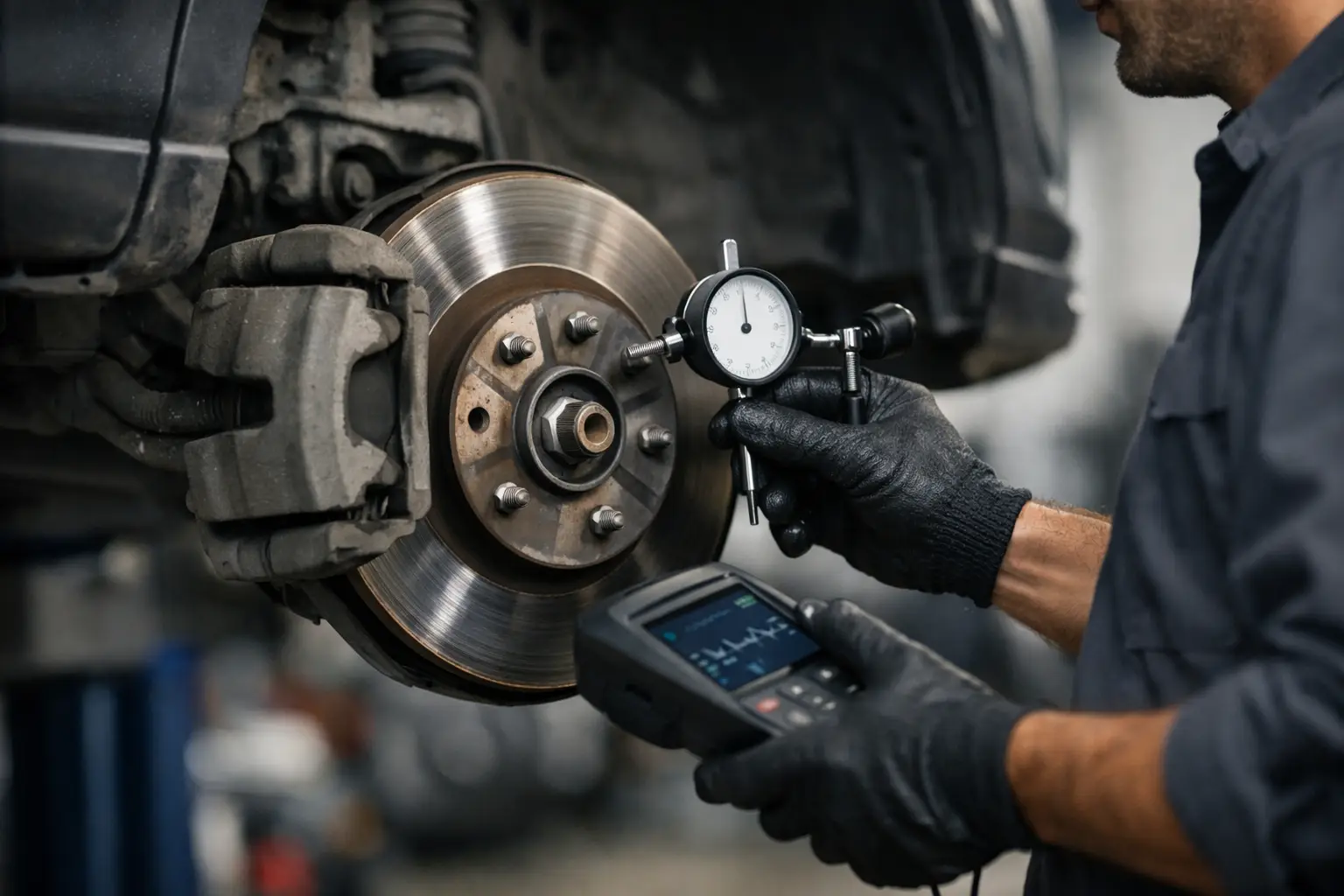
A brake pedal that pulses at 60 mph on a quiet drive down Northwest Highway is more than an annoyance. In a BMW, Mercedes-Benz, Audi, Porsche, or other premium vehicle, it can take away the smooth, confident braking feel the vehicle was engineered to deliver. Knowing how to diagnose brake pulsation starts with noticing exactly when it occurs, where you feel it, and whether it changes with speed or brake pressure.
The common explanation is “warped rotors.” Sometimes the brake discs do have excessive runout, but that phrase can hide the real cause. Brake pulsation may come from disc thickness variation, uneven pad deposits, a sticking caliper, a wheel or tire issue, worn suspension components, or even improper wheel installation. Replacing parts without identifying the source can make the symptom disappear temporarily – or not at all.
Start by Describing the Pulsation Precisely
A proper diagnosis begins before the vehicle goes on a lift. Think about the conditions that make the pulsation noticeable. Does the brake pedal move up and down under your foot? Does the steering wheel shake? Does the entire vehicle vibrate? Is it present only after a longer drive, only during firm stops, or every time you slow down?
Pedal pulsation is most often associated with the brake discs and pads. A vibration through the steering wheel during braking more commonly points toward the front brake assemblies, although front suspension wear can amplify it. A sensation felt mostly through the seat or floor can indicate rear brake concerns, but wheel, tire, and suspension conditions still need to be ruled out.
Speed matters as well. A pulse that is strongest from highway speed during moderate braking can suggest disc thickness variation or lateral runout. A shake that occurs at the same speed even when you are not braking is more likely related to wheel balance, tire condition, or a bent wheel. That distinction saves time and prevents an unnecessary brake repair.
Keep Brake Pulsation Separate From ABS Operation
Anti-lock braking system activation feels like a fast, deliberate vibration or chatter in the brake pedal, usually during hard braking on snow, gravel, wet pavement, or a slippery surface. It is a normal safety function when traction is limited.
Brake pulsation from a mechanical issue generally appears on dry pavement during ordinary stops. If the ABS activates unexpectedly on clean, dry roads, that is a different diagnostic path. A technician may need to inspect wheel-speed sensor readings, tone rings, wiring, and fault codes using manufacturer-grade diagnostic equipment.
How to Diagnose Brake Pulsation Step by Step
The most reliable process combines a careful road test with physical measurements. On European and luxury vehicles, this matters because vehicle weight, brake system design, electronic brake functions, and wheel mounting procedures can all influence the result.
Road-test the vehicle safely
A technician first confirms the complaint without making abrupt or unsafe stops. The test should include light, moderate, and firmer brake applications from different speeds, while paying attention to pedal feedback, steering-wheel movement, vehicle pull, brake noise, and any warning messages.
Heat-related behavior is especially useful. A pulsation that appears only after repeated braking may point to uneven friction material transfer, caliper drag, or a disc that develops greater runout when hot. A vehicle that pulls to one side may have a sticking caliper, restricted brake hose, uneven pad friction, or a suspension alignment issue. Those conditions should be addressed rather than simply installing new discs and pads.
Inspect wheels, tires, and mounting surfaces
Before condemning the brakes, inspect the wheels and tires. A damaged tire, shifted belt, bent wheel, or loose wheel hardware can create a vibration that feels remarkably similar to a braking problem. Check for uneven tire wear, sidewall damage, missing wheel weights, and evidence that a wheel has contacted a pothole or curb.
Wheel installation is another overlooked factor. Rust, dirt, or corrosion between the wheel hub and brake disc can prevent the disc from sitting perfectly flush. Incorrect wheel-bolt torque, or tightening bolts unevenly with an impact tool, can also contribute to disc runout. Premium vehicles often use wheel bolts rather than studs and lug nuts, making correct seating and torque procedure particularly important.
Examine pads, discs, calipers, and hardware
With the wheels removed, inspect the brake system for uneven pad wear, cracked or glazed pads, grooves in the disc surface, overheated areas, and missing or damaged anti-rattle hardware. Inner and outer pads that wear very differently can reveal a caliper slide issue or a caliper piston that is not moving freely.
A blue or purple discoloration on a brake disc indicates excessive heat. That does not automatically mean the disc is unusable, but it warrants a closer look at caliper operation and driving conditions. For example, a seized slide pin or sticking piston can hold a pad against the disc after the brake pedal is released. The resulting heat can damage pads and discs quickly.
Uneven pad deposits can also create a pulse. This is often described as a warped disc, but the measurable issue may be variation in disc thickness caused by friction material transferring unevenly onto the disc face. Repeated aggressive stops, holding the brake pedal firmly after a hard stop, bedding pads improperly, or using mismatched pad and disc materials can all contribute.
Measure disc runout and thickness variation
Visual inspection alone cannot determine whether brake discs meet specification. A precise diagnosis uses a dial indicator to measure lateral runout and a micrometer to measure disc thickness at multiple points around the disc.
Lateral runout means the disc wobbles slightly as it rotates. Excessive runout can be caused by the disc itself, debris or corrosion on the hub face, a damaged hub, or improper installation. Thickness variation means one section of the disc is measurably thicker or thinner than another. As the pads clamp onto those changing thicknesses, the caliper piston moves in and out, which the driver feels as a pedal pulse.
Specifications vary by make, model, brake package, and disc design. A Porsche performance brake system, for instance, should not be judged by a generic measurement standard. The technician should use the manufacturer specification and confirm the disc remains above its minimum allowable thickness. If the disc is too thin, machining it is not an appropriate solution.
Check the hub and suspension when measurements are out of range
If a new or replacement disc shows excessive runout, replacing it again without checking the hub can repeat the problem. The hub mounting surface should be cleaned carefully and measured. Any corrosion, damage, or runout at the hub can transfer directly to the brake disc.
Suspension and steering components deserve equal attention. Worn control-arm bushings, ball joints, tie rods, or wheel bearings may allow movement under braking that turns a mild brake issue into a noticeable steering-wheel shake. On heavier vehicles such as Range Rover, Land Rover, and certain Mercedes-Benz SUVs, component loading can make this especially apparent.
Why Brake Pulsation May Return After a Brake Job
When pulsation comes back soon after pads and discs are replaced, the installation process and the underlying cause both need review. Quality parts matter, but so do clean mating surfaces, correct fastener torque, freely moving caliper components, and appropriate pad bedding.
There is also a driving-pattern element. Long downhill braking, repeated high-speed stops, towing, and stop-and-go commuting create more heat. That does not mean a vehicle owner caused the problem, but it may affect pad compound selection and whether an upgraded OEM-quality brake option makes sense. The right recommendation depends on how the vehicle is actually used, not simply on the least expensive part available.
A brake fluid concern can occasionally create a soft or inconsistent pedal, but it does not usually produce the rhythmic pedal pulse associated with disc thickness variation. Likewise, a brake booster or hydraulic assist concern can change pedal effort, yet it is a separate issue from a speed-related brake vibration. Good diagnostics separate symptoms instead of treating every brake complaint as one problem.
When to Schedule a Professional Inspection
Do not wait if pulsation is worsening, the vehicle pulls during braking, you smell burning material near a wheel, a brake warning light appears, or stopping distance seems longer than normal. These signs can point to a condition that affects safety, not just comfort.
For milder symptoms, a specialist inspection is still worthwhile before authorizing parts. At Wizard Werks, the goal is to identify what is actually causing the pulsation, explain the measurements and repair options clearly, and recommend only the work your vehicle needs. A smooth brake pedal is not a luxury feature – it is part of the controlled, predictable driving experience your vehicle should deliver every time you slow down.