
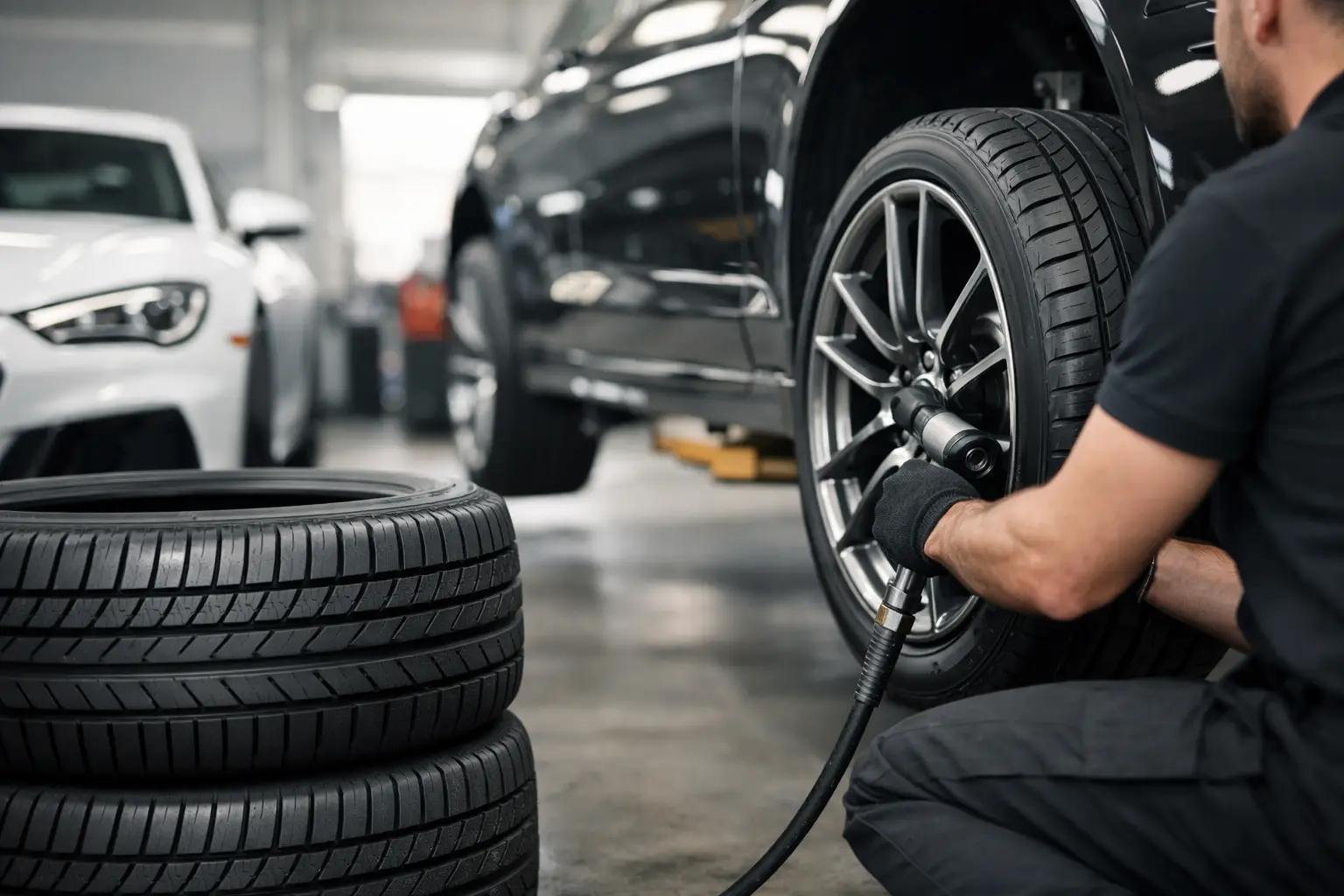
A new set of tires can make a BMW feel composed again, restore the confident steering of an Audi, or help a Mercedes-Benz ride as quietly as it should. But tire installation is not simply a matter of removing one wheel and fitting another. On a European or luxury vehicle, the details behind the service affect ride quality, tire life, handling, and safety long after you leave the shop.
The right tire is only part of the equation. Proper installation requires accurate wheel balancing, correct inflation, careful torque procedures, and an inspection of the components that influence how the tire meets the road. For drivers in Palatine and the northwest suburbs, that attention is especially valuable through changing Illinois weather, from summer heat to potholes, rain, snow, and freezing temperatures.
Why Tire Installation Matters More on Premium Vehicles
Luxury and performance vehicles are engineered with precise suspension geometry, wheel specifications, and electronic systems. A small issue that may be easy to overlook on another vehicle can be noticeable in a Porsche, Range Rover, Volvo, or Lexus. A steering wheel vibration at highway speed, a pull during braking, or a change in road noise can take away from the driving experience and may point to a problem that deserves attention.
Many premium vehicles also use staggered tire setups, where the rear tires are wider than the fronts, or directional and asymmetrical tread patterns that must be installed in a specific orientation. Some are equipped with run-flat tires, low-profile sidewalls, tire pressure monitoring systems, or large-diameter wheels that require careful handling. The wrong mounting procedure can damage a wheel, affect the tire bead, or leave the vehicle with an avoidable vibration.
This does not mean every tire service needs to be complicated. It means the shop performing the work should understand the vehicle, use appropriate equipment, and avoid treating a premium wheel and tire package like a one-size-fits-all job.
What Proper Tire Installation Should Include
A professional service begins before the tire touches the wheel. The technician should confirm the correct tire size, load rating, speed rating, and fitment for your vehicle. If you are replacing only two tires, placement matters as well. In many situations, the newer tires belong on the rear axle to help maintain stability in wet conditions, even on a front-wheel-drive vehicle. However, the recommendation can vary based on tire type, tread depth, drivetrain, and manufacturer guidance.
The old tires should be removed with equipment designed to protect the wheel finish. This matters for factory wheels and aftermarket wheels alike, particularly on vehicles with painted, polished, machined, or specialty finishes. The wheel is then inspected for cracks, bends, corrosion around the bead area, or other concerns that could lead to a slow leak or vibration.
Once mounted, each tire should be balanced accurately. Wheel balancing corrects small weight differences in the wheel-and-tire assembly. Without it, you may feel vibration through the steering wheel, seat, or floor at certain speeds. A balancing concern is not always caused by the tire itself. A bent wheel, road damage, or improper mounting can produce similar symptoms, which is why a proper inspection is useful.
The final steps are equally important: setting tire pressures to the vehicle manufacturer’s specification, resetting or verifying the tire pressure monitoring system when applicable, and tightening wheel fasteners with a calibrated torque wrench. Air tools can speed up removal and initial installation, but final torque should be controlled. Over-tightened or unevenly tightened wheel bolts can create service problems later and may affect brake or wheel service.
Tire Installation and Wheel Alignment Are Different Services
Tire installation and wheel alignment are often discussed together, but they are not the same thing. Installation mounts and balances the tires. Alignment adjusts the angles at which the wheels meet the road, including toe, camber, and caster where adjustable.
You do not automatically need an alignment every time you install tires. If the previous tires wore evenly, the vehicle tracks straight, and there has been no impact with a pothole or curb, an alignment inspection may be all that is needed. On the other hand, uneven tread wear, a steering wheel that sits off-center, drifting or pulling, or damage from rough roads are good reasons to have alignment checked.
For vehicles such as BMW, Mercedes-Benz, Audi, Jaguar, Land Rover, and Porsche, alignment settings can be particularly sensitive to suspension condition and manufacturer specifications. Replacing tires without addressing an alignment issue can shorten the life of a new set quickly. Honest service means recommending alignment when the inspection supports it, not automatically adding it to every tire appointment.
Choosing Tires That Match How You Drive
The least expensive tire is not always the best value, especially on a vehicle built around precise handling and refined ride quality. Tire selection should reflect your driving habits, vehicle requirements, and priorities.
All-season tires are a practical choice for many northwest suburban drivers because they provide balanced everyday performance across a broad range of conditions. They are not intended to replace dedicated winter tires in severe snow and ice, but a quality all-season tire can work well for typical year-round commuting.
Summer performance tires offer responsive handling and strong warm-weather grip. They are common on sporty BMW, Audi, Mercedes-AMG, and Porsche models, but they should not be driven in freezing temperatures or snow. Their rubber compound is designed for warmer conditions, and cold weather can reduce traction and affect the tire itself.
Winter tires offer a meaningful advantage when roads are snowy, icy, or consistently cold. A dedicated winter set can be a smart choice for drivers who rely on their vehicle every day and want more confidence during Chicago-area winters. If you use a separate winter wheel-and-tire package, seasonal changeovers also reduce the wear associated with repeated mounting and dismounting on the same wheels.
Run-flat tires add another consideration. They can allow limited driving after a loss of pressure, but they may produce a firmer ride and can cost more to replace. Some owners choose to stay with run-flats because their vehicle was designed around them. Others consider conventional tires where appropriate, but that decision should account for factory recommendations, available spare equipment, and the vehicle’s handling characteristics.
Signs You Should Not Wait to Schedule Service
Tires deserve attention before a warning light appears. A visible bulge, sidewall cut, exposed cords, or repeated loss of air calls for prompt inspection. So does a new vibration after hitting a pothole, especially with low-profile tires that offer less protection for the wheel.
Tread depth matters, but tread wear patterns tell a larger story. Excessive wear on one edge may indicate an alignment concern. Cupping or scalloped wear can point to suspension or balance-related issues. Wear concentrated in the center or outer shoulders may be related to inflation pressure. The goal is not just to replace worn tires, but to identify why they wore that way.
If your tire pressure monitoring system alerts you repeatedly, do not assume it is only a sensor issue. The tire may have a nail or screw, a leaking valve stem, a damaged wheel, or corrosion interfering with the seal. A thorough inspection provides a clearer answer than repeatedly adding air.
A Better Experience at the Tire Shop
A well-run tire appointment should be straightforward. The shop confirms your vehicle and tire needs, inspects the existing tires and wheels, explains any findings clearly, and gives you the information needed to make a decision. You should not feel pressured into unrelated work or left guessing about what was performed.
At Wizard Werks, ASE-certified technicians approach tire and wheel service with the same brand-specific care used across European and luxury vehicle maintenance. That includes protecting your wheels, following manufacturer-grade procedures, and communicating clearly if an inspection reveals a concern with alignment, suspension, brakes, or tire pressure monitoring components.
Before leaving, take a moment to confirm that the tire pressure warning has been addressed, the steering wheel feels normal, and there are no vibrations at the speeds you commonly drive. If anything feels different, mention it early. The right tire installation should leave your vehicle feeling planted, quiet, and ready for the miles ahead.