
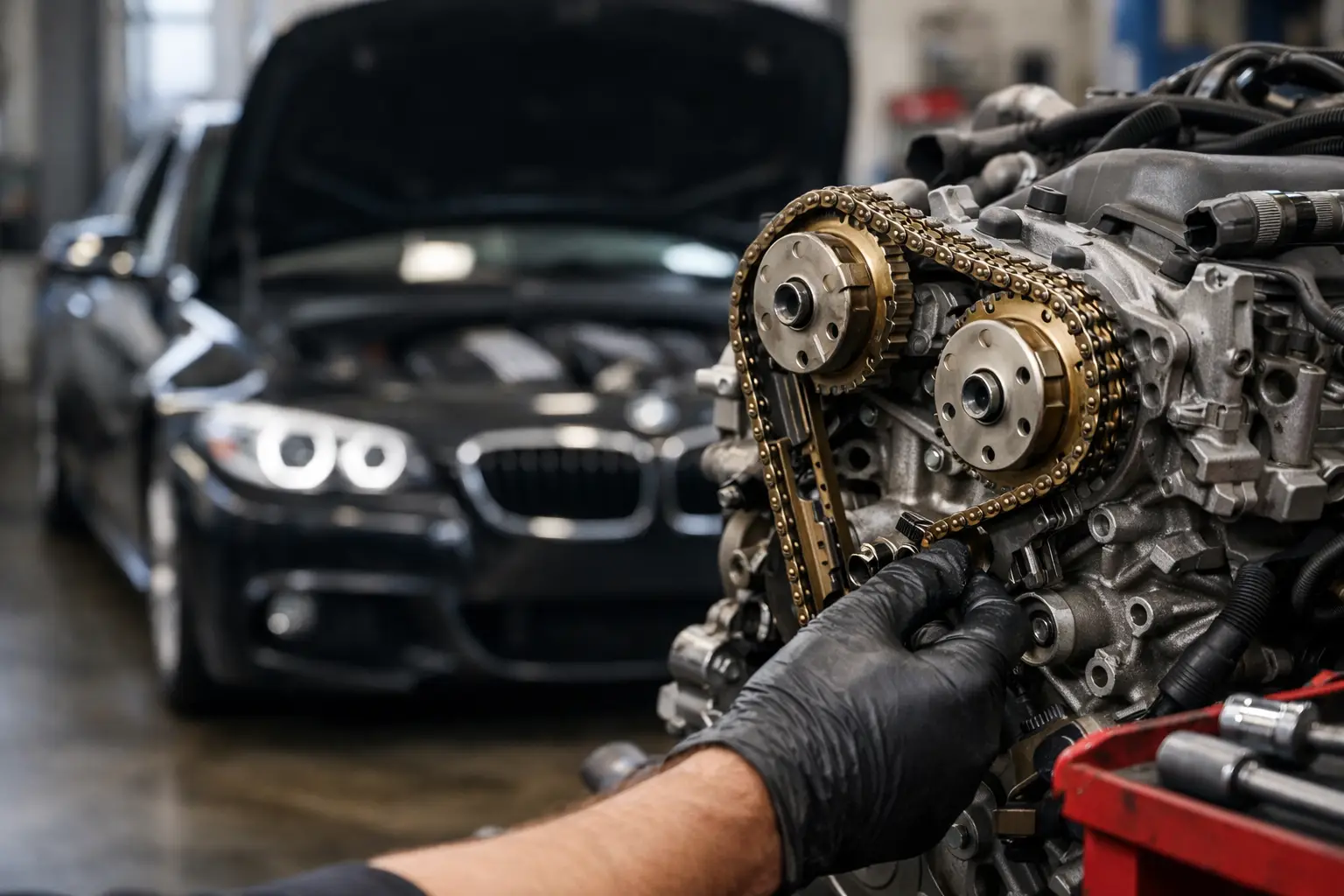
A BMW that starts sounding different is usually telling you something. When that sound comes from the timing chain area, waiting it out rarely saves money. BMW timing chain repair is one of those services where early diagnosis can mean the difference between a controlled repair and major engine damage.
For BMW owners, this issue is frustrating because the car may still drive, at least for a while. That can create a false sense of safety. A stretched chain, worn guides, or a failing tensioner may begin with a cold-start rattle or a check engine light, but the problem can escalate quickly if the timing slips.
What the timing chain does
Your BMW’s timing chain keeps the crankshaft and camshaft in sync so the engine’s valves and pistons move exactly when they should. It is a precision component, and when it starts to wear, engine performance and reliability can suffer in a hurry.
Many drivers assume a timing chain is a lifetime part because it is not a rubber belt. In real-world service, that is not always the case. Oil quality, maintenance intervals, engine design, and driving conditions all affect chain life. On some BMW engines, timing chain wear is a known concern and deserves prompt attention.
Common signs you may need BMW timing chain repair
The first warning sign is often noise. Owners describe it as a rattling, ticking, or metallic chatter, especially during startup. Sometimes the sound fades as oil pressure builds, which makes it easy to dismiss. It should not be ignored.
A check engine light is another common clue. If the engine computer detects camshaft timing that is out of range, it may store faults related to timing correlation or variable valve timing performance. You may also notice rough idle, hesitation, reduced power, or poor fuel economy.
In more advanced cases, the engine may crank longer than usual, run badly, or fail to start. At that point, the risk is much higher. If the chain jumps timing, internal engine contact can occur. That is why diagnosis matters so much with this issue.
Symptoms that deserve immediate attention
If you hear persistent rattling from the front or rear of the engine, depending on the BMW model, it is worth scheduling an inspection right away. The same goes for a check engine light paired with drivability changes. A luxury vehicle should feel smooth and confident. When it suddenly does not, there is usually a mechanical reason behind it.
Why BMW timing chains fail
Timing chain problems usually do not come from the chain alone. The system includes guides, tensioners, sprockets, seals, and related hardware. Wear in any of those areas can affect chain tension and timing accuracy.
Oil condition plays a major role. BMW engines rely on proper lubrication for the timing chain and tensioner to function correctly. Extended oil change intervals, low oil level, sludge buildup, or the wrong oil specification can accelerate wear. Even an owner who has kept up with maintenance may still face timing chain concerns on certain engines, but neglected oil service raises the odds.
Engine design also matters. Some BMW engines are simply more prone to guide wear or chain stretch than others. That is where brand-specific experience becomes valuable. A general repair shop may hear a rattle and treat it as minor valvetrain noise. A BMW specialist is more likely to recognize the pattern, inspect the right components, and measure whether the timing has already moved out of spec.
How BMW timing chain repair is diagnosed
A proper diagnosis starts before any parts come off. The technician should listen to the engine, review the fault codes, and evaluate live data related to camshaft timing. On BMWs, scan tool information is especially important because the engine computer can reveal whether timing adaptation values are drifting beyond normal range.
From there, the next step depends on the symptoms and engine family. Some vehicles need a physical timing inspection using manufacturer-specific tools to verify chain stretch or camshaft alignment. Others may require inspection of the tensioner or chain guides for wear. The goal is to confirm the actual fault, not guess.
That matters because not every rattle is a timing chain, and not every check engine light means the chain has failed. Honest diagnostics protect the customer from unnecessary work while also catching real problems before they become catastrophic.
What the repair usually includes
BMW timing chain repair is not a quick add-on service. In most cases, it involves replacing the timing chain, guides, tensioner, and related seals and hardware. Depending on the engine and what is found during inspection, additional components may also be recommended if they directly affect timing system reliability.
This is detail-heavy work. The technician must disassemble access points, lock the engine in the correct position with the right specialty tools, install new components to precise specifications, and verify timing before reassembly. If the engine timing is even slightly off, the vehicle may run poorly or set faults immediately.
That is one reason BMW owners often look for a dealer alternative with real European-car experience. You want the repair done with OEM-quality parts, BMW-specific diagnostic equipment, and technicians who work on these systems regularly. Precision matters more than speed here.
Repair versus wait-and-see
Some repairs can be monitored. Timing chain issues usually are not in that category. If inspection confirms wear in the chain system, delaying service can raise the cost significantly. A repair that starts as chain, guide, and tensioner replacement can become much more serious if the chain slips.
There is still some nuance. If a BMW has a brief startup noise and testing shows no measurable timing fault, the next step may be continued monitoring rather than immediate repair. If there are fault codes, strong noise, or confirmed guide wear, waiting becomes much harder to justify.
How much BMW timing chain repair costs
Cost depends on the BMW model, engine type, labor access, and the extent of parts needed. Timing chain service is labor-intensive, so the total is usually more than routine maintenance but far less than the cost of engine failure caused by a skipped chain.
The honest answer is that there is no one-size-fits-all price. A 3 Series, X3, or X5 can differ considerably depending on engine layout and what the inspection finds. If there are oil leaks from related seals or other timing system components showing wear, addressing them during the same visit can make sense. It may increase the repair total upfront, but it can reduce repeat labor later.
For most owners, the right question is not just what it costs today. It is what it costs to ignore. On a premium vehicle, preventive repair often protects the long-term value of the car and helps avoid a much larger breakdown.
Choosing the right shop for BMW timing chain repair
This is not the job to hand off to a general repair facility that only sees an occasional BMW. Chain timing, fault tracing, and post-repair verification all require model-specific knowledge. The best outcome usually comes from a shop that works on European vehicles every day and understands the differences between BMW engine families.
Look for clear communication as much as technical capability. You should be told what symptoms were confirmed, what testing was performed, what parts are being replaced, and why. A good shop will explain the repair without overselling and will be upfront about cost, timing, and any related recommendations.
For BMW owners in Palatine and the northwest suburbs, that dealer-alternative approach matters. At Wizard Werks, that means using the right diagnostic process, quality parts, and experienced technicians while keeping communication straightforward and personal.
When to schedule service
If your BMW has a startup rattle, timing-related fault codes, rough running, or a sudden change in engine behavior, now is the time to have it checked. Timing chain problems rarely improve on their own, and early diagnosis gives you more options.
There is peace of mind in getting a straight answer. Maybe the chain system needs repair. Maybe the issue is something less serious. Either way, having the vehicle evaluated by a specialist is the fastest path back to confidence behind the wheel.
A BMW is built to deliver a refined, responsive driving experience. When something mechanical starts getting in the way of that, the best move is simple – address it early, fix it correctly, and keep the car performing the way it should.