
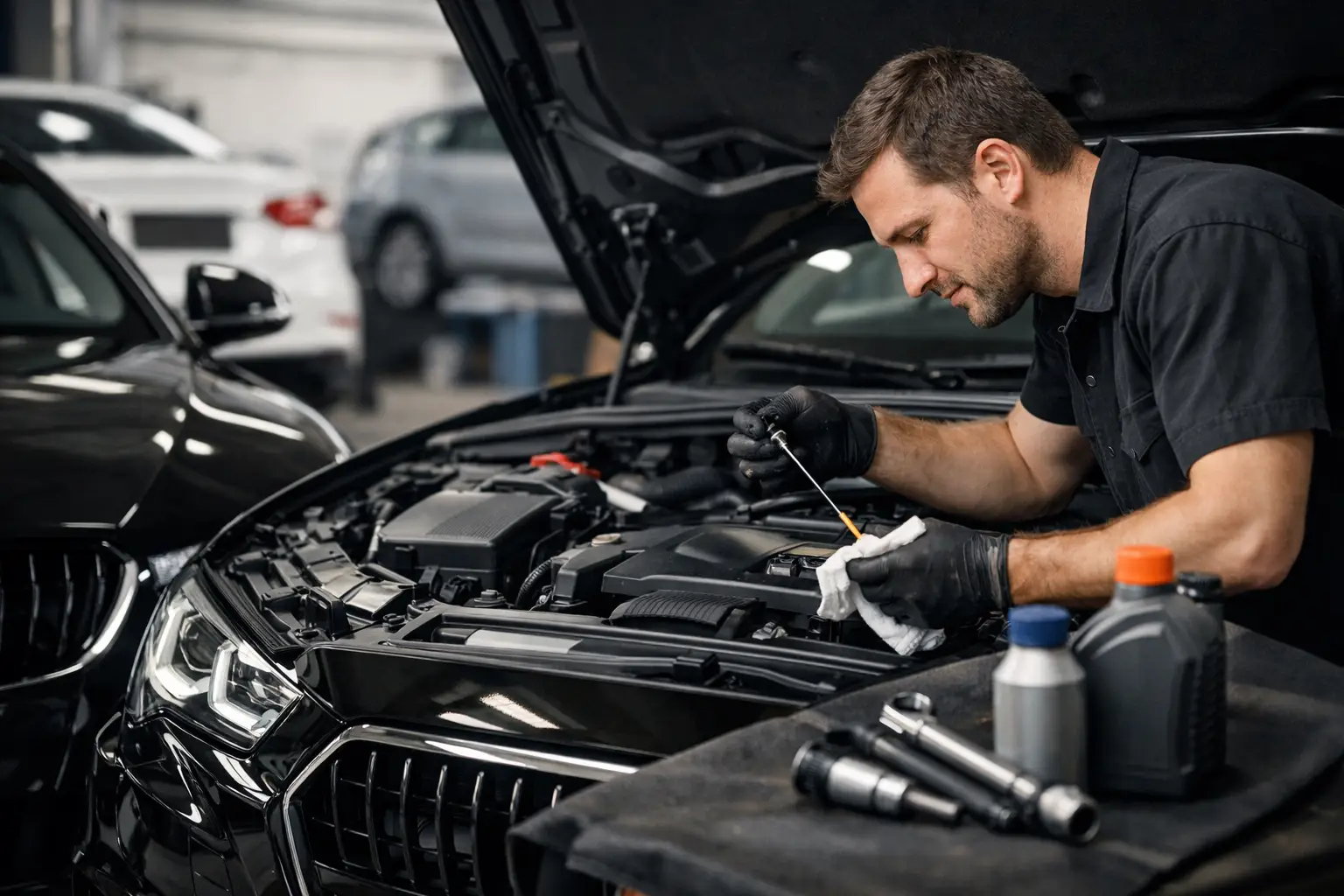
That dashboard reminder might say oil service, but on a German vehicle, maintenance is rarely just about one fluid change. BMW, Mercedes-Benz, Audi, Volkswagen, and Porsche models are engineered to tight standards, and they tend to reward owners who stay ahead of wear instead of reacting to it. This german car maintenance guide is built for drivers who want to protect performance, avoid expensive surprises, and make smart service decisions without defaulting to the dealership.
Why a german car maintenance guide matters
German cars are not fragile, but they are precise. The same engineering that gives you sharp handling, refined power delivery, and high-speed stability also means systems work together closely. A small oil leak, a weak battery, or a worn suspension bushing can affect far more than one isolated part.
That is why generic maintenance habits often fall short. A quick-lube mindset may work on some vehicles, but premium European cars typically need the right fluids, the right service intervals, and the right diagnostic process. Skipping that approach can lead to repeat visits, poor drivability, or repairs that could have been prevented.
For most owners, the goal is simple. You want your vehicle to stay reliable, safe, and enjoyable to drive, while keeping costs reasonable over time. The best way to get there is with consistent, brand-aware maintenance.
The service schedule is a starting point, not the whole story
Factory recommendations matter, but they should not be treated like a universal rulebook. Many German vehicles are driven in conditions that are tougher than the average schedule assumes. Short trips, stop-and-go commuting, extreme temperatures, rough roads, and long idle times all add stress.
Oil service is a good example. Some factory intervals stretch longer than many specialists are comfortable with, especially as the vehicle ages. On paper, those longer intervals may look convenient. In real-world driving, more frequent oil and filter service can help reduce sludge, limit internal wear, and support turbocharger health.
The same goes for brake fluid, coolant, spark plugs, filters, and transmission service. The exact timing depends on the make, model, engine, mileage, and how the car is used. There is no honest one-size-fits-all answer, which is why transparent recommendations matter.
The maintenance items that deserve the most attention
Fluids are where many expensive problems begin or get prevented. Engine oil, coolant, brake fluid, and gearbox fluid all do more than lubricate. They manage heat, protect seals, and support components that operate under high loads. Using the wrong specification or delaying service can create issues that build gradually before they become obvious.
Brakes also deserve close attention on German vehicles because braking systems are often designed around specific pad and rotor materials, electronic wear monitoring, and stability system calibration. Waiting until brakes are noisy is not a great strategy. By then, you may be looking at more parts than necessary.
Suspension and steering wear can be subtle at first. A slight clunk over bumps, uneven tire wear, or a steering wheel that no longer feels centered may point to bushings, mounts, control arms, or alignment concerns. European vehicles are sensitive to these changes, and drivers usually feel the difference quickly once the issue is corrected.
Electrical health is another big one. Modern luxury and European cars rely heavily on modules, sensors, and software communication. A weak battery or charging issue can trigger faults that seem unrelated. That is one reason accurate diagnostics matter so much. Replacing parts based on guesswork is expensive, and it often misses the real cause.
A practical german car maintenance guide by ownership stage
If your vehicle is newer and still feels perfect, this is the easiest time to save money. Staying current on oil service, inspections, filters, and fluid exchanges helps preserve the systems that are most expensive to ignore later. This stage is about prevention and documentation.
If your vehicle is in the mid-mileage range, maintenance usually becomes more active. You may start seeing brake work, spark plugs, suspension wear, cooling system concerns, or battery replacement. This is normal. What matters is catching these items early and grouping work thoughtfully when it makes sense.
If your German vehicle has higher mileage, the right approach is not to stop maintaining it. It is to become more intentional. High-mileage European cars can remain excellent daily drivers when they are inspected carefully and serviced by technicians who know the platform. The trade-off is that deferred maintenance tends to show up all at once, so a clear plan becomes even more valuable.
Why specialist diagnostics save money
Many owners try a general repair path first because it seems more convenient or less expensive. Sometimes that works for basic items. Often, it does not. German brands use advanced control systems, manufacturer-specific software logic, and model-specific failure patterns that require the right tools and training.
A warning light is a perfect example. The code stored in the system is not always the failed part. It is often a clue that needs testing, interpretation, and confirmation. Without that process, it is easy to replace one component, then another, and still have the original problem.
This is where an independent European specialist provides real value. You get dealership-level attention to diagnostics and service procedure, but usually with more personal communication and a clearer explanation of what is urgent, what can wait, and why.
What honest maintenance should look like
Good maintenance is not about selling every recommendation on the same visit. It is about prioritizing what protects safety, reliability, and long-term value. Some items need immediate attention. Others should simply be monitored and planned for.
That distinction matters to owners who want transparency. If your front brakes are near replacement and your cabin air filter is dirty, those are not the same level of concern. A trustworthy shop should explain the difference clearly, document findings, and give you a realistic timeline.
The best service experience also feels straightforward. You should know what was inspected, what was found, what was done, and what may be coming next. For drivers in Palatine and the northwest suburbs, that kind of relationship is often what makes an independent specialist the smarter long-term choice over a dealership service lane.
Brand-specific care makes a difference
Not all German vehicles age the same way. BMW may have one set of common maintenance patterns, while Audi or Volkswagen may present another. Mercedes-Benz models can vary significantly by engine family and chassis. Porsche owners often have different service priorities tied to performance use, low annual mileage, or both.
That does not mean every car from these brands is trouble-prone. It means familiarity matters. Knowing what tends to wear, what should be inspected more closely, and which service intervals deserve adjustment can prevent both under-maintenance and unnecessary work.
At Wizard Werks, that specialist mindset is the point. Owners of European and luxury vehicles do not need vague advice or upselling. They need accurate diagnostics, OEM-quality parts, manufacturer-grade equipment, and recommendations that respect both the car and the customer.
How owners can make maintenance easier
You do not need to become your own technician to take better care of a German vehicle. A few habits go a long way. Pay attention to changes in sound, ride quality, warning lights, and fluid spots where you park. Do not ignore a small issue because the car is still driving well. Many European vehicle problems start small and get expensive only after they are delayed.
It also helps to keep service records and ask for a maintenance plan instead of isolated repairs. When you know what is due now, what is likely next, and what can wait, budgeting becomes much easier. That is especially useful if you plan to keep the vehicle long term.
Finally, choose a shop that explains things in plain language. You should never feel talked into repairs you do not understand. You should feel informed, respected, and confident that the work is being done to the standard your vehicle requires.
German cars ask for more precision than average transportation, but they also give more back when cared for properly. Stay ahead of maintenance, work with people who know the vehicle, and your ownership experience is far more likely to feel rewarding than stressful.