
That light squeal at the stop sign is easy to ignore until the brake pedal starts feeling different or the car no longer stops as smoothly as it should. If you are wondering how to know brake wear, the answer usually starts with small changes in sound, feel, and stopping performance long before braking becomes a real safety issue.
For owners of BMW, Mercedes-Benz, Audi, Porsche, Land Rover, Lexus, and other premium vehicles, those early signs matter. Modern braking systems are precise, and on European and luxury models they often include electronic wear sensors, model-specific pad compounds, and rotors designed to work within tight tolerances. That means brake wear is not something to guess at or put off for another month.
How to know brake wear before it gets expensive
Most brake wear shows up in stages. The first stage is often sound. You may hear a light squeak when slowing down, especially on a cold morning or after the vehicle has been sitting. In some cases, that noise is harmless and temporary. Moisture, surface rust, or brake dust can cause a brief squeal that disappears after a few stops.
What you do not want to ignore is a repeated squealing or scraping noise. A consistent high-pitched squeal can mean the brake pads are wearing thin. A metal-on-metal grinding sound is more serious and may indicate the pad material is worn down enough that backing plates are contacting the rotor. At that point, what could have been a straightforward brake service can become a more expensive repair.
The second stage is feel. Healthy brakes should respond smoothly and predictably. If the pedal feels softer than usual, if it takes more pressure to slow the car, or if braking feels uneven, something has changed. That does not always mean the pads are worn out. It can also point to rotor wear, brake fluid issues, or a system component that needs inspection. Either way, a change in pedal feel is worth taking seriously.
The third stage is performance. If stopping distances seem longer, if the vehicle pulls to one side during braking, or if the steering wheel shakes when you slow down from highway speeds, brake wear may already be affecting drivability. Premium vehicles are engineered for refined, confident braking. When that confidence starts to fade, it is usually not your imagination.
Common signs of brake wear
Brake warning signs are rarely limited to one symptom. More often, drivers notice a pattern. The car may begin with an occasional squeak, then develop vibration, then trigger a dashboard message.
Some of the most common clues include squealing or grinding noises, vibration in the steering wheel or brake pedal, reduced stopping power, a brake warning light, visible thinning of the brake pads, or grooves and discoloration on the rotors. You may also notice excess brake dust on one wheel more than the others, which can suggest uneven wear or a sticking caliper.
There is a little nuance here. Not every noise means the brakes are failing, and not every worn brake pad makes noise. Some high-performance pad materials are naturally noisier than others. Some vehicles also use electronic pad wear sensors that trigger a warning before the brakes start sounding rough. That is why a proper inspection matters more than trying to diagnose the issue based on one symptom alone.
What brake wear looks like
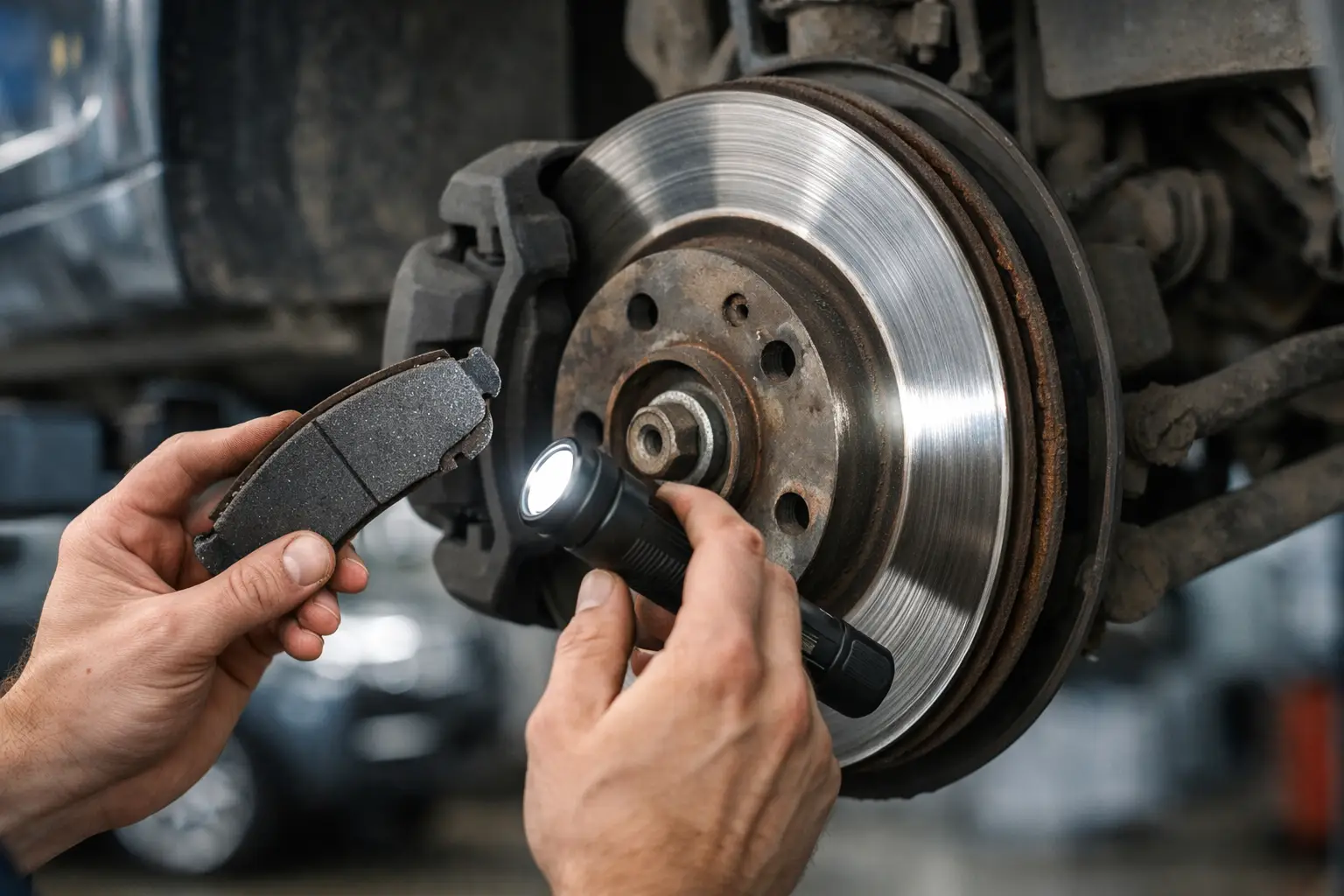
If you can see through the wheel, you may be able to get a rough idea of pad condition. Brake pads press against the rotor, and the friction material should still look substantial. If the pad appears very thin, it is likely near the end of its usable life.
As a general rule, pads with less than about 3 to 4 millimeters of material remaining should be checked promptly. Rotors also matter. If the rotor surface looks deeply grooved, heavily scored, or shows heat spots, the system may need more than just new pads.
Still, visual checks have limits. Many luxury vehicles have wheel designs that make the brakes hard to inspect without removing the wheel. Rear brakes can also be easy to overlook. And because European braking systems are often engineered as matched components, pad and rotor condition should be evaluated together rather than as separate parts.
Why brake wear can happen faster than expected
A lot of drivers assume brake life follows a fixed schedule, but it depends on how and where the vehicle is driven. A commuter in stop-and-go traffic will wear brakes differently than someone doing mostly open-road driving. A heavier SUV or performance model may go through pads faster than a lighter sedan. Driving style also matters. Gentle, planned braking is easier on the system than late, aggressive stops.
European and luxury vehicles add another layer. Many are designed with softer pad compounds for better braking feel and quieter operation. That can mean more predictable performance, but sometimes shorter pad life. Some models also use larger braking systems that generate excellent stopping power but cost more to service correctly.
This is where brand-specific knowledge helps. The right brake service for a BMW or Audi is not always the same as the right approach for a Lexus or Volvo. Pad materials, rotor specifications, wear sensor integration, and electronic parking brake procedures can all vary by manufacturer.
Dashboard warnings and what they mean
Many late-model vehicles make it easier to know how to know brake wear because the system tells you directly. A brake pad wear light or service message may appear on the dashboard when the sensor detects that the pad has reached a certain wear point.
That warning should not be treated as optional. In many cases, it means the brakes are not yet metal-on-metal, but they are getting close enough that service should be scheduled soon. Waiting too long can turn a preventive visit into rotor damage or reduced braking performance.
It is also worth noting that not every brake-related dashboard light points to worn pads. A brake warning light may also be tied to low brake fluid, a parking brake issue, or another fault in the system. The message on the dash is the beginning of the diagnosis, not the whole answer.
When noise is normal and when it is not
This is one of the most common questions we hear from drivers of premium vehicles. The honest answer is that some brake noise can be normal, especially with certain pad materials or after rainy weather. A brief squeak on first use does not always mean service is overdue.
What is not normal is noise that keeps happening, gets louder, or is paired with poor braking feel. Grinding, harsh scraping, pulsing, or shuddering under braking should be checked right away. The trade-off with waiting is simple: the longer worn components stay in service, the greater the chance of damaging other parts of the system.
Why professional inspection matters on European cars
Brake service on premium import vehicles is about more than replacing worn parts. It is about measuring rotor condition, checking sensor status, verifying caliper operation, inspecting brake fluid condition, and confirming that the system performs the way the manufacturer intended.
That is especially important on vehicles with electronic service monitoring, advanced driver assistance systems, or performance brake packages. A general quick-look inspection may miss issues that affect refinement, safety, or long-term component life. At Wizard Werks, that is why brake inspections are handled with the same attention to detail owners expect from a dealer alternative, but with clearer communication and a more personal experience.
When to schedule brake service
If your brakes are making noise regularly, the pedal feels different, the vehicle vibrates when slowing down, or a brake warning light appears, it is time to schedule an inspection. If you are unsure, err on the side of caution. Brakes are one of those systems where early attention almost always costs less than waiting.
Even without obvious symptoms, periodic inspections are smart, particularly for vehicles that see daily commuting, suburban traffic, or seasonal weather changes. Brake wear is gradual, which makes it easy to miss until the difference becomes obvious. By then, the repair is often larger than it needed to be.
The best approach is simple. Pay attention to what your car is telling you, and do not settle for guesswork. If something feels off, have it checked by technicians who know your vehicle and can explain exactly what they find. Good brake service should never feel like upselling. It should feel clear, accurate, and worth your trust.
If your car has started to sound different or stop differently, listen to it now rather than later. That small change is often the earliest chance to protect both your safety and the driving experience you bought the car for.