
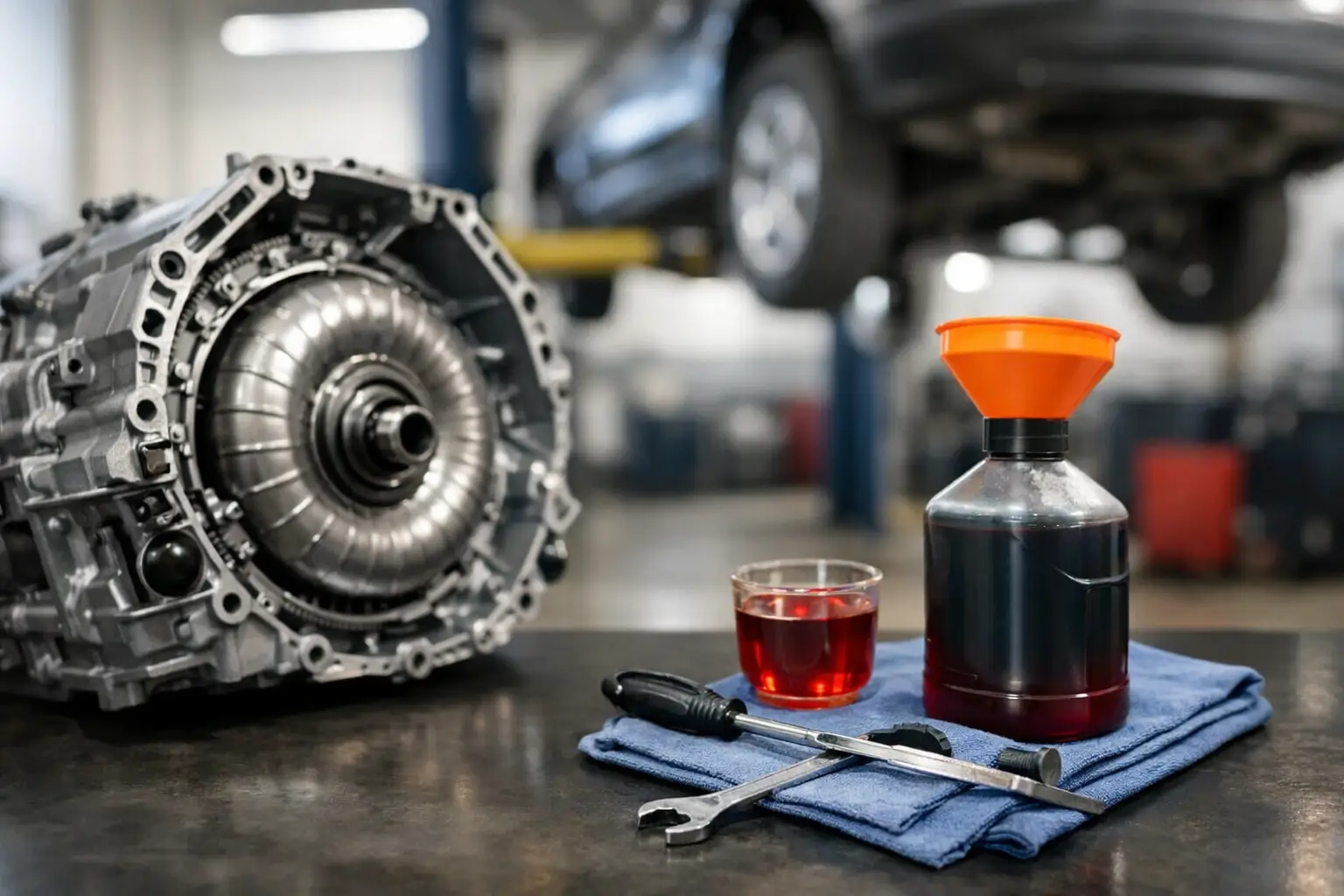
That slight hesitation pulling away from a stop, the harder-than-usual shift on a cold morning, or the feeling that your vehicle just is not as smooth as it used to be – those are often the moments that send owners searching for a transmission service interval guide. For European and luxury vehicles, that timing matters more than many drivers realize. Waiting too long can turn a routine maintenance visit into a much larger repair conversation.
Why a transmission service interval guide matters
Your transmission does more than change gears. It manages power delivery, drivability, fuel efficiency, and in many cases the refined feel you paid for when you bought a BMW, Mercedes-Benz, Audi, Porsche, or Land Rover. Transmission fluid is responsible for lubrication, cooling, hydraulic pressure, and smooth clutch engagement. Over time, heat, friction, and normal wear break that fluid down.
The problem is that transmission service timing is not one-size-fits-all. Some manufacturers set shorter intervals. Others once labeled certain fluids as lifetime fill, which sounds reassuring but often causes confusion. In real-world driving, especially with stop-and-go commuting, seasonal temperature swings, and long ownership plans, lifetime fluid rarely means forever. It usually means the expected life of the component under ideal conditions, not the longest practical lifespan for your vehicle.
That is why a practical transmission service interval guide should start with one simple point: the best interval is the one that fits your specific make, model, transmission type, and driving habits.
General transmission service intervals by vehicle type
As a starting point, many automatic transmissions benefit from service somewhere between 40,000 and 60,000 miles. Dual-clutch transmissions often need attention in a similar range, sometimes sooner depending on the manufacturer. Manual gearboxes may go longer, but that does not mean they should be ignored. Transfer cases and differentials on all-wheel-drive vehicles also have service intervals that are easy to overlook.
For premium imports, manufacturer guidance can vary widely. A Volkswagen DSG service schedule is not the same as a BMW ZF automatic service plan. A Porsche PDK has different needs than a conventional automatic in a Lexus. Even within the same brand, interval recommendations can change based on model year and drivetrain.
That is where owners can get into trouble by relying on generic advice. A quick internet answer like service it every 100,000 miles might be too late for one transmission and unnecessarily delayed for another. The safe approach is to pair manufacturer recommendations with real-world inspection and fluid condition.
What changes the right interval
Driving style plays a big role. Frequent short trips, city traffic, aggressive acceleration, towing, spirited driving, and heavy summer heat all increase fluid stress. If your vehicle sees those conditions regularly, a shorter interval is usually the smarter move.
Mileage is only part of the picture. Time matters too. A low-mileage luxury vehicle that sits often can still need transmission service because fluid ages, seals dry out, and moisture can build up over time. If you drive only a few thousand miles a year, your service schedule may still be based on years, not just miles.
The “lifetime fluid” question
This is one of the most common concerns we hear from owners of European vehicles. If the manufacturer says the transmission fluid is lifetime, why service it at all?
Because lifetime claims are often written around marketing, warranty periods, and ideal operating conditions. They do not always reflect what is best for a vehicle you plan to keep well beyond 100,000 miles. They also do not account for suburban commuting, cold starts, heat cycles, or the wear that naturally accumulates in any gearbox.
Fresh fluid cannot reverse mechanical wear, but it can help reduce heat, maintain proper hydraulic function, and support smoother operation. In many cases, proactive service is one of the best ways to protect the performance and longevity of the transmission you already have.
That said, there is nuance here. If a vehicle has very high mileage and has clearly missed service for a long time, the right next step is not always as simple as replacing fluid immediately. Condition, symptoms, fluid contamination, and scan data all matter. Honest advice should be based on inspection, not a blanket sales pitch.
Signs your car may need transmission service sooner
A mileage chart is helpful, but your vehicle may ask for service before the scheduled interval. Delayed engagement when shifting into drive or reverse is one common clue. Harsh shifting, slipping between gears, surging, shuddering under light acceleration, or unusual whining can also point to fluid breakdown or related transmission concerns.
In some vehicles, you may notice a warning light, stored fault codes, or a change in fuel economy. In others, the symptoms are subtle at first. The car still drives, but it no longer feels crisp or refined. Luxury vehicles are especially good at masking early issues, which is why experienced diagnostics matter.
Fluid leaks should never be ignored. Even a small leak can lower fluid level enough to affect pressure and shifting quality. And because some modern transmissions do not have a simple dipstick check, fluid condition and level often require the correct procedure, temperature range, and manufacturer-grade equipment.
Transmission service interval guide for European vehicles
European vehicles are engineered with tighter tolerances and brand-specific service procedures. That is good for performance, but it also means shortcuts can create problems. The right fluid specification matters. The correct fill level matters. Fluid temperature during service matters. In many cases, software adaptations or calibration checks matter too.
A proper transmission service interval guide for European and luxury cars is less about guessing and more about precision. The service should match the vehicle, not just the category. A BMW, Audi, Mercedes-Benz, or Range Rover may all have automatic transmissions, but that does not mean they should all be treated the same way.
This is also why bargain service offers can be risky. Using the wrong fluid or a generic procedure may save money for one visit and create drivability problems later. Premium vehicles respond best to brand-informed care, especially when transmission performance is closely tied to electronics, mechatronics, and software logic.
What a proper transmission service should include
At a minimum, a quality transmission service should begin with verifying the correct interval and evaluating the current condition of the vehicle. That includes checking for leaks, scanning for transmission-related faults, reviewing shift behavior, and confirming the right fluid specification.
Depending on the design, service may include fluid replacement, filter replacement, pan service, sealing components, and level setting at the correct temperature. On some vehicles, the process is straightforward. On others, it is more involved and must follow very specific manufacturer procedures.
The important part for owners is transparency. You should know what is being serviced, why that interval is recommended, and whether any symptoms suggest a larger issue that needs attention first. Good service is not about selling the most work. It is about giving you a clear picture of what your vehicle needs right now and what can reasonably wait.
How to decide when to schedule service
If you are not sure where your vehicle stands, start with three questions. How many miles are on the current transmission fluid? Has the vehicle shown any shift quality changes? Do you know the exact manufacturer interval for your transmission type?
If the answer to any of those is unclear, it is a good time to have the vehicle evaluated by a shop that works with European and luxury models every day. For owners in Palatine and the northwest suburbs, that often means choosing a dealer alternative that can provide manufacturer-level diagnostics without the dealership experience that feels rushed or vague. At Wizard Werks, that conversation starts with inspection and honest recommendations, not pressure.
There is no prize for stretching transmission fluid longer than you should. On the other hand, there is also no reason to service a transmission blindly without considering its condition and history. The best approach sits in the middle: informed, brand-specific, and based on how the car is actually used.
If you want your vehicle to keep shifting the way it was designed to, treat transmission service as part of ownership, not as a last resort after something feels wrong. A little attention at the right time usually costs far less than waiting for the transmission to force the issue.