
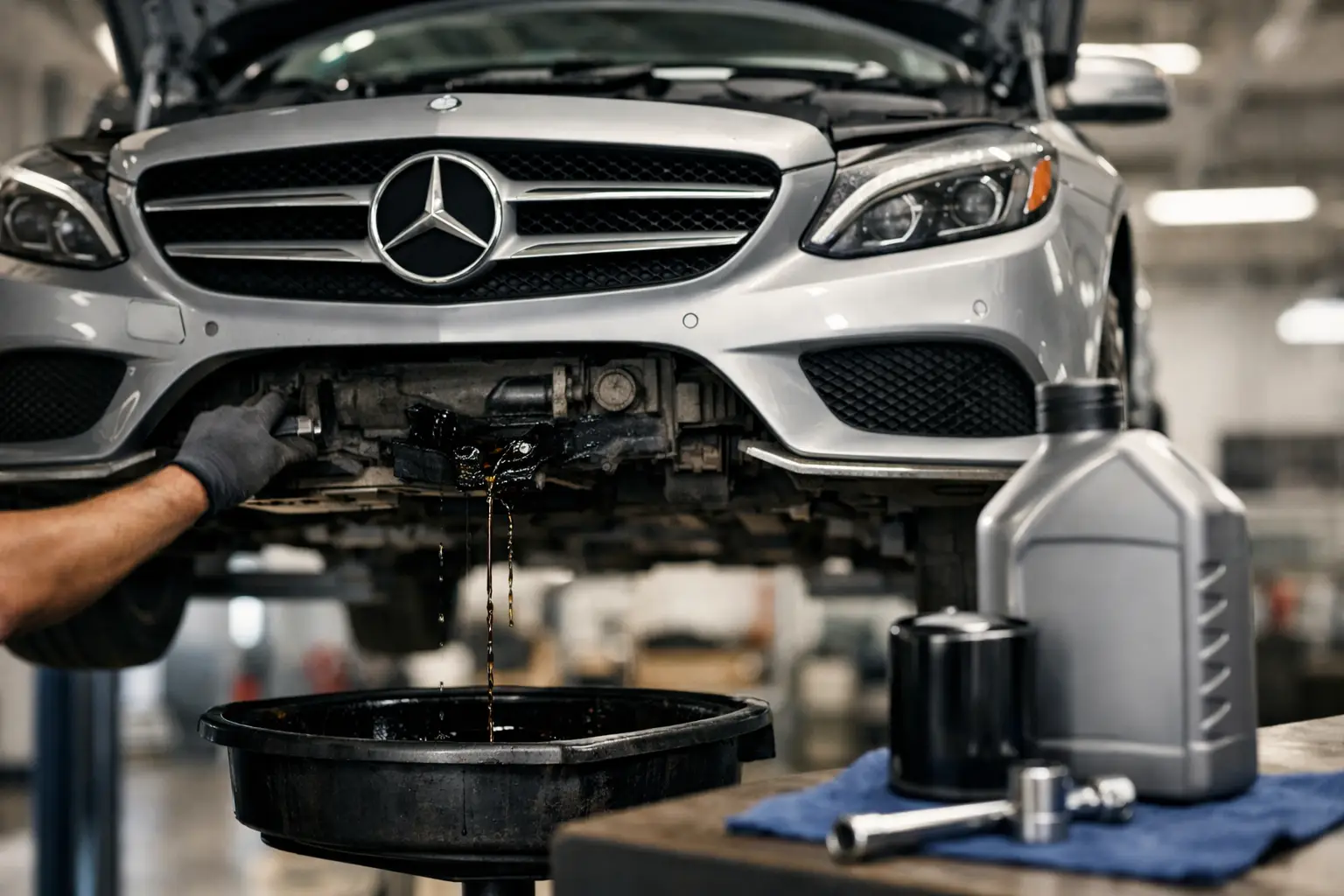
That burnt-oil smell after a short drive, a few dark spots on the garage floor, or smoke rising lightly from the engine bay at a stoplight usually points to one thing: Mercedes Benz oil leak repair should not wait. On these vehicles, an oil leak is rarely just a mess. It can affect belts, hoses, engine mounts, sensors, and overall reliability if the source is misdiagnosed or ignored.
Mercedes-Benz engines are precisely engineered, and that precision matters when a leak shows up. A small seep from a valve cover gasket is different from an oil cooler seal failure or a timing cover leak. To the untrained eye, they can all look the same because oil travels. It runs down the engine, collects on shields and subframes, and often drips somewhere far from the actual problem. That is why proper diagnosis matters more than guesswork.
What causes Mercedes Benz oil leak repair issues?
Most oil leaks come from seals and gaskets that have aged, hardened, or shrunk from heat cycles over time. Mercedes-Benz vehicles are built for performance and refinement, but underhood temperatures are still high, especially on turbocharged engines. Rubber and gasket materials eventually lose flexibility, and once that happens, oil starts finding a way out.
The most common leak points depend on the model and engine, but several areas show up repeatedly. Valve cover gaskets are frequent offenders because they sit at the top of the engine and handle constant heat. Oil filter housing seals and oil cooler seals are also common, especially when oil appears to be coming from the middle or rear of the engine. Front timing covers, lower oil pans, drain plugs, and camshaft adjuster seals can leak as well. In some cases, what looks like a major leak is actually a minor seep that has spread across a large area.
Not every leak is urgent in the same way, but every leak deserves a real inspection. A very slow seep may be manageable for a short period if oil level is monitored closely. A leak that reaches the exhaust, contaminates the serpentine belt, or leaves active drips after parking should be addressed much sooner.
Signs you need Mercedes Benz oil leak repair
Some leaks are obvious. Others build slowly and only become clear when another service is being performed. If your Mercedes-Benz is leaking oil, you may notice spots under the front half of the vehicle, an oil smell through the vents, smoke from oil burning off hot components, or a low oil warning between services.
You might also see residue around the engine cover, along the underside splash shield, or near the transmission bell housing area. That last one is a good example of why diagnosis matters. Oil collecting there does not always mean a rear main seal problem. It could be traveling down from much higher up.
If the vehicle starts consuming oil faster than normal, that does not always mean the engine is burning it internally. An external leak is often part of the story. On Mercedes-Benz models with underbody panels, leaks can hide for longer than owners expect, so by the time drips appear on the floor, the problem may already be established.
Why the leak source is often misidentified
Oil moves with airflow, gravity, and engine vibration. It coats nearby parts, then drips from the lowest point. That means replacing the first wet gasket you see can easily become wasted money. A technician who knows Mercedes-Benz systems will usually begin by cleaning the area, tracing the leak pattern, and checking known failure points for that engine family before recommending repairs.
This is also why parts-swapping does not save money in the long run. Replacing multiple seals without confirming the source can turn a straightforward repair into several unnecessary ones.
How Mercedes Benz oil leak repair should be diagnosed
A proper inspection starts with verifying the fluid type and confirming it is actually engine oil. Power steering fluid, transmission fluid, and coolant can sometimes be mistaken for oil when they mix with road grime. Once engine oil is confirmed, the next step is identifying whether the leak is active, slow, or only occurring under certain operating conditions.
In a specialist shop, technicians typically inspect the upper and lower engine, remove covers as needed, and look for the highest visible point of oil saturation. If the engine is heavily coated, cleaning may be required before the leak can be traced accurately. In some cases, dye testing helps confirm the source, especially when more than one area appears suspicious.
The value of a brand-specific inspection is not just technical equipment. It is pattern recognition. Experienced Mercedes-Benz technicians know where certain engines tend to leak, which seals often fail together, and when a leak that looks major is actually contained to one repairable area.
Common Mercedes-Benz leak repairs and what affects cost
Repair cost depends on where the leak is, how much disassembly is needed, and whether contaminated parts also need attention. A valve cover gasket repair is generally more straightforward than resealing an oil cooler assembly buried deeper in the engine. An oil pan reseal may sound simple, but on some models, access and labor make it more involved than owners expect.
There is also a difference between stopping the leak and restoring the surrounding area properly. If oil has soaked a belt, softened a hose, or damaged mounting bushings, those issues should be discussed honestly. That does not mean replacing everything automatically. It means evaluating what has actually been affected and explaining what can wait versus what should be handled now.
A good shop will also tell you when bundled repairs make sense. If multiple seals in the same area are nearing the end of their service life and labor overlaps, it can be smarter to address them together. Other times, a targeted repair is the better choice. It depends on condition, mileage, and how long you plan to keep the vehicle.
Why the cheapest repair estimate can cost more later
Low estimates often skip the time required for proper cleaning, confirmation, and reinspection. They may also overlook OEM-quality seals or the small related components that help the repair last. With Mercedes-Benz vehicles, that shortcut can mean the leak returns, or a second leak becomes obvious right after the first repair.
For owners trying to avoid dealership pricing without sacrificing standards, this is where an experienced independent specialist is often the best fit. At Wizard Werks, the goal is straightforward diagnosis, clear recommendations, and repairs performed with the right parts and tools for European vehicles.
Can you keep driving with an oil leak?
Sometimes, briefly. But that answer comes with conditions.
If the leak is minor, the oil level is full, and there is no smell of oil hitting hot exhaust components, limited driving may be possible while you schedule service. Even then, you should check the oil level regularly and avoid assuming the leak will stay minor.
If oil is dripping actively, smoke is present, the low oil warning has appeared, or the belt area is contaminated, continued driving is risky. Engine oil is not just lubrication. It also helps with cooling and protecting critical internal components. Let the level drop too far, and the repair you were trying to postpone can become far more expensive.
There is also the fire risk issue. Oil leaking onto hot exhaust parts does not always lead to a dangerous event, but it is never something to dismiss.
How to prevent future oil leaks
You cannot prevent every seal from aging, but you can reduce the chance of a small issue turning into a major one. Regular oil service with the correct specification oil matters. So does having the vehicle inspected by technicians who know what early seepage looks like on Mercedes-Benz platforms.
Waiting too long between services can contribute to sludge, pressure issues, and accelerated gasket wear. Using the wrong oil can do the same. Just as important, small leaks caught early are usually less expensive to repair than leaks that have spread and affected nearby components.
If your Mercedes-Benz is over a certain mileage and still dry underneath, that is good news, but not a reason to stop checking. A quick inspection during routine maintenance often catches developing leaks before they leave stains on the driveway.
Choosing the right shop for Mercedes Benz oil leak repair
This is not a repair where general automotive experience always translates cleanly. Mercedes-Benz models use tight packaging, engine-specific sealing points, and diagnostic procedures that reward familiarity. You want a shop that can identify the leak correctly the first time, explain the repair in plain English, and use quality parts that match the vehicle.
You also want transparency. If a leak is minor, you should be told that. If it needs prompt attention, you should hear why without pressure or upselling. The right service experience feels less like being sold a repair and more like getting a clear plan.
An oil leak rarely fixes itself, but it also does not need to become a bigger problem than it is. Catch it early, diagnose it accurately, and the repair is usually far more manageable than most owners fear.